Govaert Geertje A, IJpma Frank F, McNally Martin, McNally Eugene, Reininga Inge H, Glaudemans Andor W
Department of Surgery, Subdivision of Trauma Surgery, University of Groningen, University Medical Center Groningen, Groningen, The Netherlands.
Department of Trauma Surgery, University of Utrecht, University Medical Center Utrecht, Room number G.04.228, P.O. Box 85500, 3508, GA, Utrecht, The Netherlands.
Eur J Nucl Med Mol Imaging. 2017 Aug;44(8):1393-1407. doi: 10.1007/s00259-017-3683-7. Epub 2017 Apr 27.
Post-traumatic osteomyelitis (PTO) is difficult to diagnose and there is no consensus on the best imaging strategy. The aim of this study is to present a systematic review of the recent literature on diagnostic imaging of PTO.
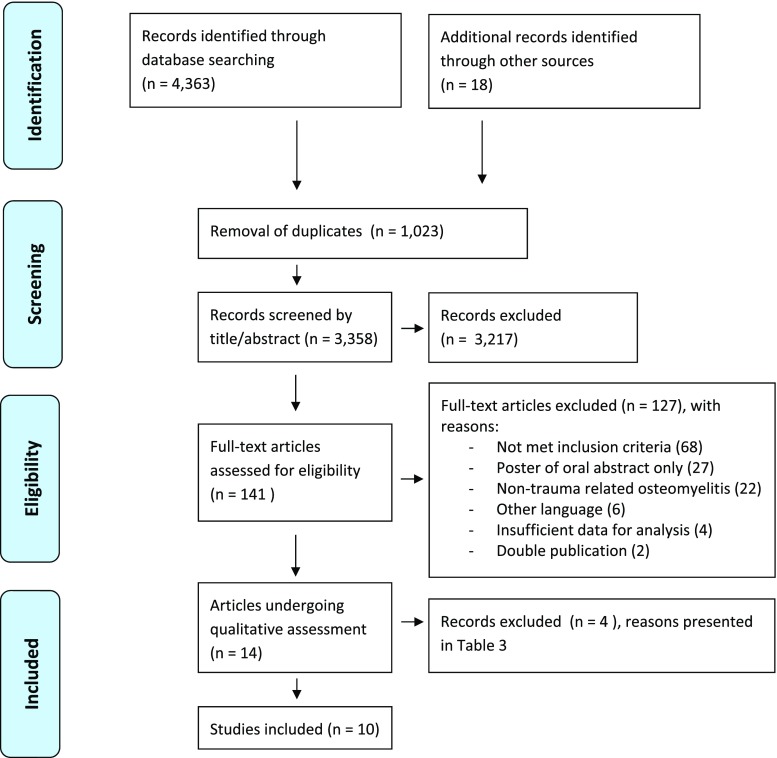
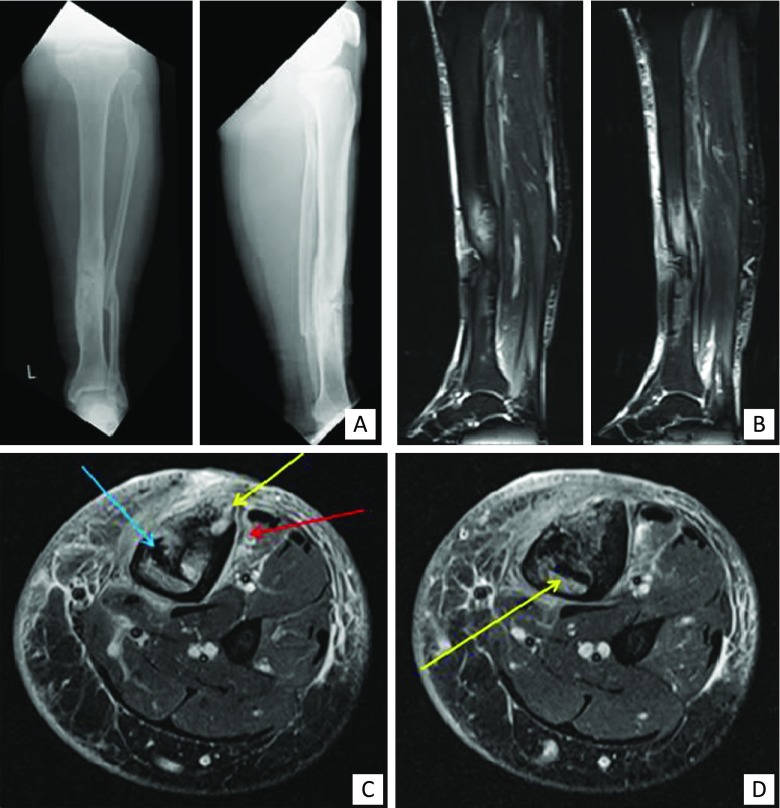
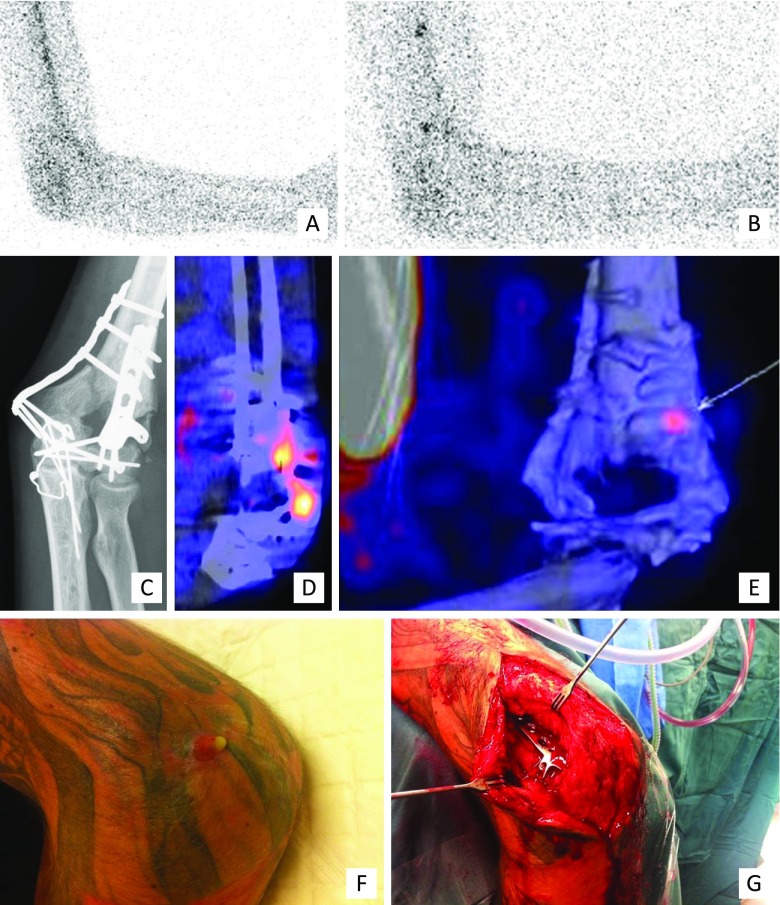
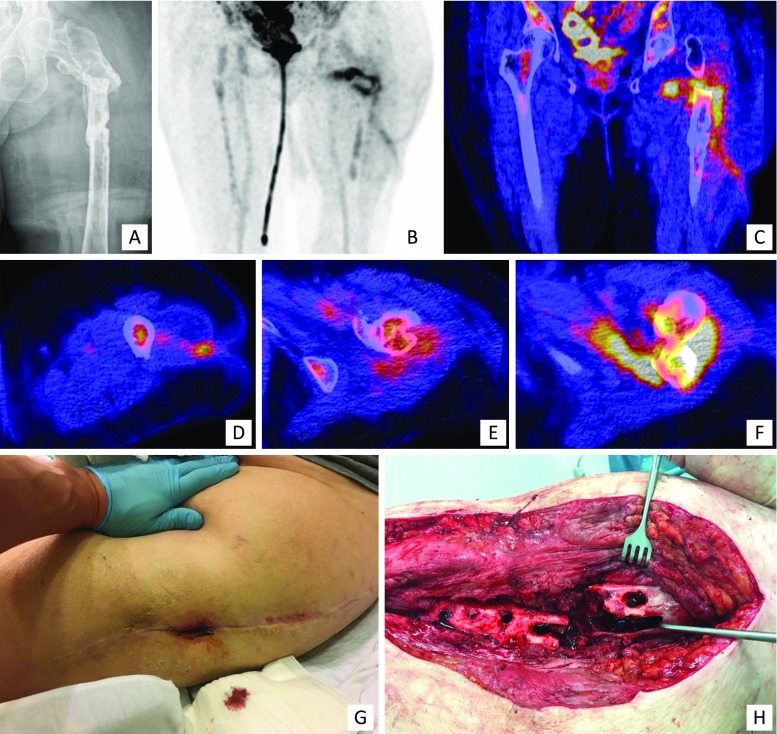
A literature search of the EMBASE and PubMed databases of the last 16 years (2000-2016) was performed. Studies that evaluated the accuracy of magnetic resonance imaging (MRI), three-phase bone scintigraphy (TPBS), white blood cell (WBC) or antigranulocyte antibody (AGA) scintigraphy, fluorodeoxyglucose positron emission tomography (FDG-PET) and plain computed tomography (CT) in diagnosing PTO were considered for inclusion. The review was conducted using the PRISMA statement and QUADAS-2 criteria.
The literature search identified 3358 original records, of which 10 articles could be included in this review. Four of these studies had a comparative design which made it possible to report the results of, in total, 17 patient series. WBC (or AGA) scintigraphy and FDG-PET exhibit good accuracy for diagnosing PTO (sensitivity ranged from 50-100%, specificity ranged from 40-97% versus 83-100% and 51%-100%, respectively). The accuracy of both modalities improved when a hybrid imaging technique (SPECT/CT & FDG-PET/CT) was performed. For FDG-PET/CT, sensitivity ranged between 86 and 94% and specificity between 76 and 100%. For WBC scintigraphy + SPECT/CT, this is 100% and 89-97%, respectively.
Based on the best available evidence of the last 16 years, both WBC (or AGA) scintigraphy combined with SPECT/CT or FDG-PET combined with CT have the best diagnostic accuracy for diagnosing peripheral PTO.
创伤后骨髓炎(PTO)难以诊断,对于最佳影像学检查策略尚无共识。本研究旨在对近期有关PTO诊断性影像学的文献进行系统综述。
对过去16年(2000 - 2016年)的EMBASE和PubMed数据库进行文献检索。纳入评估磁共振成像(MRI)、三相骨闪烁显像(TPBS)、白细胞(WBC)或抗粒细胞抗体(AGA)闪烁显像、氟脱氧葡萄糖正电子发射断层扫描(FDG - PET)和平扫计算机断层扫描(CT)诊断PTO准确性的研究。使用PRISMA声明和QUADAS - 2标准进行综述。
文献检索共识别出3358条原始记录,其中10篇文章可纳入本综述。这些研究中有4项采用了比较设计,总共可报告17个患者系列的结果。WBC(或AGA)闪烁显像和FDG - PET在诊断PTO方面表现出良好的准确性(敏感性范围为50 - 100%,特异性范围为40 - 97%,而FDG - PET的敏感性为83 - 100%,特异性为51% - 100%)。当采用混合成像技术(SPECT/CT和FDG - PET/CT)时,两种检查方法的准确性均有所提高。对于FDG - PET/CT,敏感性在86%至94%之间,特异性在76%至100%之间。对于WBC闪烁显像 + SPECT/CT,敏感性和特异性分别为100%和89 - 97%。
基于过去16年的最佳现有证据,WBC(或AGA)闪烁显像联合SPECT/CT或FDG - PET联合CT在诊断外周PTO方面具有最佳诊断准确性。