Amar Yacine, Meddah Boumediene, Bonacorsi Irene, Costa Gregorio, Pezzino Gaetana, Saija Antonina, Cristani Mariateresa, Boussahel Soulef, Ferlazzo Guido, Meddah Aicha Tirtouil
Laboratory of Bioconversion, Engineering and Microbiological Food Safety, University of Mascara (29000), Algeria.
Laboratoryof Immunology and Biotherapy, Department of Human Pathology University of Messina, 98125- Messina, Italy.
Iran J Pharm Res. 2017 Winter;16(1):315-327.
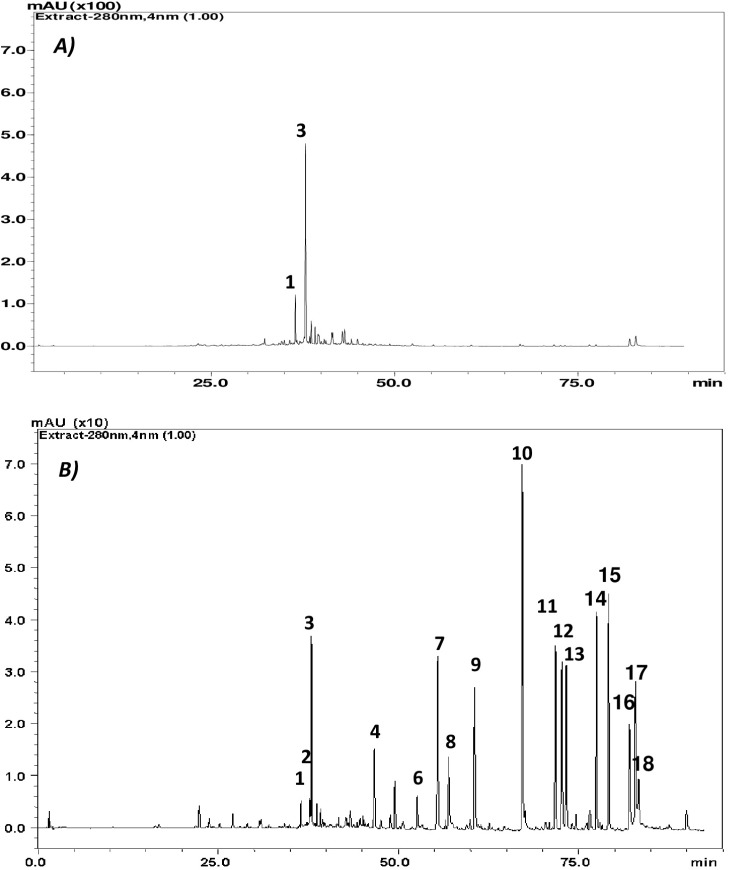
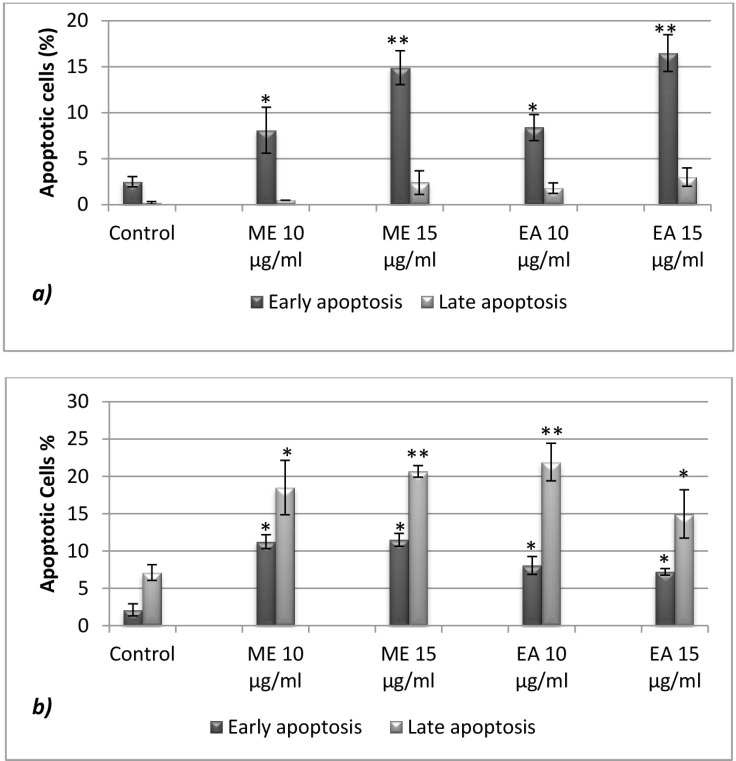
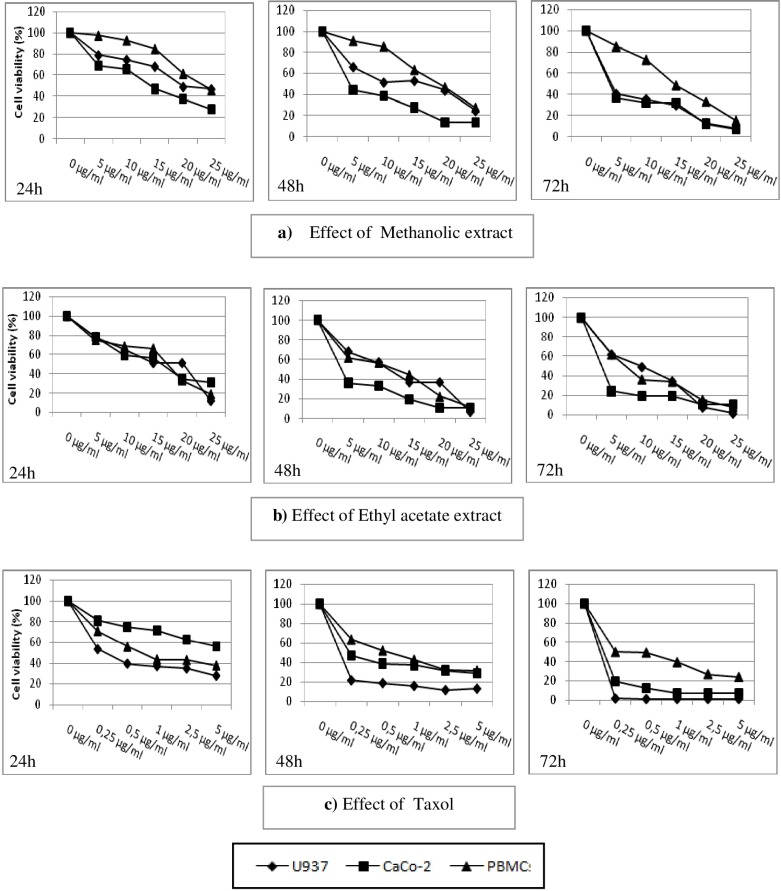
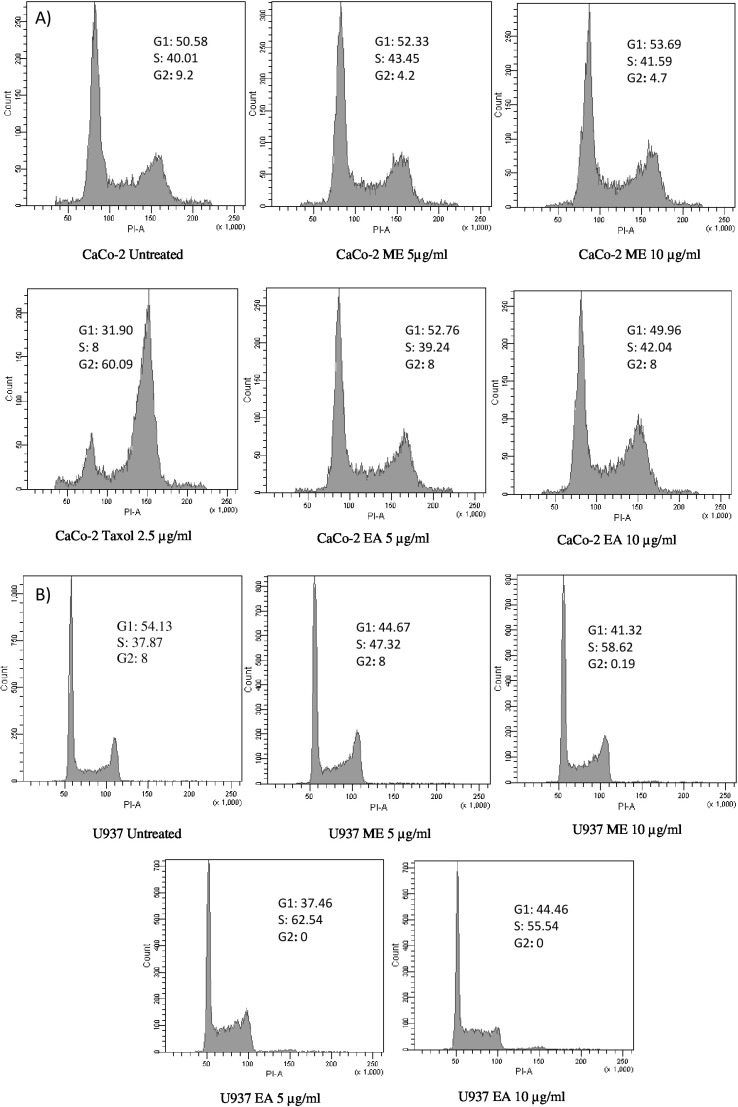
L., a medicinal herb from the labiates family, has been reported to have potential benefit in the treatment and prevention of several diseases. In particular its phenolics have demonstrated protective effects on various types of cancer through several mechanisms. The present study aimed to determine the effects of rosemary phenolic extracts on human cell functions, with particular regard to their anti-proliferative properties in three cell types U937, CaCo-2 and the peripheral blood mononuclear cells (PBMCs). The radical scavenging and Ferric reducing abilities of the extracts have been assessed as well as their cyto-toxicity and effects on cell cycle distribution and apoptosis. About 13 compounds were identified with dominance of rosmarinic acid in the methanolic extract and phenolic diterpens in the ethyl acetate fraction (Carnosol, Carnosic acid and methyl Carnosate). The total polyphenolic content was important in the first extract with 2.589 ± 0.005 g/100 g in gallic acid equivalent compared to 0.763 ± 0.005 g/100 g. The methanolic fraction displayed higher antioxidant activity (DPPH: 0.510 mg/mL and FRAP: 1.714 ± 0.068 mmol Fe/g) while ethyl acetate showed pronounced antiproliferative effects (IC: 14.85 ± 0.20µg/mL and 14.95 ± 2.32 µg/mL respectively for U937 and CaCo-2 cells). The anti-proliferative effect was associated with a cell cycle arrest in S phase for U937 (62% of the population at 5 µg/mL) with a concomitant decrease in G1 and G2/M phases. Tested extracts displayed in addition early apoptotic effects in U937 and late apoptosis in CaCo-2 cells. The obtained data indicate that the identified phenolics are at least partially responsible for the observed cytotoxicity.
迷迭香是一种唇形科药草,据报道在多种疾病的治疗和预防方面具有潜在益处。特别是其酚类物质已通过多种机制对各类癌症表现出保护作用。本研究旨在确定迷迭香酚类提取物对人体细胞功能的影响,尤其关注其对三种细胞类型U937、CaCo - 2和外周血单个核细胞(PBMCs)的抗增殖特性。同时评估了提取物的自由基清除能力、铁还原能力以及它们的细胞毒性、对细胞周期分布和凋亡的影响。在甲醇提取物中鉴定出约13种化合物,其中迷迭香酸占主导,而乙酸乙酯馏分中则以酚类二萜(鼠尾草酸、鼠尾草酚和甲基鼠尾草酸酯)为主。第一种提取物中的总多酚含量较高,以没食子酸当量计为2.589±0.005 g/100 g,相比之下另一种为0.763±0.005 g/100 g。甲醇馏分显示出较高的抗氧化活性(DPPH:0.510 mg/mL和FRAP:1.714±0.068 mmol Fe/g),而乙酸乙酯则表现出显著的抗增殖作用(U937和CaCo - 2细胞的IC分别为14.85±0.20µg/mL和14.95±2.32 µg/mL)。U937细胞的抗增殖作用与S期细胞周期停滞有关(5 µg/mL时62%的细胞群体),同时G1期和G2/M期细胞减少。此外,测试的提取物在U937细胞中显示出早期凋亡作用,在CaCo - 2细胞中显示出晚期凋亡作用。所得数据表明,鉴定出的酚类物质至少部分地导致了所观察到的细胞毒性。