Department of Health Science, University Magna Graecia of Catanzaro , Viale Europa-Loc. Germaneto, 88100 Catanzaro, Italy.
Italian Institute of Technology , Via Morego 30, 16163 Genova, Italy.
ACS Appl Mater Interfaces. 2017 Sep 6;9(35):29394-29411. doi: 10.1021/acsami.7b01583. Epub 2017 Aug 24.
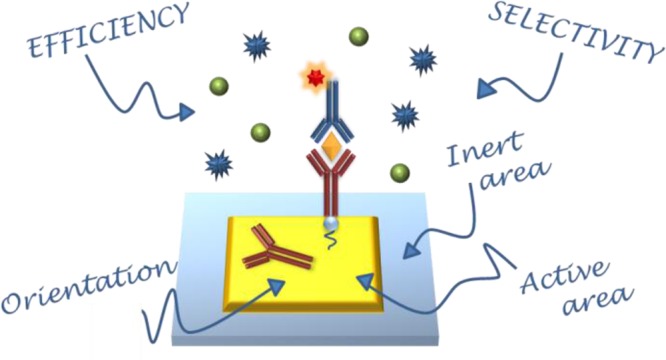
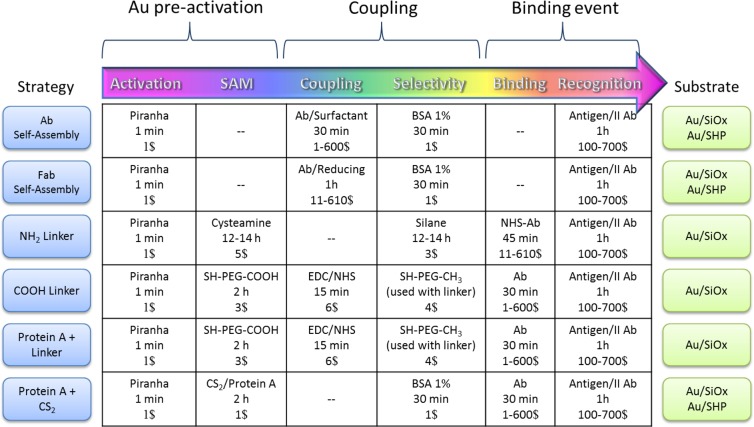
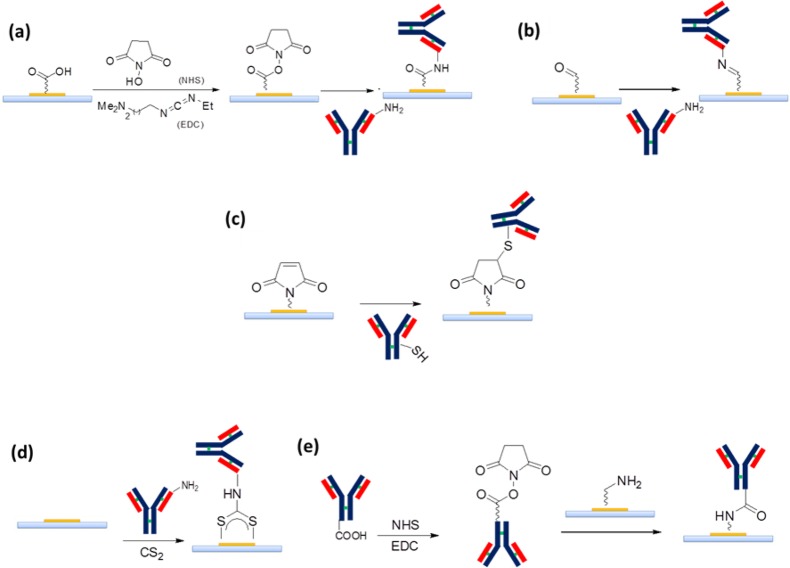
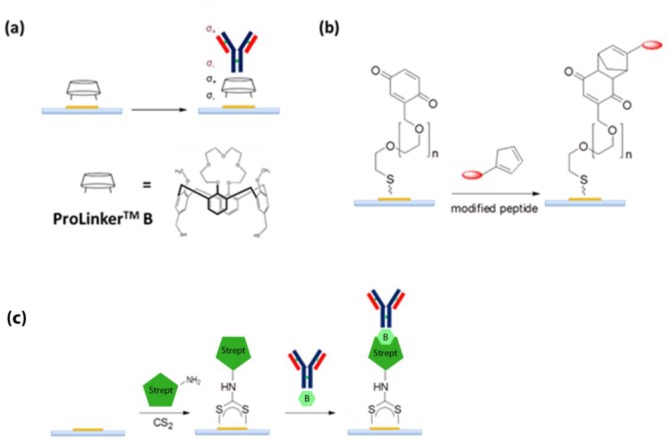
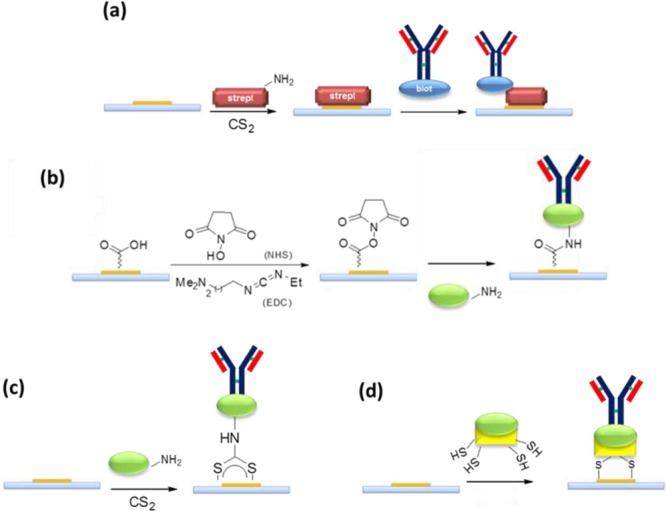
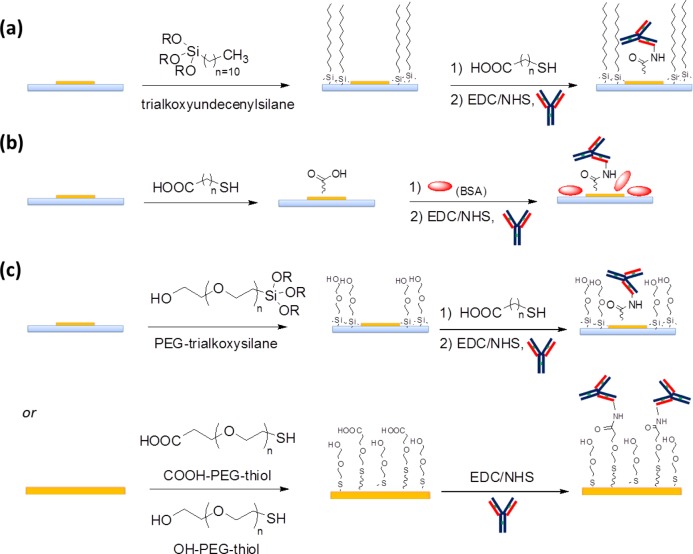
In an ideal plasmonic surface sensor, the bioactive area, where analytes are recognized by specific biomolecules, is surrounded by an area that is generally composed of a different material. The latter, often the surface of the supporting chip, is generally hard to be selectively functionalized, with respect to the active area. As a result, cross talks between the active area and the surrounding one may occur. In designing a plasmonic sensor, various issues must be addressed: the specificity of analyte recognition, the orientation of the immobilized biomolecule that acts as the analyte receptor, and the selectivity of surface coverage. The objective of this tutorial review is to introduce the main rational tools required for a correct and complete approach to chemically functionalize plasmonic surface biosensors. After a short introduction, the review discusses, in detail, the most common strategies for achieving effective surface functionalization. The most important issues, such as the orientation of active molecules and spatial and chemical selectivity, are considered. A list of well-defined protocols is suggested for the most common practical situations. Importantly, for the reported protocols, we also present direct comparisons in term of costs, labor demand, and risk vs benefit balance. In addition, a survey of the most used characterization techniques necessary to validate the chemical protocols is reported.
在理想的等离子体表面传感器中,生物活性区域是被特定生物分子识别的区域,它被一个通常由不同材料组成的区域包围。后者通常是支撑芯片的表面,很难相对于活性区域进行选择性功能化。因此,活性区域和周围区域之间可能会发生串扰。在设计等离子体传感器时,必须解决各种问题:分析物识别的特异性、作为分析物受体的固定化生物分子的取向以及表面覆盖率的选择性。本教程综述的目的是介绍正确和完整地处理化学功能化等离子体表面生物传感器所需的主要合理工具。简短介绍之后,详细讨论了实现有效表面功能化的最常见策略。考虑了最重要的问题,例如活性分子的取向以及空间和化学选择性。针对最常见的实际情况,提出了一系列明确的方案。重要的是,对于所报道的方案,我们还根据成本、劳动力需求以及风险与收益平衡进行了直接比较。此外,还报告了用于验证化学方案所需的最常用的表征技术。