Heyman Leali, Houri-Haddad Yael, Heyman Samuel N, Ginsburg Isaac, Gleitman Yossi, Feuerstein Osnat
Department of Prosthodontics, Hebrew University-Hadassah Faculty of Dental Medicine, P.O.B. 12272, 91120, Jerusalem, Israel.
Department of Medicine, Hadassah-Hebrew University Hospital, Mount Scopus, Jerusalem, Israel.
BMC Complement Altern Med. 2017 Aug 10;17(1):399. doi: 10.1186/s12906-017-1900-3.
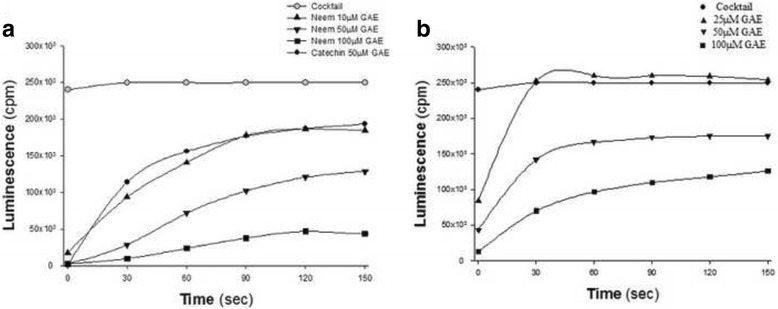
The common usage of chewing sticks prepared from Neem tree (Azadirachta indica) in India suggests its potential efficacy in periodontal diseases. The objective of this study is to explore the antibacterial effects of Neem leaf extract on the periodontophatic bacteria Porphyromonas gingivalis and Fusobacterium nucleatum, and its antioxidant capacities alone and in combination with bacteria and polycationic peptides that may be at the site of inflammation.
Neem leaf extract was prepared by ethanol extraction. The growth kinetics of P. gingivalis and F. nucleatum under anaerobic conditions in the presence of Neem leaf extract were measured. Broth microdilution test was used to determine the Minimal Inhibitory Concentration (MIC) of Neem leaf extract against each bacterial strain. The effect of Neem leaf extract on the coaggregation of the bacteria was assessed by a visual semi-quantitative assay. The antioxidant capacities of Neem leaf extract alone and in combination with bacteria, with the addition of red blood cells or the polycationic peptides chlorhexidine and lisozyme, were determined using a chemiluminescence assay.
Neem leaf extract showed prominent dose-dependent antibacterial activity against P. gingivalis, however, had no effect on the growth of F. nucleatum nor on the coaggregation of the two bacteria. Yet, it showed intense antioxidant activity, which was amplified following adherence to bacteria and with the addition of red blood cells or the polycationic peptides.
Neem leaf extract, containing polyphenols that adhere to oral surfaces, have the potential to provide long-lasting antibacterial as well as synergic antioxidant activities when in complex with bacteria, red blood cells and lisozyme. Thus, it might be especially effective in periodontal diseases.
在印度,由印楝树(Azadirachta indica)制备的咀嚼棒被广泛使用,这表明其在牙周疾病中可能具有潜在疗效。本研究的目的是探讨印楝叶提取物对牙周病原菌牙龈卟啉单胞菌和具核梭杆菌的抗菌作用,以及其单独和与可能存在于炎症部位的细菌及聚阳离子肽联合时的抗氧化能力。
通过乙醇提取制备印楝叶提取物。在厌氧条件下,测量牙龈卟啉单胞菌和具核梭杆菌在印楝叶提取物存在时的生长动力学。采用肉汤微量稀释法测定印楝叶提取物对每种细菌菌株的最低抑菌浓度(MIC)。通过视觉半定量分析法评估印楝叶提取物对细菌共聚集的影响。使用化学发光分析法测定印楝叶提取物单独以及与细菌联合、添加红细胞或聚阳离子肽氯己定和溶菌酶时的抗氧化能力。
印楝叶提取物对牙龈卟啉单胞菌显示出显著的剂量依赖性抗菌活性,然而,对具核梭杆菌的生长以及两种细菌的共聚集均无影响。不过,它显示出强烈的抗氧化活性,在与细菌黏附以及添加红细胞或聚阳离子肽后,这种活性增强。
含有能黏附于口腔表面的多酚类物质的印楝叶提取物,在与细菌、红细胞和溶菌酶结合时,有可能提供持久的抗菌以及协同抗氧化活性。因此,它在牙周疾病中可能特别有效。