Institute for Theoretical Physics, University of Cologne, 50937, Cologne, Germany.
Perimeter Institute for Theoretical Physics, Waterloo, Ontario, N2L 2Y5, Canada.
Sci Rep. 2017 Aug 18;7(1):8823. doi: 10.1038/s41598-017-09098-0.
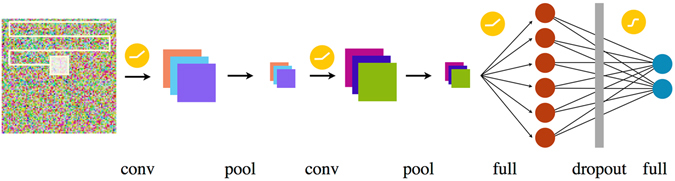
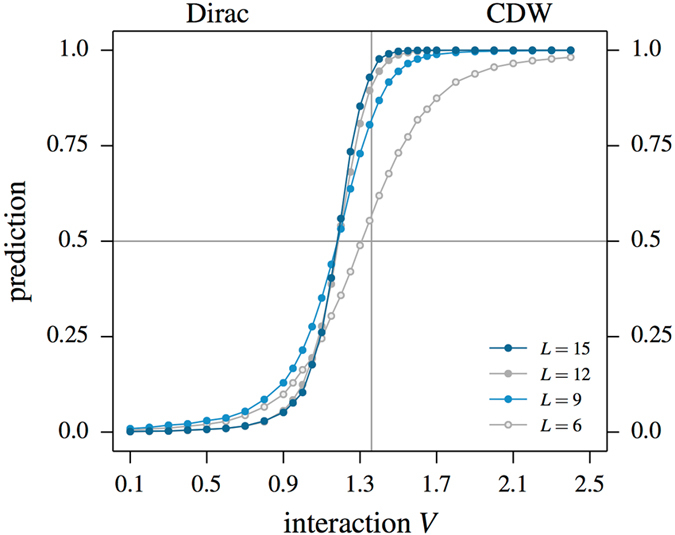
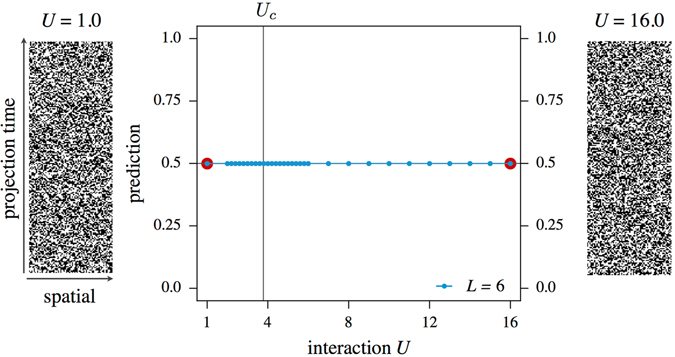
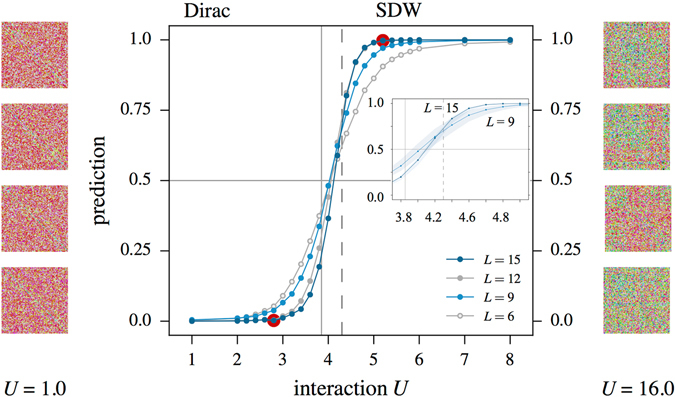
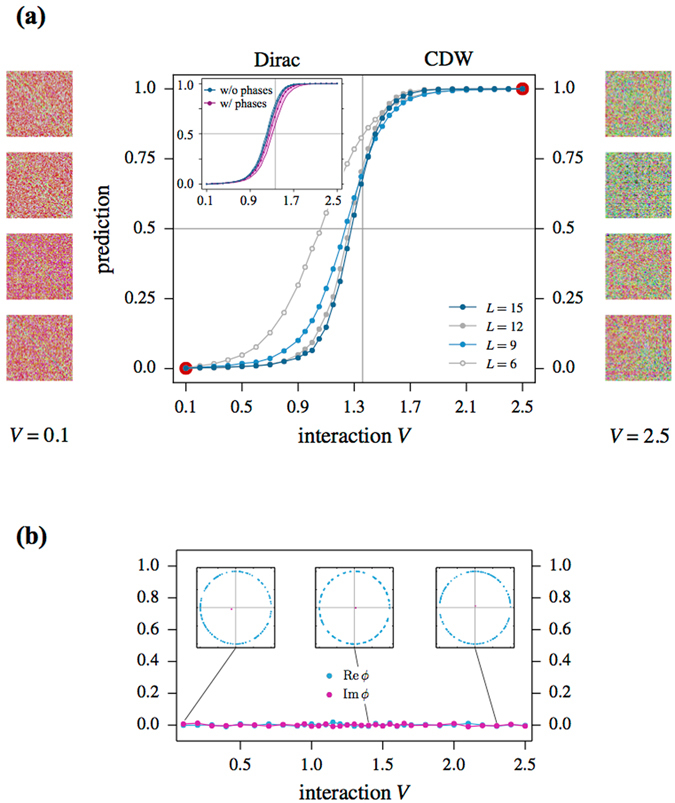
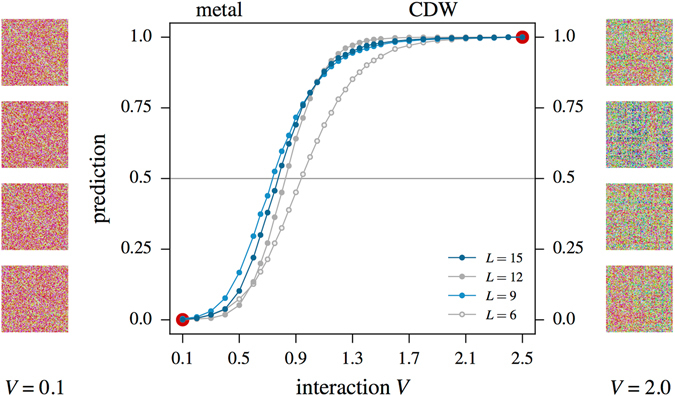
State-of-the-art machine learning techniques promise to become a powerful tool in statistical mechanics via their capacity to distinguish different phases of matter in an automated way. Here we demonstrate that convolutional neural networks (CNN) can be optimized for quantum many-fermion systems such that they correctly identify and locate quantum phase transitions in such systems. Using auxiliary-field quantum Monte Carlo (QMC) simulations to sample the many-fermion system, we show that the Green's function holds sufficient information to allow for the distinction of different fermionic phases via a CNN. We demonstrate that this QMC + machine learning approach works even for systems exhibiting a severe fermion sign problem where conventional approaches to extract information from the Green's function, e.g. in the form of equal-time correlation functions, fail.
最先进的机器学习技术有望通过自动区分物质的不同相,成为统计力学中的强大工具。在这里,我们证明卷积神经网络 (CNN) 可以针对量子多费米子系统进行优化,以便它们能够正确识别和定位此类系统中的量子相变。通过使用辅助场量子蒙特卡罗 (QMC) 模拟对多费米子系统进行采样,我们表明格林函数包含足够的信息,可通过 CNN 区分不同的费米子相。我们证明,即使对于表现出严重费米子符号问题的系统,这种 QMC +机器学习方法也有效,而从格林函数中提取信息的传统方法(例如以等时相关函数的形式)在这种情况下会失败。