Zhang Yanhua, Li Donghua, Han Ruili, Wang Yanbin, Li Guoxi, Liu Xiaojun, Tian Yadong, Kang Xiangtao, Li Zhuanjian
College of Animal Science and Veterinary Medicine, Henan Agricultural University, Zhengzhou, China.
Henan Innovative Engineering Research Center of Poultry Germplasm Resource, Zhengzhou, China.
PLoS One. 2017 Sep 1;12(9):e0184115. doi: 10.1371/journal.pone.0184115. eCollection 2017.
The molecular mechanisms underlying meat quality and muscle growth are not clear. The meat quality and growth rates of local chickens and commercial broilers are very different. The Ribo-Zero RNA-Seq technology is an effective means of analyzing transcript groups to clarify molecular mechanisms. The aim of this study was to provide a reference for studies of the differences in the meat quality and growth of different breeds of chickens.
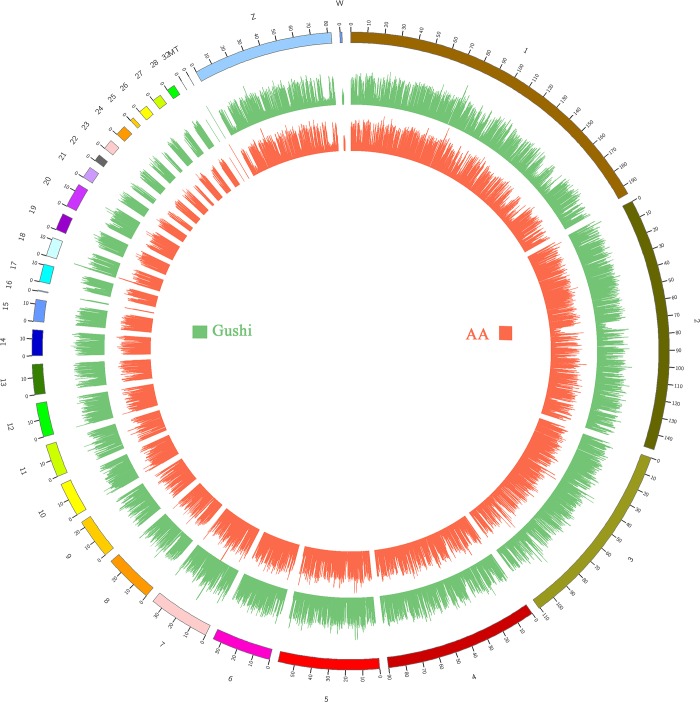
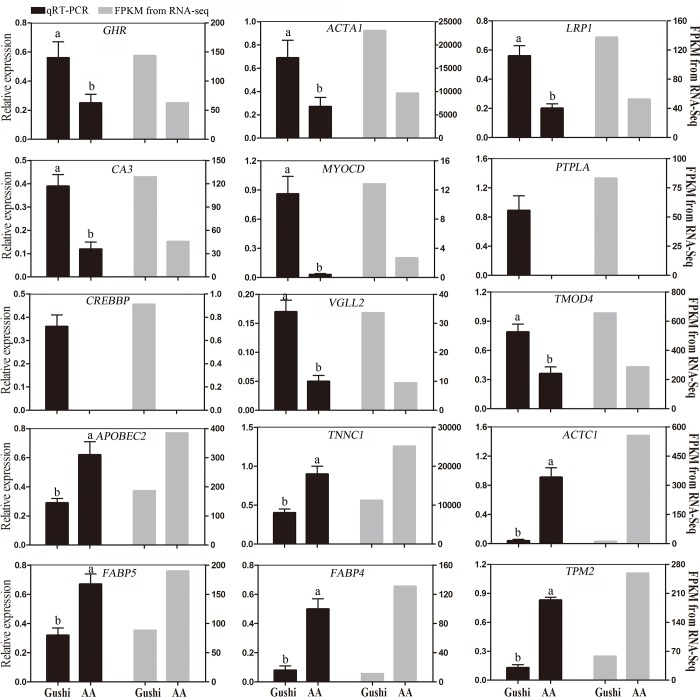
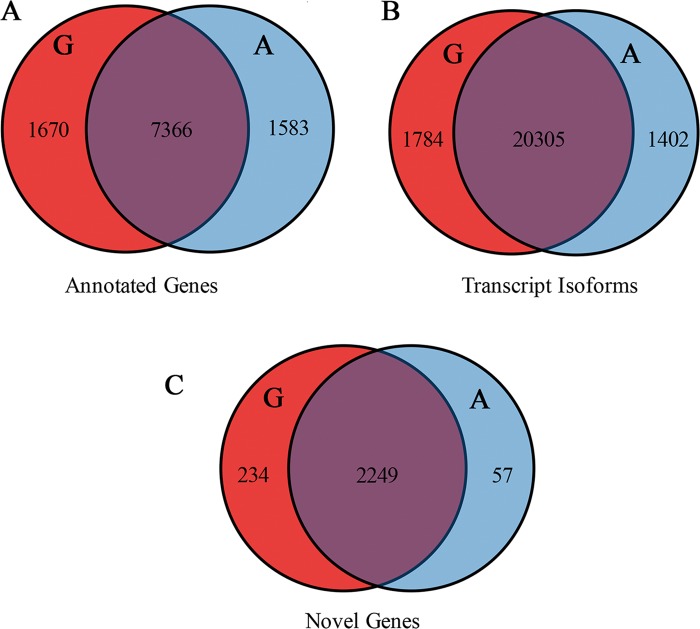
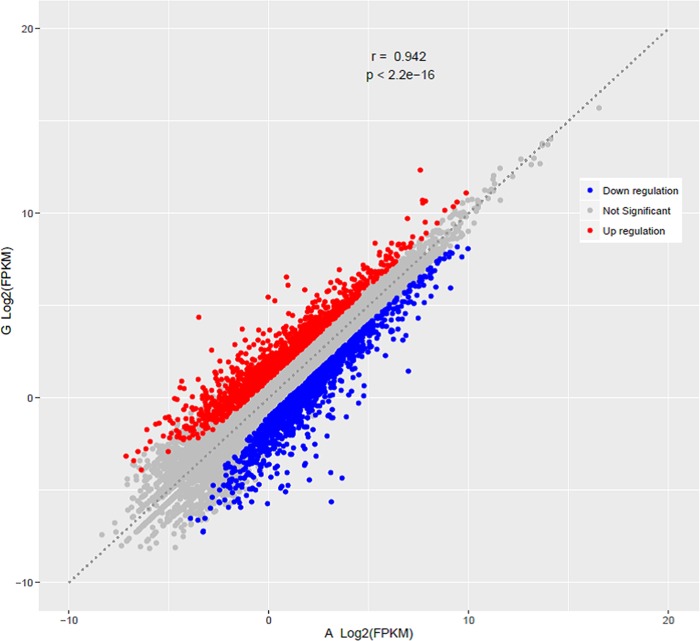
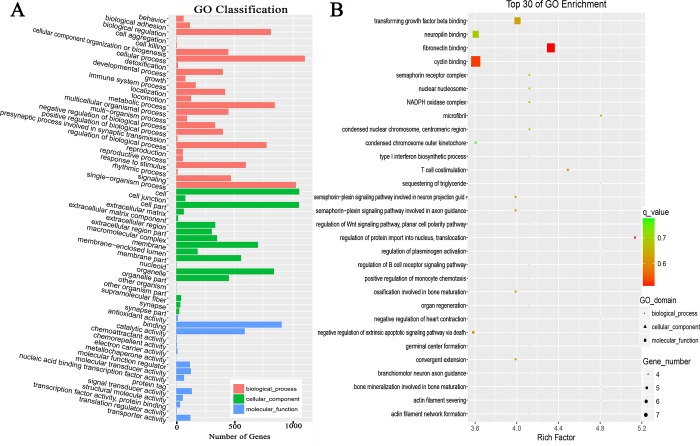
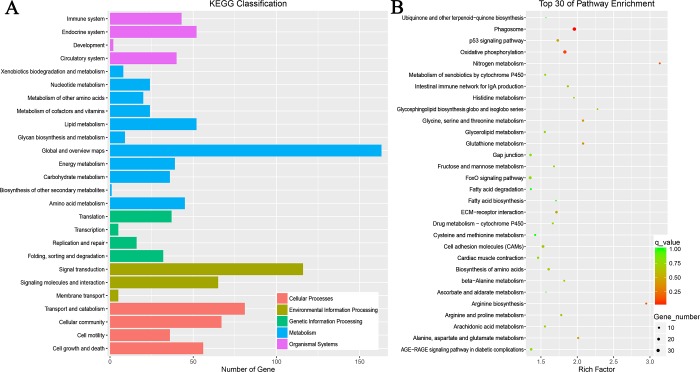
Ribo-Zero RNA-Seq technology was used to analyze the pectoral muscle transcriptomes of Gushi chickens and AA broilers. Compared with AA broilers, 1649 genes with annotated information were significantly differentially expressed (736 upregulated and 913 downregulated) in Gushi chickens with Q≤0.05 (Q is the P-value corrected by multiple assumptions test) at a fold change ≥2 or ≤0.5. In addition, 2540 novel significantly differentially expressed (SDE) genes (1405 upregulated and 1135 downregulated) were discovered. The results showed that the main signal transduction pathways that differed between Gushi chickens and AA broilers were related to amino acid metabolism. Amino acids are important for protein synthesis, and they regulate key metabolic pathways to improve the growth, development and reproduction of organisms.
This study showed that differentially expressed genes in the pectoral tissues of Gushi chickens and AA broilers were related to fat metabolism, which affects meat. Additionally, a large number of novel genes were found that may be involved in fat metabolism and thus may affect the formation of meat, which requires further study. The results of this study provide a reference for further studies of the molecular mechanisms of meat formation.
肉质和肌肉生长的分子机制尚不清楚。本地鸡和商品肉鸡的肉质和生长速度差异很大。Ribo-Zero RNA测序技术是分析转录组以阐明分子机制的有效手段。本研究旨在为不同品种鸡的肉质和生长差异研究提供参考。
采用Ribo-Zero RNA测序技术分析固始鸡和AA肉鸡胸肌转录组。与AA肉鸡相比,在固始鸡中,Q≤0.05(Q是经多重假设检验校正的P值)且变化倍数≥2或≤0.5时,有1649个具有注释信息的基因显著差异表达(736个上调,913个下调)。此外,还发现了2540个新的显著差异表达基因(SDE)(1405个上调,1135个下调)。结果表明,固始鸡和AA肉鸡之间不同的主要信号转导途径与氨基酸代谢有关。氨基酸对蛋白质合成很重要,它们调节关键代谢途径以促进生物体的生长、发育和繁殖。
本研究表明,固始鸡和AA肉鸡胸肌组织中差异表达的基因与脂肪代谢有关,脂肪代谢会影响肉质。此外,发现了大量可能参与脂肪代谢从而可能影响肉形成的新基因,这需要进一步研究。本研究结果为进一步研究肉形成的分子机制提供了参考。