Lawal Oluwasola, Ahmed Waqar M, Nijsen Tamara M E, Goodacre Royston, Fowler Stephen J
Division of Infection, Immunity and Respiratory Medicine, School of Biological Sciences, Faculty of Biology, Medicine and Health, The University of Manchester, Manchester, UK.
Philips Research, Royal Philips B.V., Eindhoven, The Netherlands.
Metabolomics. 2017;13(10):110. doi: 10.1007/s11306-017-1241-8. Epub 2017 Aug 19.
The potential of exhaled breath sampling and analysis has long attracted interest in the areas of medical diagnosis and disease monitoring. This interest is attributed to its non-invasive nature, access to an unlimited sample supply (i.e., breath), and the potential to facilitate a rapid at patient diagnosis. However, progress from laboratory setting to routine clinical practice has been slow. Different methodologies of breath sampling, and the consequent difficulty in comparing and combining data, are considered to be a major contributor to this. To fulfil the potential of breath analysis within clinical and pre-clinical medicine, standardisation of some approaches to breath sampling and analysis will be beneficial.
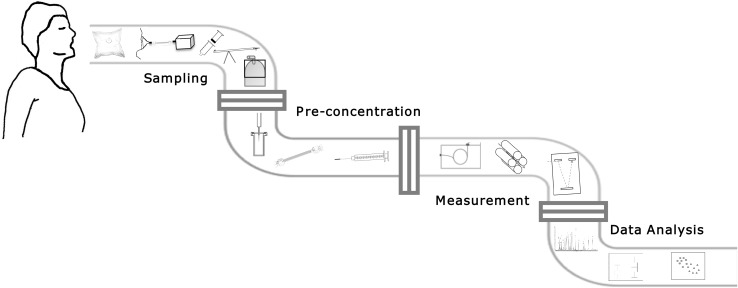
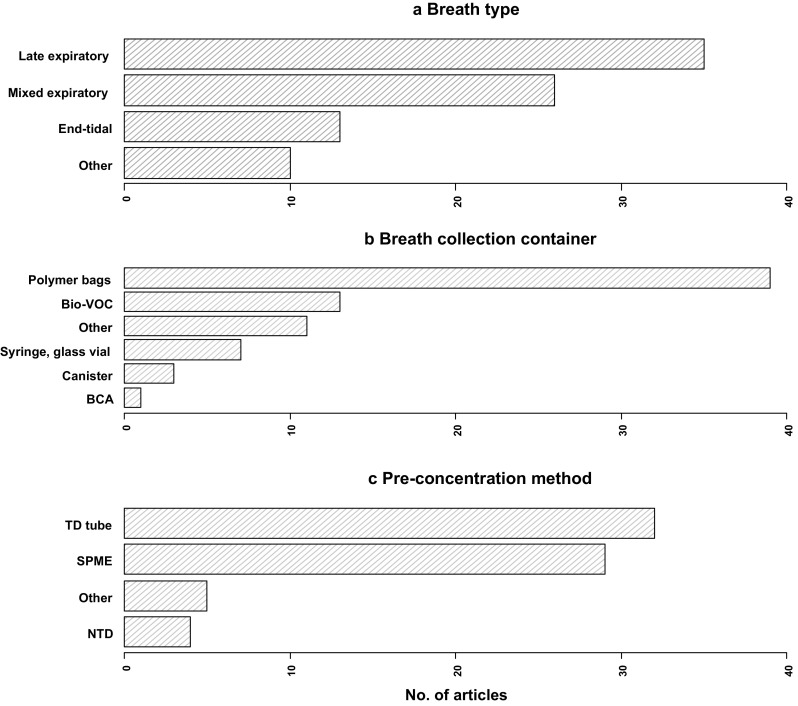
The aim of this review is to investigate the heterogeneity of breath sampling methods by performing an in depth bibliometric search to identify the current state of art in the area. In addition, the review will discuss and critique various breath sampling methods for off-line breath analysis.
Literature search was carried out in databases MEDLINE, BIOSIS, EMBASE, INSPEC, COMPENDEX, PQSCITECH, and SCISEARCH using the STN platform which delivers peer-reviewed articles. Keywords searched for include breath, sampling, collection, pre-concentration, volatile. Forward and reverse search was then performed on initially included articles. The breath collection methodologies of all included articles was subsequently reviewed.
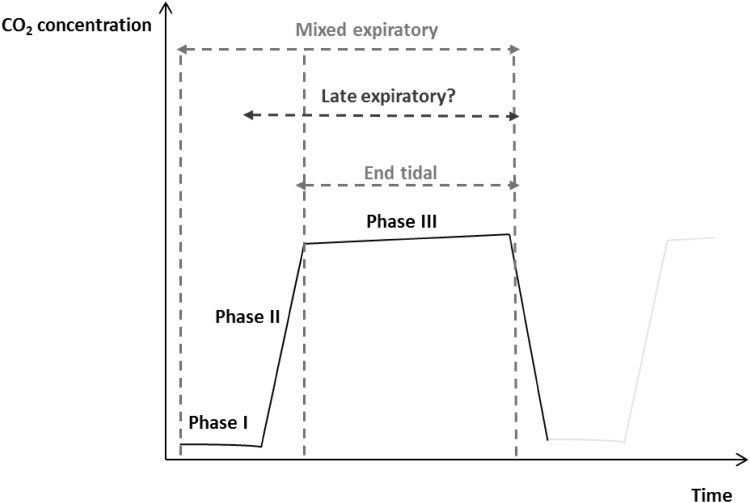
Sampling methods differs between research groups, for example regarding the portion of breath being targeted. Definition of late expiratory breath varies between studies.
Breath analysis is an interdisciplinary field of study using clinical, analytical chemistry, data processing, and metabolomics expertise. A move towards standardisation in breath sampling is currently being promoted within the breath research community with a view to harmonising analysis and thereby increasing robustness and inter-laboratory comparisons.
呼气采样与分析的潜力长期以来一直吸引着医学诊断和疾病监测领域的关注。这种关注归因于其非侵入性、可获取无限样本供应(即呼吸)以及有助于对患者进行快速诊断的潜力。然而,从实验室环境到常规临床实践的进展一直缓慢。呼气采样的不同方法以及随之而来的数据比较和合并困难被认为是造成这种情况的主要原因。为了实现呼气分析在临床和临床前医学中的潜力,对呼气采样和分析的一些方法进行标准化将是有益的。
本综述的目的是通过进行深入的文献计量学搜索来调查呼气采样方法的异质性,以确定该领域的当前技术水平。此外,本综述将讨论和批评用于离线呼气分析的各种呼气采样方法。
使用提供同行评审文章的STN平台,在MEDLINE、BIOSIS、EMBASE、INSPEC、COMPENDEX、PQSCITECH和SCISEARCH数据库中进行文献搜索。搜索的关键词包括呼吸、采样、收集、预浓缩、挥发性。然后对最初纳入的文章进行正向和反向搜索。随后对所有纳入文章的呼气收集方法进行了综述。
不同研究组的采样方法不同,例如在针对的呼吸部分方面。不同研究中对呼气末期呼吸的定义也有所不同。
呼气分析是一个跨学科的研究领域,需要临床、分析化学、数据处理和代谢组学等专业知识。呼气研究界目前正在推动呼气采样的标准化,以期统一分析方法,从而提高稳健性和实验室间的可比性。