Department of Neurological Sciences, Faculty of Medicine, University of Helsinki, Helsinki, Finland.
Department of Children's Clinical Neurophysiology, HUS Medical Imaging Center, Helsinki University Central Hospital, Helsinki, Finland.
Sci Rep. 2017 Oct 11;7(1):12969. doi: 10.1038/s41598-017-13537-3.
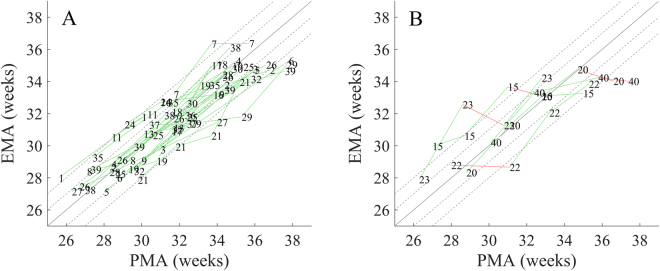
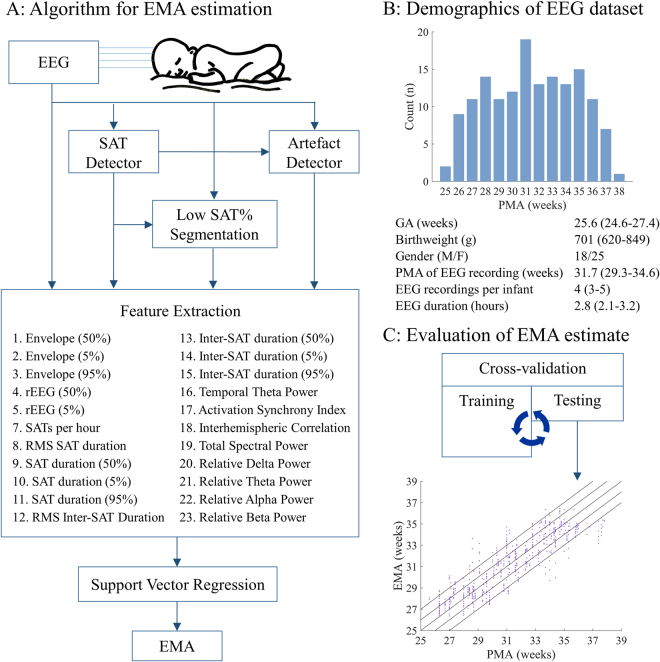
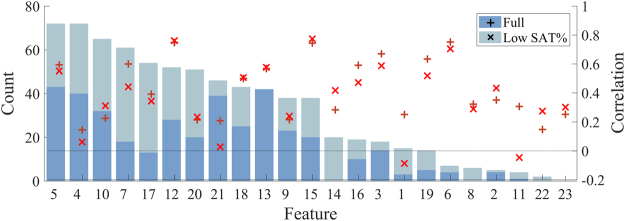
Minimally invasive, automated cot-side tools for monitoring early neurological development can be used to guide individual treatment and benchmark novel interventional studies. We develop an automated estimate of the EEG maturational age (EMA) for application to serial recordings in preterm infants. The EMA estimate was based on a combination of 23 computational features estimated from both the full EEG recording and a period of low EEG activity (46 features in total). The combination function (support vector regression) was trained using 101 serial EEG recordings from 39 preterm infants with a gestational age less than 28 weeks and normal neurodevelopmental outcome at 12 months of age. EEG recordings were performed from 24 to 38 weeks post-menstrual age (PMA). The correlation between the EMA and the clinically determined PMA at the time of EEG recording was 0.936 (95%CI: 0.932-0.976; n = 39). All infants had an increase in EMA between the first and last EEG recording and 57/62 (92%) of repeated measures within an infant had an increasing EMA with PMA of EEG recording. The EMA is a surrogate measure of age that can accurately determine brain maturation in preterm infants.
微创、自动化的床旁工具可用于监测早期神经发育,指导个体化治疗并为新的介入性研究提供基准。我们开发了一种自动估计脑电图成熟年龄(EMA)的方法,用于对早产儿的连续记录进行分析。EMA 的估计基于从整个脑电图记录和一段低脑电图活动期(共 46 个特征)中估计的 23 个计算特征的组合。组合函数(支持向量回归)使用 39 名胎龄小于 28 周且在 12 个月时神经发育正常的早产儿的 101 个连续脑电图记录进行训练。脑电图记录在出生后 24 至 38 周的胎龄(PMA)之间进行。EMA 与脑电图记录时临床确定的 PMA 之间的相关性为 0.936(95%CI:0.932-0.976;n=39)。所有婴儿的 EMA 均在第一次和最后一次脑电图记录之间增加,62 次脑电图记录中有 57 次(92%)的重复测量值随着脑电图记录时的 PMA 而增加。EMA 是年龄的替代指标,可准确确定早产儿的大脑成熟度。