Fernández-Crespo Emma, Navarro Jose A, Serra-Soriano Marta, Finiti Iván, García-Agustín Pilar, Pallás Vicente, González-Bosch Carmen
Grupo de Bioquímica y Biotecnología, Área de Fisiología Vegetal, Universitat Jaume I, Castellon de la Plana, Spain.
Instituto de Biología Molecular y Celular de Plantas (IBMCP), UPV-CSIC, Valencia, Spain.
Front Plant Sci. 2017 Oct 20;8:1793. doi: 10.3389/fpls.2017.01793. eCollection 2017.
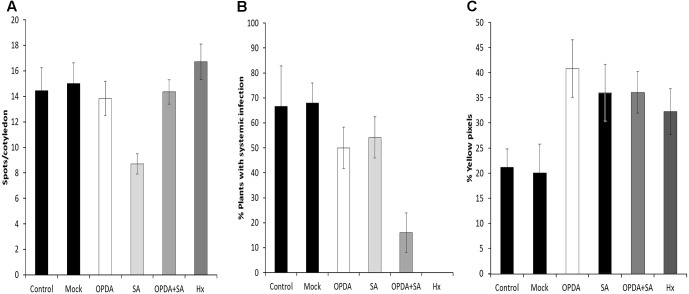
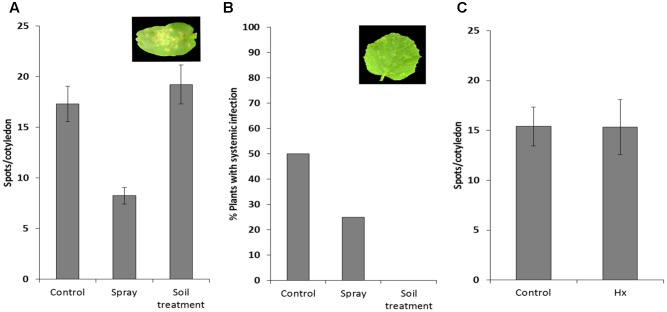
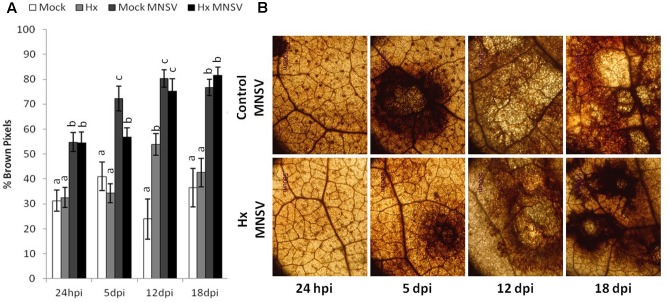
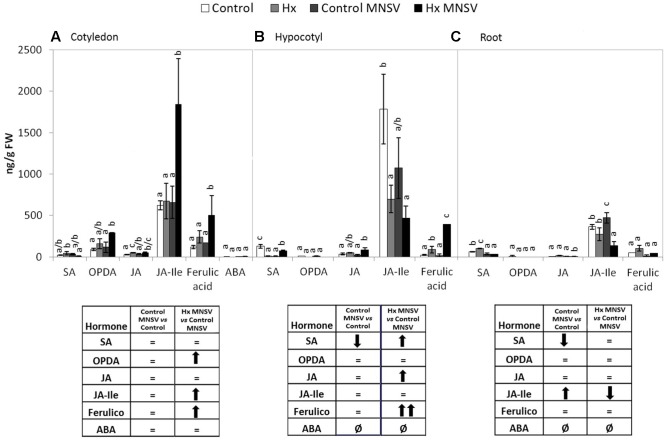
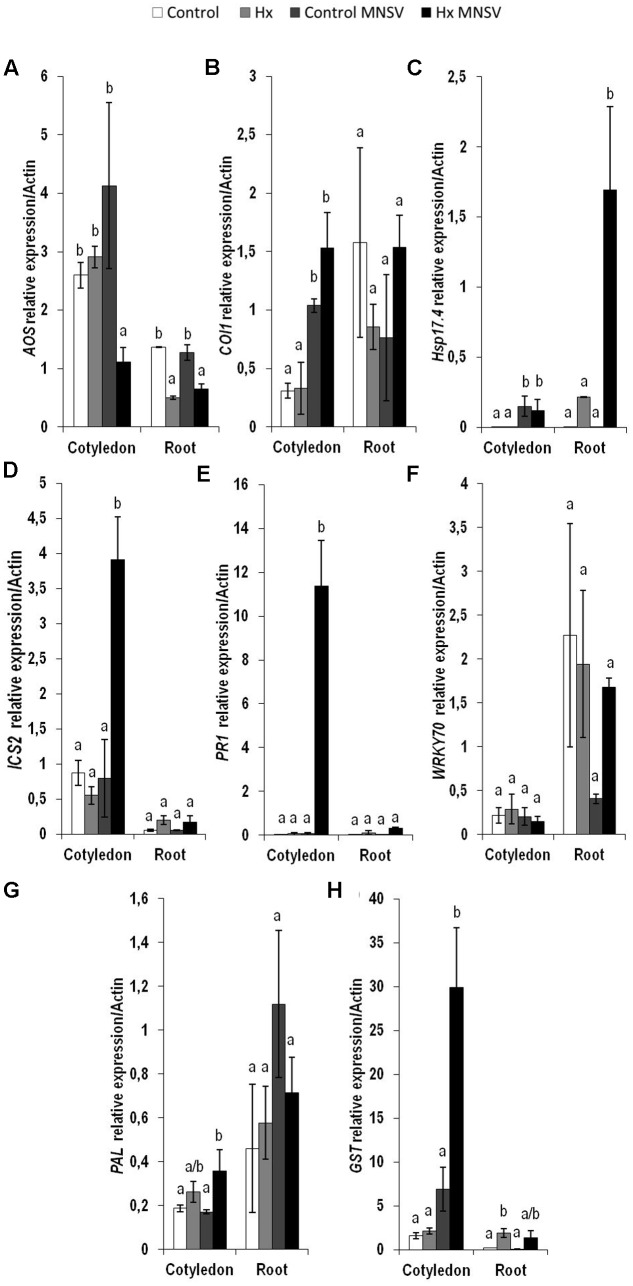
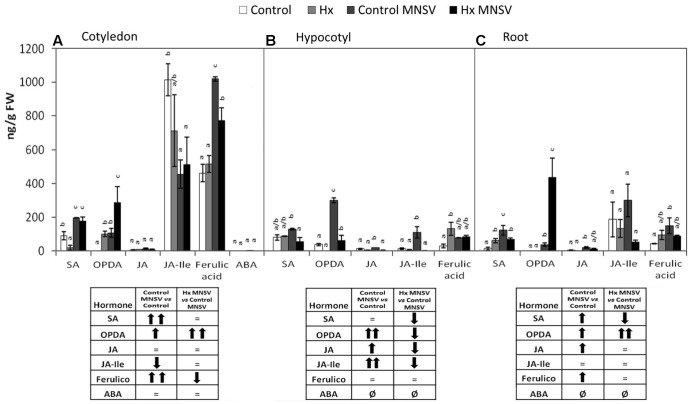
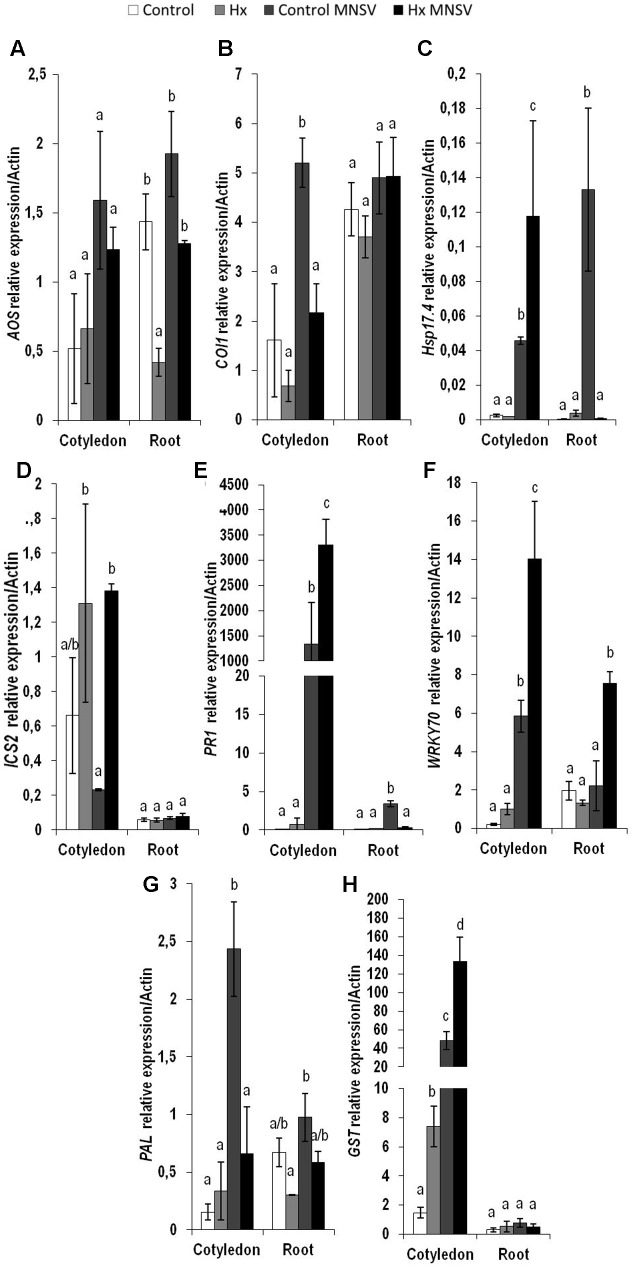
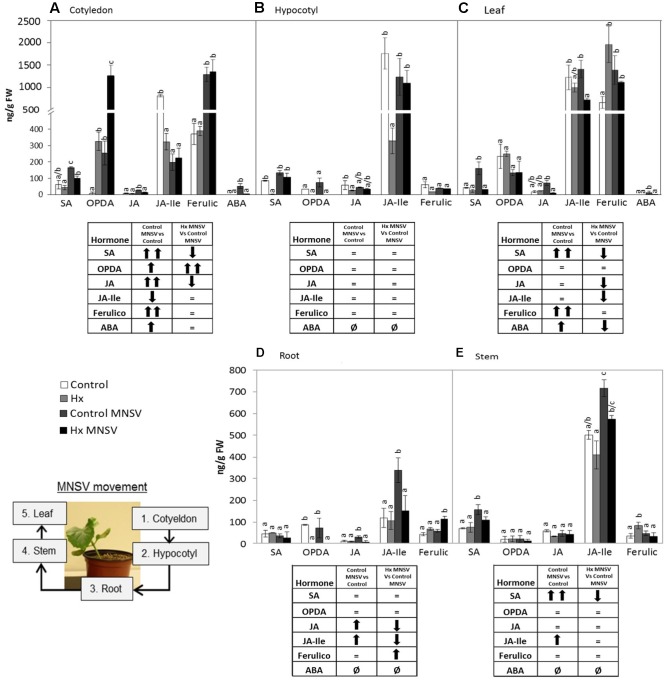
Unlike fungal and bacterial diseases, no direct method is available to control viral diseases. The use of resistance-inducing compounds can be an alternative strategy for plant viruses. Here we studied the basal response of melon to (MNSV) and demonstrated the efficacy of hexanoic acid (Hx) priming, which prevents the virus from systemically spreading. We analysed callose deposition and the hormonal profile and gene expression at the whole plant level. This allowed us to determine hormonal homeostasis in the melon roots, cotyledons, hypocotyls, stems and leaves involved in basal and hexanoic acid-induced resistance (Hx-IR) to MNSV. Our data indicate important roles of salicylic acid (SA), 12-oxo-phytodienoic acid (OPDA), jasmonic-isoleucine, and ferulic acid in both responses to MNSV. The hormonal and metabolites balance, depending on the time and location associated with basal and Hx-IR, demonstrated the reprogramming of plant metabolism in MNSV-inoculated plants. The treatment with both SA and OPDA prior to virus infection significantly reduced MNSV systemic movement by inducing callose deposition. This demonstrates their relevance in Hx-IR against MNSV and a high correlation with callose deposition. Our data also provide valuable evidence to unravel priming mechanisms by natural compounds.
与真菌和细菌疾病不同,目前尚无直接控制病毒疾病的方法。使用诱导抗性的化合物可能是针对植物病毒的一种替代策略。在这里,我们研究了甜瓜对甜瓜坏死斑点病毒(MNSV)的基础反应,并证明了己酸(Hx)引发的功效,它可防止病毒系统性传播。我们在全株水平分析了胼胝质沉积、激素谱和基因表达。这使我们能够确定甜瓜根、子叶、下胚轴、茎和叶中参与对MNSV的基础抗性和己酸诱导抗性(Hx-IR)的激素稳态。我们的数据表明水杨酸(SA)、12-氧代植物二烯酸(OPDA)、茉莉酸异亮氨酸和阿魏酸在对MNSV的两种反应中都起着重要作用。激素和代谢物的平衡,取决于与基础抗性和Hx-IR相关的时间和位置,证明了接种MNSV的植物中植物代谢的重新编程。在病毒感染前用SA和OPDA处理可通过诱导胼胝质沉积显著减少MNSV的系统性移动。这证明了它们在针对MNSV的Hx-IR中的相关性以及与胼胝质沉积的高度相关性。我们的数据还为揭示天然化合物的引发机制提供了有价值的证据。