Department of Neurology, Medical University of South Carolina, Charleston, SC 29425.
Department of Communication Sciences and Disorders, University of South Carolina, Columbia, SC 29208.
eNeuro. 2017 Nov 6;4(5). doi: 10.1523/ENEURO.0204-17.2017. eCollection 2017 Sep-Oct.
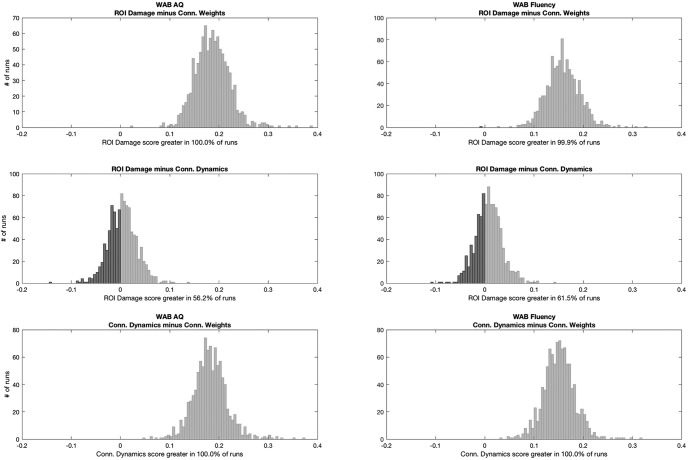
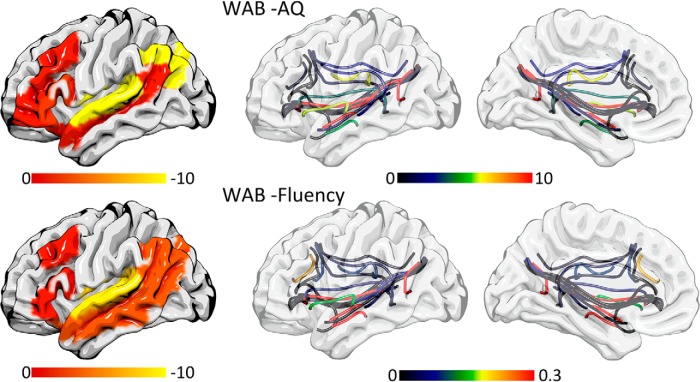
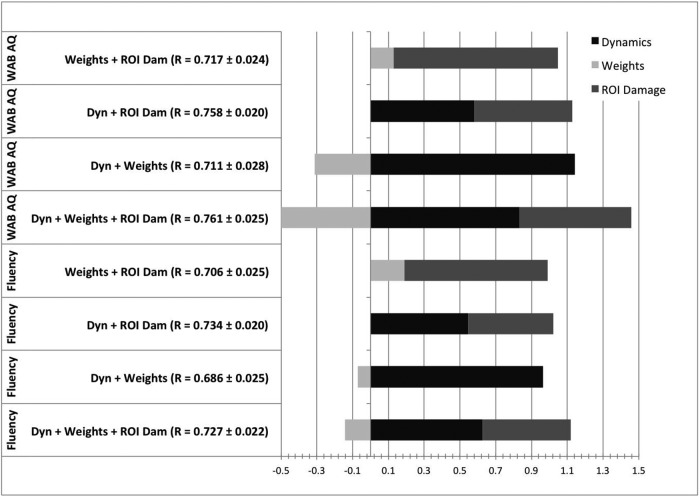
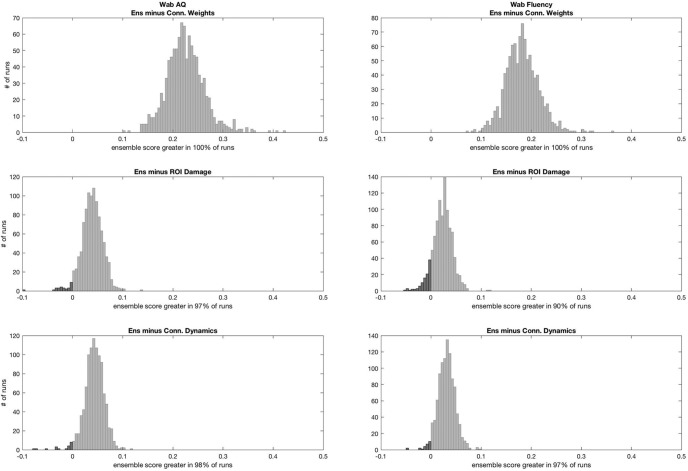
Lesion-symptom mapping is often employed to define brain structures that are crucial for human behavior. Even though poststroke deficits result from gray matter damage as well as secondary white matter loss, the impact of structural disconnection is overlooked by conventional lesion-symptom mapping because it does not measure loss of connectivity beyond the stroke lesion. This study describes how traditional lesion mapping can be combined with structural connectome lesion symptom mapping (CLSM) and connectome dynamics lesion symptom mapping (CDLSM) to relate residual white matter networks to behavior. Using data from a large cohort of stroke survivors with aphasia, we observed improved prediction of aphasia severity when traditional lesion symptom mapping was combined with CLSM and CDLSM. Moreover, only CLSM and CDLSM disclosed the importance of temporal-parietal junction connections in aphasia severity. In summary, connectome measures can uniquely reveal brain networks that are necessary for function, improving the traditional lesion symptom mapping approach.
病灶-症状映射常用于定义对人类行为至关重要的大脑结构。尽管中风后的缺陷不仅源于灰质损伤,还源于继发性的白质损失,但传统的病灶-症状映射却忽略了结构连接中断的影响,因为它无法测量中风病灶之外的连通性损失。本研究描述了如何将传统的病灶映射与结构连接组病灶症状映射(CLSM)和连接组动态病灶症状映射(CDLSM)相结合,将残余的白质网络与行为联系起来。我们使用来自一大群伴有失语症的中风幸存者的数据,观察到当传统的病灶症状映射与 CLSM 和 CDLSM 相结合时,失语症严重程度的预测得到了改善。此外,只有 CLSM 和 CDLSM 揭示了颞顶联合区连接在失语症严重程度中的重要性。总之,连接组测量可以独特地揭示对功能必不可少的大脑网络,从而改进传统的病灶症状映射方法。