Unit of Health-Care Epidemiology, Big Data Institute, Li Ka Shing Centre for Health Information and Discovery, Nuffield Department of Population Health, University of Oxford, Oxford, OX3 7LF, UK.
Diabetologia. 2018 Mar;61(3):616-625. doi: 10.1007/s00125-017-4493-y. Epub 2017 Nov 11.
AIMS/HYPOTHESIS: With genetics thought to explain only 40-50% of the total risk of type 1 diabetes, environmental risk factors in early life have been proposed. Previous findings from studies of type 1 diabetes incidence by birthweight and gestational age at birth have been inconsistent. This study aimed to investigate the relationships between birthweight, gestational age at birth and subsequent type 1 diabetes in England.
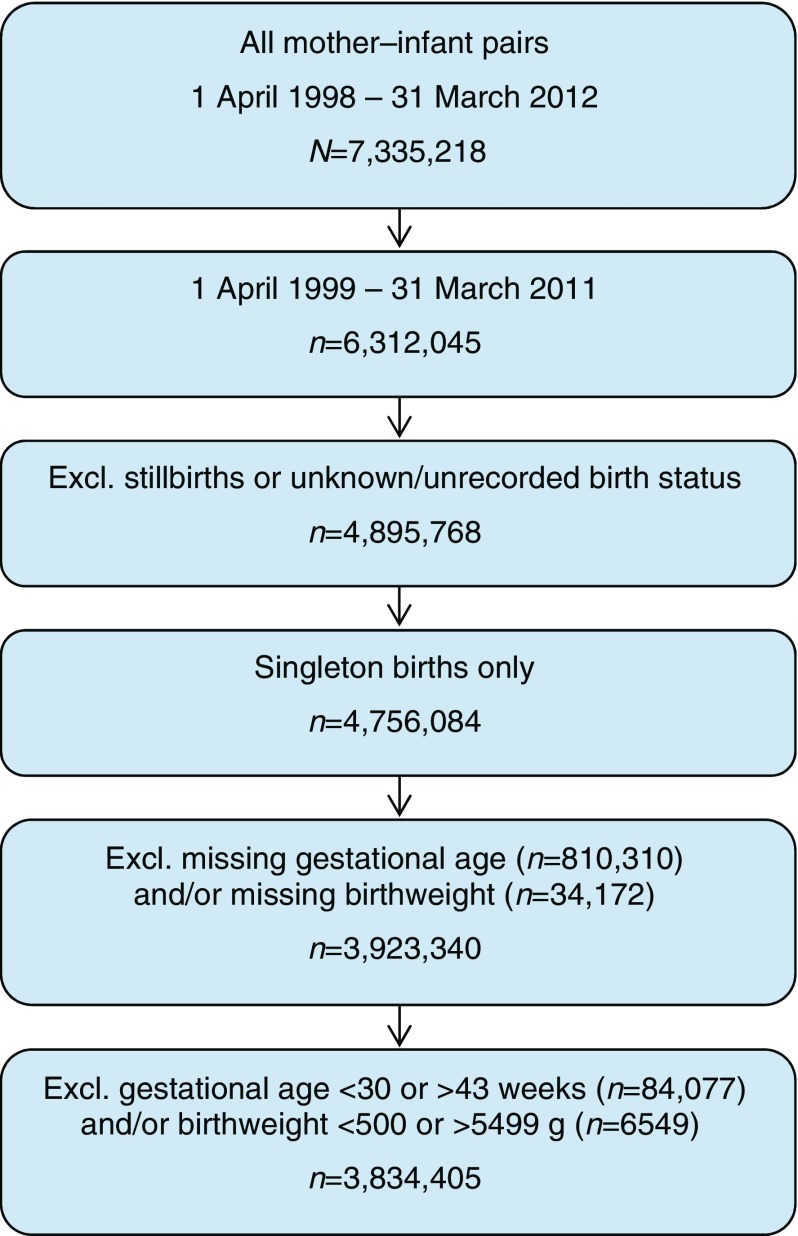
Data were obtained from a population-based database comprising linked mother-infant pairs using English national Hospital Episode Statistics from 1998 to 2012. In total, 3,834,405 children, categorised by birthweight and gestational age at birth, were followed up through record linkage to compare their incidence of type 1 diabetes through calculation of multivariable-adjusted HRs.
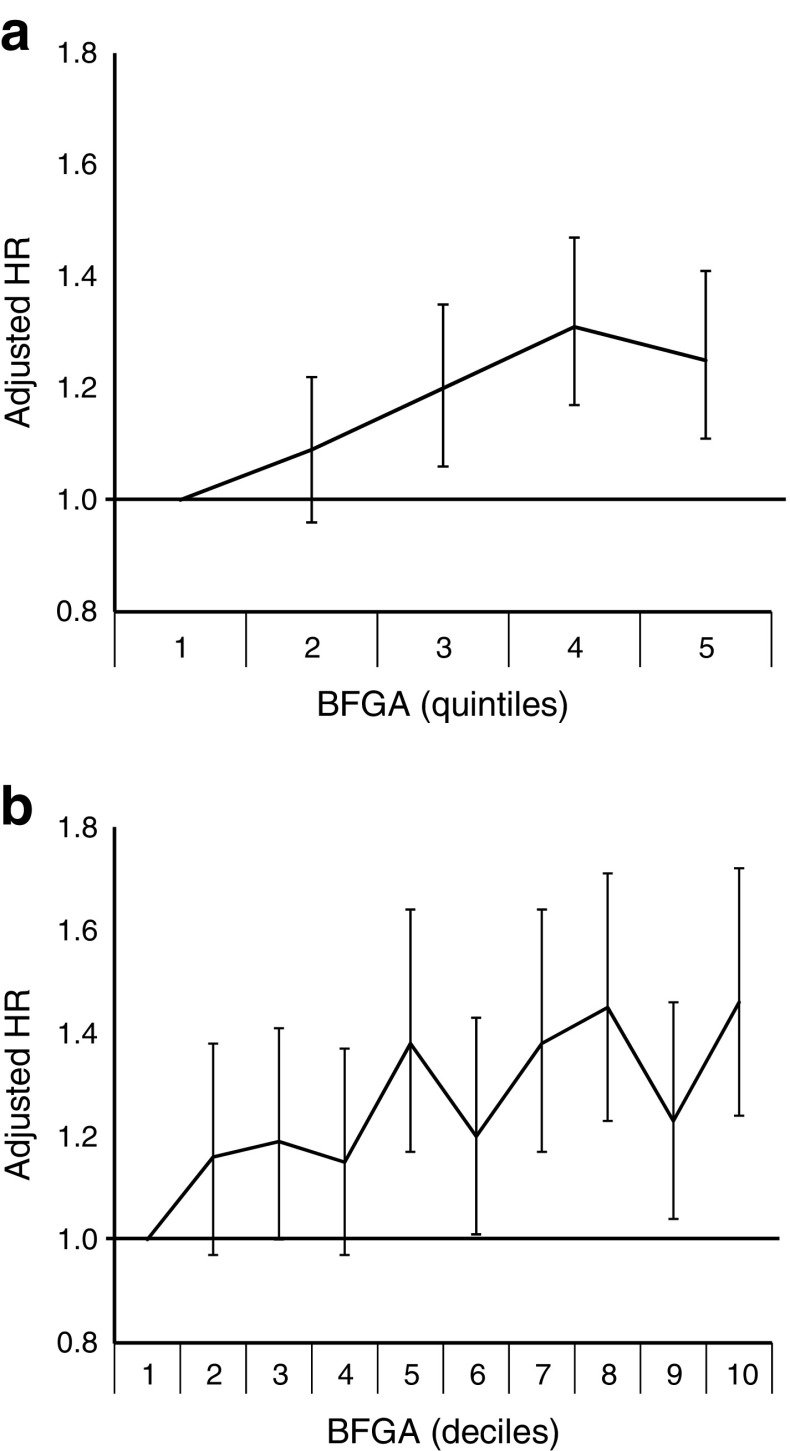
Out of 3,834,405 children, 2969 had a subsequent hospital diagnosis of type 1 diabetes in childhood. Children born preterm (<37 weeks) or early term (37-38 weeks) experienced significantly higher incidence of type 1 diabetes than full term children (39-40 weeks) (HR 1.19 [95% CI 1.03, 1.38] and 1.27 [95% CI 1.16, 1.39], respectively). Children born at higher than average birthweight (3500-3999 g or 4000-5499 g) after controlling for gestational age experienced higher incidence of type 1 diabetes than children born at medium birthweight (3000-3499 g) (HR 1.13 [95% CI 1.03, 1.23] and 1.16 [95% CI 1.02, 1.31], respectively), while children at low birthweight (<2500 g) experienced lower incidence (0.81 [95% CI 0.67, 0.98]), signifying a statistically significant trend (p trend 0.001).
CONCLUSIONS/INTERPRETATION: High birthweight for gestational age and low gestational age at birth are both independently associated with subsequent type 1 diabetes. These findings help contextualise the debate about the potential role of gestational and early life environmental risk factors in the pathogenesis of type 1 diabetes, including the potential roles of insulin sensitivity and gut microbiota.
目的/假设:由于遗传因素仅能解释 1 型糖尿病总风险的 40-50%,因此人们提出了生命早期的环境危险因素。先前关于出生体重和胎龄与 1 型糖尿病发病率的研究结果并不一致。本研究旨在调查英国出生体重、胎龄与随后发生 1 型糖尿病之间的关系。
本研究的数据来自一个基于人群的数据库,该数据库由英国国家医院住院统计数据通过母婴配对获得,时间范围为 1998 年至 2012 年。共有 3834405 名儿童按出生体重和胎龄进行分类,通过记录链接进行随访,以计算多变量调整后的 HR 来比较其 1 型糖尿病的发病率。
在 3834405 名儿童中,有 2969 名儿童在儿童时期被诊断患有 1 型糖尿病。早产儿(<37 周)或早期早产儿(37-38 周)比足月儿(39-40 周)的 1 型糖尿病发病率显著更高(HR 1.19 [95%CI 1.03, 1.38] 和 1.27 [95%CI 1.16, 1.39])。在控制胎龄后,出生体重高于平均水平(3500-3999 g 或 4000-5499 g)的儿童比出生体重处于中等水平(3000-3499 g)的儿童更易发生 1 型糖尿病(HR 1.13 [95%CI 1.03, 1.23] 和 1.16 [95%CI 1.02, 1.31]),而出生体重较低(<2500 g)的儿童的发病率较低(0.81 [95%CI 0.67, 0.98]),表明存在统计学显著趋势(p 趋势<0.001)。
结论/解释:胎龄的高出生体重和低胎龄与随后发生的 1 型糖尿病均独立相关。这些发现有助于理解关于胎龄和生命早期环境危险因素在 1 型糖尿病发病机制中的潜在作用的争论,包括胰岛素敏感性和肠道微生物群的潜在作用。