Institute for Biomedical Ethics, Faculty of Medicine, University of Basel, Bernoullistrasse 28, -4056, Basel, CH, Switzerland.
Health Ethics & Policy Lab, Department of Health Sciences & Technology, ETH Zürich, Zürich, Switzerland.
J Neuroeng Rehabil. 2017 Nov 14;14(1):115. doi: 10.1186/s12984-017-0325-z.
Rapid advancements in rehabilitation science and the widespread application of engineering techniques are opening the prospect of a new phase of clinical and commercial maturity for Neuroengineering, Assistive and Rehabilitation Technologies (NARTs). As the field enters this new phase, there is an urgent need to address and anticipate the ethical implications associated with novel technological opportunities, clinical solutions, and social applications.
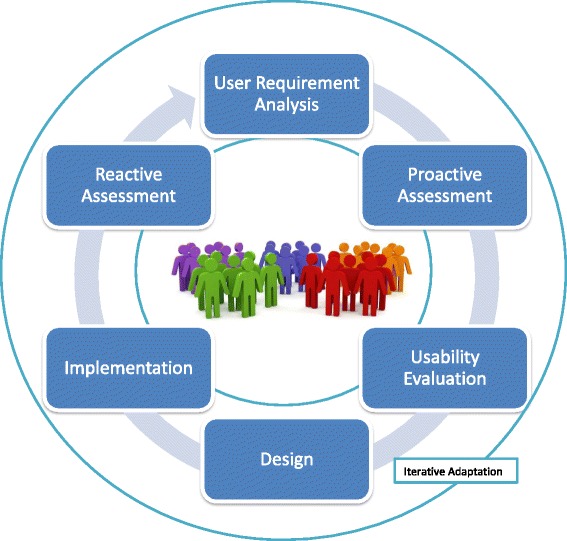
In this paper we review possible approaches to the ethics of NART, and propose a framework for ethical design and development, which we call the Proactive Ethical Design (PED) framework.
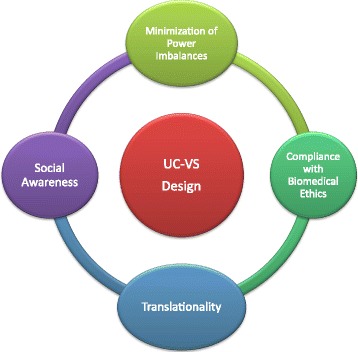
A viable ethical framework for neuroengineering, assistive and rehabilitation technology should be characterized by the convergence of user-centered and value-sensitive approaches to product design through a proactive mode of ethical evaluation. We propose four basic normative requirements for the realization of this framework: minimization of power imbalances, compliance with biomedical ethics, translationality and social awareness. The aims and values of the CYBATHLON competition provide an operative model of this ethical framework and could drive an ethical shift in neuroengineering and rehabilitation.
康复科学的快速发展和工程技术的广泛应用,为神经工程、辅助和康复技术(NARTs)的临床和商业成熟新阶段开辟了前景。随着该领域进入这一新阶段,迫切需要解决和预测与新技术机会、临床解决方案和社会应用相关的伦理问题。
本文回顾了 NART 的伦理学可能方法,并提出了一个伦理设计和开发框架,我们称之为主动伦理设计(PED)框架。
神经工程、辅助和康复技术的可行伦理框架应通过主动的伦理评估模式,将以用户为中心和重视价值的方法相结合,以产品设计为特征。我们提出了实现这一框架的四个基本规范要求:最小化权力失衡、符合生物医学伦理、可转化性和社会意识。CYBATHLON 竞赛的目标和价值观为这一伦理框架提供了一个可行的模型,并可能推动神经工程和康复领域的伦理转变。