Zunic Lejla, Skrbo Armin, Dobraca Amra
Faculty of Medicine, University of Zenica, Zenica, Bosnia and Herzegovina.
Faculty of Pharmacy, University of Sarajevo, Sarajevo, Bosnia and Herzegovina.
Mater Sociomed. 2017 Dec;29(4):291-300. doi: 10.5455/msm.2017.29.291-300.
Pharmacy and medicine belong to the oldest human activities, so the development of these sciences is closely related to the socio-economic, cultural and religious opportunities of the nations within which they have been developing.
To present the historical influence of pharmacy on the development of the human being from its very beginning; To present the historical link between pharmaceutical and medical activity, as well as early development of independent pharmaceutical activity; To present the historical influence of pharmacists on the development of botany and pharmacognosy and to present the historical influence of the first written herbarium and incunabula on the development of pharmacognosy.
The article has a descriptive character, and represents a systematic review of the literature dealing with this topic.
The roots of pharmacy started to the very beginning of human civilization, when people collected various medicinal herbs and try to alleviate their health problems, pain and suffering. The scientific foundations of the pharmacy were set up in the antique period by the books of Dioskurides and Galen, and its further development continued in the mid-century, at the beginning by rewriting famous parts of ancient literature, and later by writing new discoveries (the base of this development was represented by South Italy) so that in 1240, for the first time in history, came the separation of doctors and pharmacists, and at the beginning of the 13th century the opening of the first pharmacy.
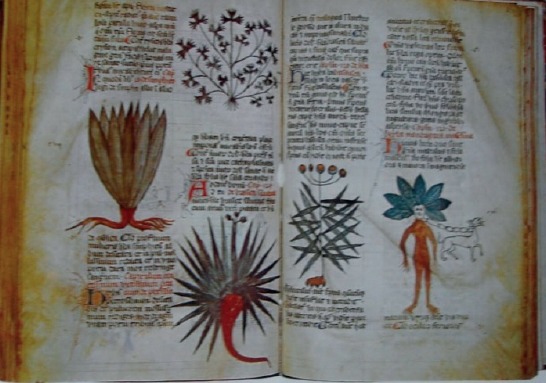
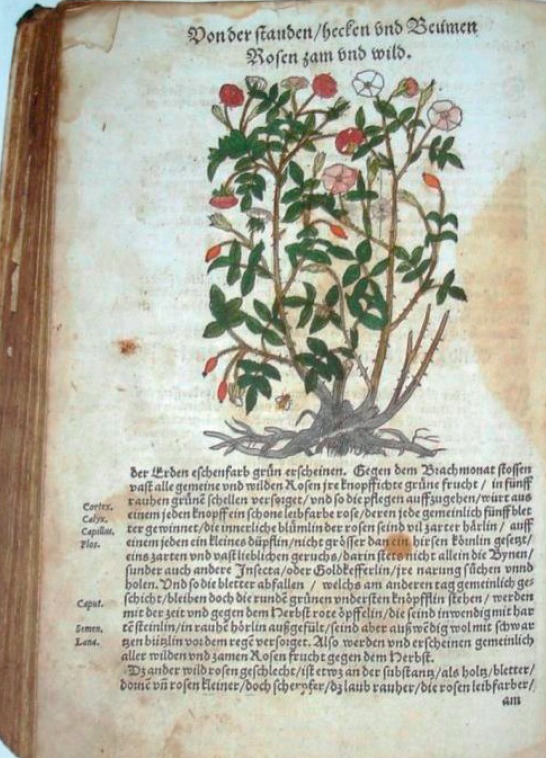
The effort to maintain knowledge of medicinal herbs and its practical application has led to the writing of a large number of recipes books, the forerunners of today's pharmacopeia, while the aspiration to classify medicinal herbs, and the desire to present medicinal herbs to ordinary people, has led to a large number of herbaria, making the knowledge and descriptions of plants available to many, not just the nobility. Descriptions of plants in herbaria and later in incunabula lead to the development of pharmacognosy, and to the opening of the first Department for pharmacognosy, 1545 in Padua.
药学与医学属于人类最古老的活动,因此这些学科的发展与它们所处国家的社会经济、文化和宗教机遇紧密相关。
展现药学从起源之初对人类发展的历史影响;呈现药学与医学活动之间的历史联系以及独立药学活动的早期发展;展现药剂师对植物学和生药学发展的历史影响,并呈现首部书面植物标本集和早期印刷书籍对生药学发展的历史影响。
本文具有描述性,是对涉及该主题文献的系统综述。
药学的根源可追溯至人类文明之初,当时人们采集各种草药以缓解健康问题、疼痛和苦难。药学的科学基础在古代由狄奥斯科里德斯和盖伦的著作奠定,其进一步发展在中世纪中期得以延续,起初是重写古代文献的著名篇章,后来则是记录新发现(这一发展的基础是意大利南部),以至于在1240年,历史上首次出现了医生与药剂师的分离,13世纪初第一家药房开业。
保存草药知识及其实际应用的努力催生了大量食谱书籍,即当今药典的前身,而对草药进行分类以及向普通人展示草药的愿望则催生了大量植物标本集,使植物的知识和描述能为许多人所用,而非仅限于贵族。植物标本集以及后来早期印刷书籍中对植物的描述推动了生药学的发展,并促成了1545年在帕多瓦开设首个生药学系。