Alzahrani Khalid E, Niazy Abdurahman A, Alswieleh Abdullah M, Wahab Rizwan, El-Toni Ahmed M, Alghamdi Hamdan S
Department of Physics and Astronomy, King Saud University, Riyadh, Kingdom of Saudi Arabia.
King Abdullah Institute for Nanotechnology, King Saud University, Riyadh, Kingdom of Saudi Arabia.
Int J Nanomedicine. 2017 Dec 20;13:77-87. doi: 10.2147/IJN.S154218. eCollection 2018.
The increasing resistance of pathogenic bacteria to antibiotics is a challenging worldwide health problem that has led to the search for new and more efficient antibacterial agents. Nanotechnology has proven to be an effective tool for the fight against bacteria.
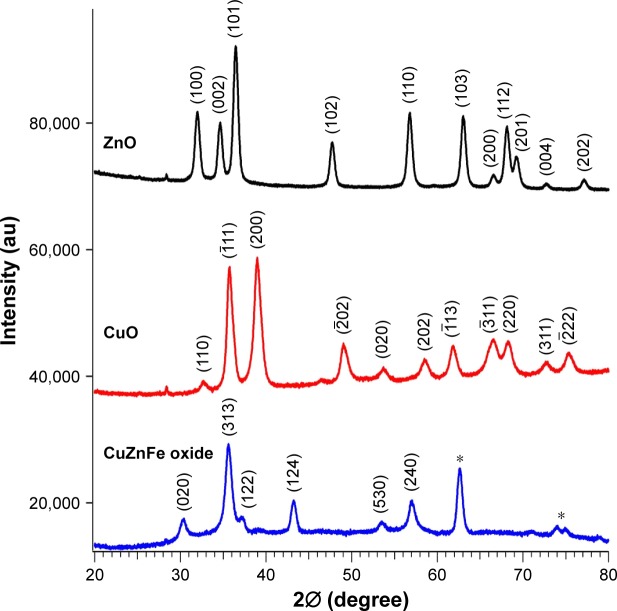
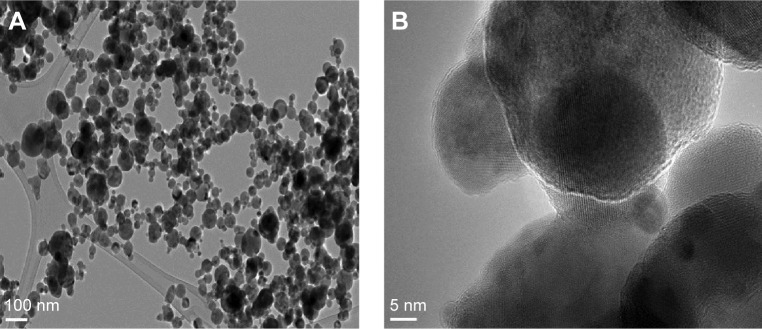
In this paper, we present the synthesis and traits of trimetal (CuZnFe) oxide nanoparticles (NPs) using X-ray diffraction, high-resolution transmission electron microscopy, and energy dispersive x-ray spectroscopy. We evaluated the antibacterial activity of these NPs against gram-negative and gram-positive and then compared it to that of their pure single-metal oxide components CuO and ZnO.
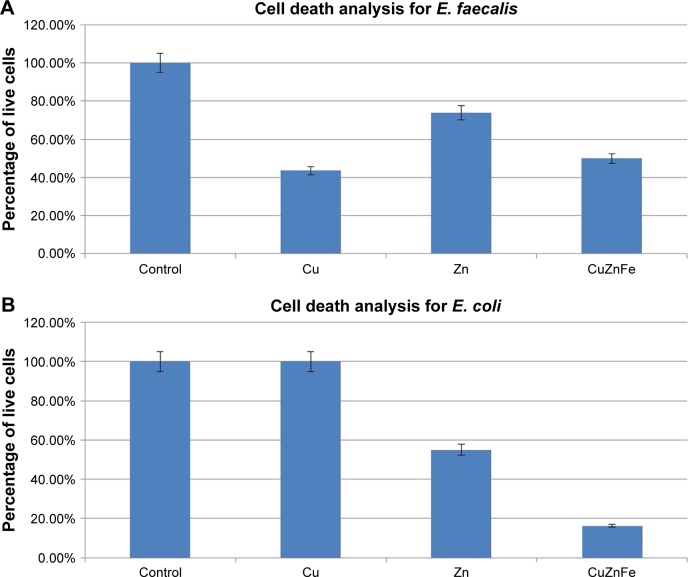
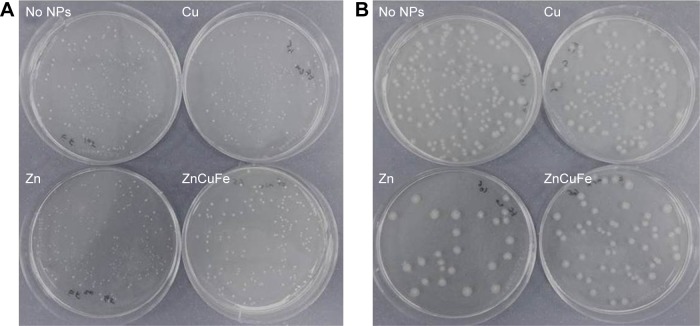
Our study showed that the antibacterial activity of the trimetal oxide NPs was greater against . than against . . Overall, the antimicrobial effect of trimetal NPs is between those of pure ZnO and CuO nanoparticles, which may mean that their cytotoxicity is also between that of pure ZnO and CuO NPs, making them potential antibiotics. However, the cytotoxicity of trimetal NPs to mammalian cells needs to be verified.
The combination of three metal oxide NPs (ZnO, CuO, and FeO) in one multimetal (CuZnFe) oxide NPs will enhance the therapeutic strategy against a wide range of microbial infections. Bacteria are unlikely to develop resistance against this new NP because bacteria must go through a series of mutations to become resistant to the trimetal oxide NP. Therefore, this NP can combat existing and emerging bacterial infections.
致病细菌对抗生素的耐药性不断增加是一个全球性的挑战性健康问题,这促使人们寻找新的、更有效的抗菌剂。纳米技术已被证明是对抗细菌的有效工具。
在本文中,我们使用X射线衍射、高分辨率透射电子显微镜和能量色散X射线光谱法展示了三金属(铜锌铁)氧化物纳米颗粒(NPs)的合成与特性。我们评估了这些纳米颗粒对革兰氏阴性菌和革兰氏阳性菌的抗菌活性,然后将其与纯单金属氧化物成分氧化铜和氧化锌的抗菌活性进行比较。
我们的研究表明,三金属氧化物纳米颗粒对[具体革兰氏阴性菌名称]的抗菌活性比对[具体革兰氏阳性菌名称]的抗菌活性更强。总体而言,三金属纳米颗粒的抗菌效果介于纯氧化锌和氧化铜纳米颗粒之间,这可能意味着它们的细胞毒性也介于纯氧化锌和氧化铜纳米颗粒之间,使其成为潜在的抗生素。然而,三金属纳米颗粒对哺乳动物细胞的细胞毒性需要得到验证。
将三种金属氧化物纳米颗粒(氧化锌、氧化铜和氧化亚铁)组合在一种多金属(铜锌铁)氧化物纳米颗粒中,将增强针对多种微生物感染的治疗策略。细菌不太可能对这种新的纳米颗粒产生耐药性,因为细菌必须经历一系列突变才能对三金属氧化物纳米颗粒产生耐药性。因此,这种纳米颗粒可以对抗现有的和新出现的细菌感染。