Spatial Epidemiology Lab. Université Libre de Bruxelles, Brussels, Belgium.
Control of Infectious Diseases Department, Institute of Public Health, Tirana, Albania.
PLoS Negl Trop Dis. 2018 Feb 12;12(2):e0006236. doi: 10.1371/journal.pntd.0006236. eCollection 2018 Feb.
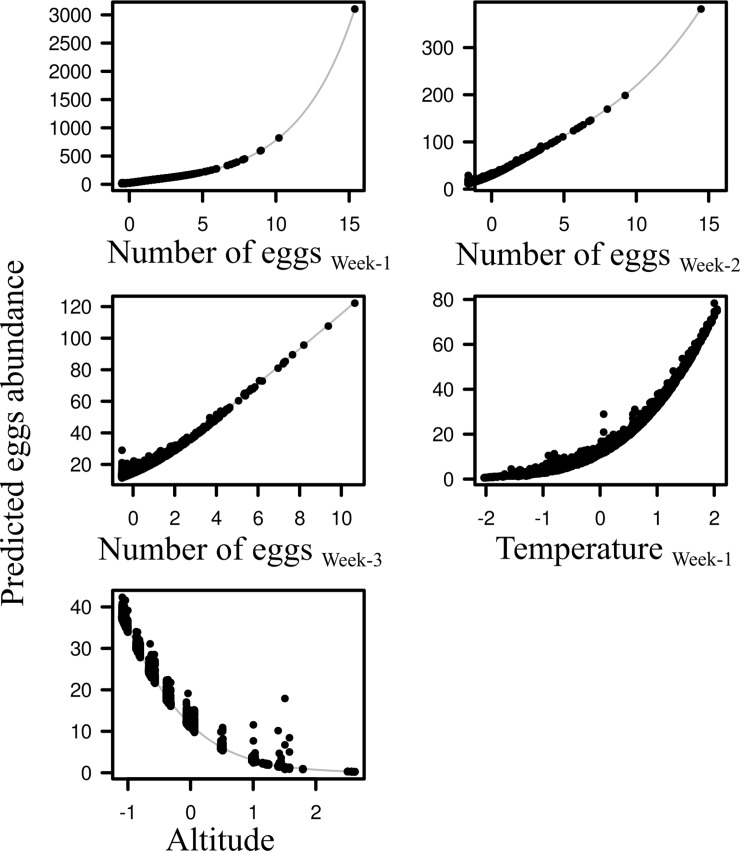
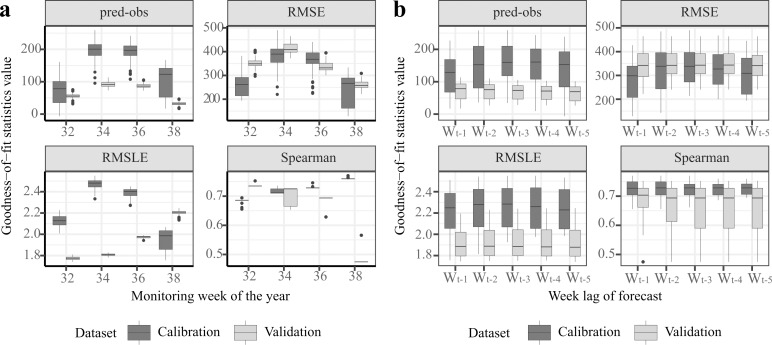
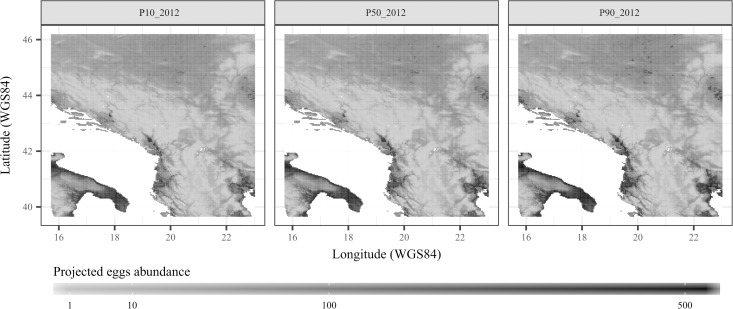
The increasing spread of the Asian tiger mosquito, Aedes albopictus, in Europe and US raises public health concern due to the species competence to transmit several exotic human arboviruses, among which dengue, chikungunya and Zika, and urges the development of suitable modeling approach to forecast the spatial and temporal distribution of the mosquito. Here we developed a dynamical species distribution modeling approach forecasting Ae. albopictus eggs abundance at high spatial (0.01 degree WGS84) and temporal (weekly) resolution over 10 Balkan countries, using temperature times series of Modis data products and altitude as input predictors. The model was satisfactorily calibrated and validated over Albania based observed eggs abundance data weekly monitored during three years. For a given week of the year, eggs abundance was mainly predicted by the number of eggs and the mean temperature recorded in the preceding weeks. That is, results are in agreement with the biological cycle of the mosquito, reflecting the effect temperature on eggs spawning, maturation and hatching. The model, seeded by initial egg values derived from a second model, was then used to forecast the spatial and temporal distribution of eggs abundance over the selected Balkan countries, weekly in 2011, 2012 and 2013. The present study is a baseline to develop an easy-handling forecasting model able to provide information useful for promoting active surveillance and possibly prevention of Ae. albopictus colonization in presently non-infested areas in the Balkans as well as in other temperate regions.
亚洲虎蚊(Aedes albopictus)在欧洲和美国的传播范围不断扩大,引起了公众对健康的关注,因为该物种有能力传播几种外来的人类虫媒病毒,包括登革热、基孔肯雅热和寨卡病毒,并促使人们开发合适的建模方法来预测蚊子的时空分布。在这里,我们使用 Modis 数据产品的温度时间序列和海拔作为输入预测因子,开发了一种动态物种分布建模方法,以每周的高空间分辨率(0.01 度 WGS84)预测 10 个巴尔干国家的白纹伊蚊卵的丰度。该模型在阿尔巴尼亚进行了令人满意的校准和验证,根据该模型,每周监测三年期间的实际卵丰度数据。对于一年中的给定周,卵丰度主要由前几周记录的卵数和平均温度来预测。也就是说,结果与蚊子的生物周期一致,反映了温度对卵孵化、成熟和孵化的影响。然后,该模型通过源自第二个模型的初始卵值进行播种,用于每周预测选定的巴尔干国家的卵丰度的时空分布,时间范围为 2011 年、2012 年和 2013 年。本研究为开发一种易于操作的预测模型提供了基线,该模型能够提供有用的信息,有助于在巴尔干半岛以及其他温带地区的目前未受感染地区促进对亚洲虎蚊的主动监测和可能的预防。