Laboratory of Phytopathology, Wageningen University, Wageningen, The Netherlands.
Wageningen University, Bioinformatics Group, Wageningen, The Netherlands.
mBio. 2018 Feb 13;9(1):e01939-17. doi: 10.1128/mBio.01939-17.
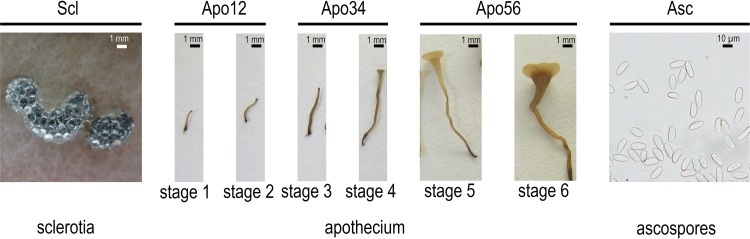
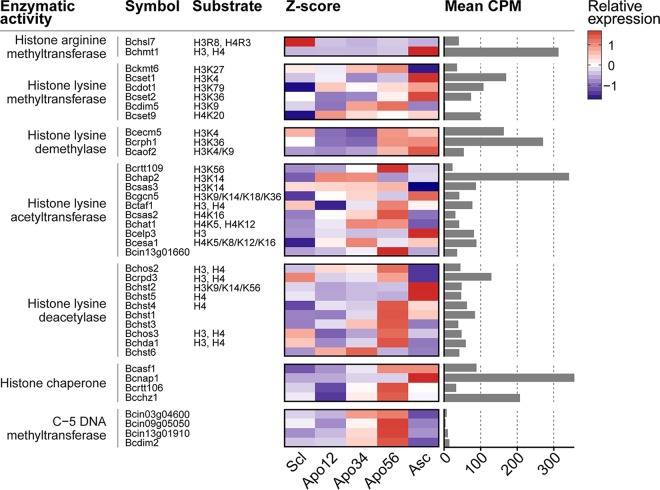
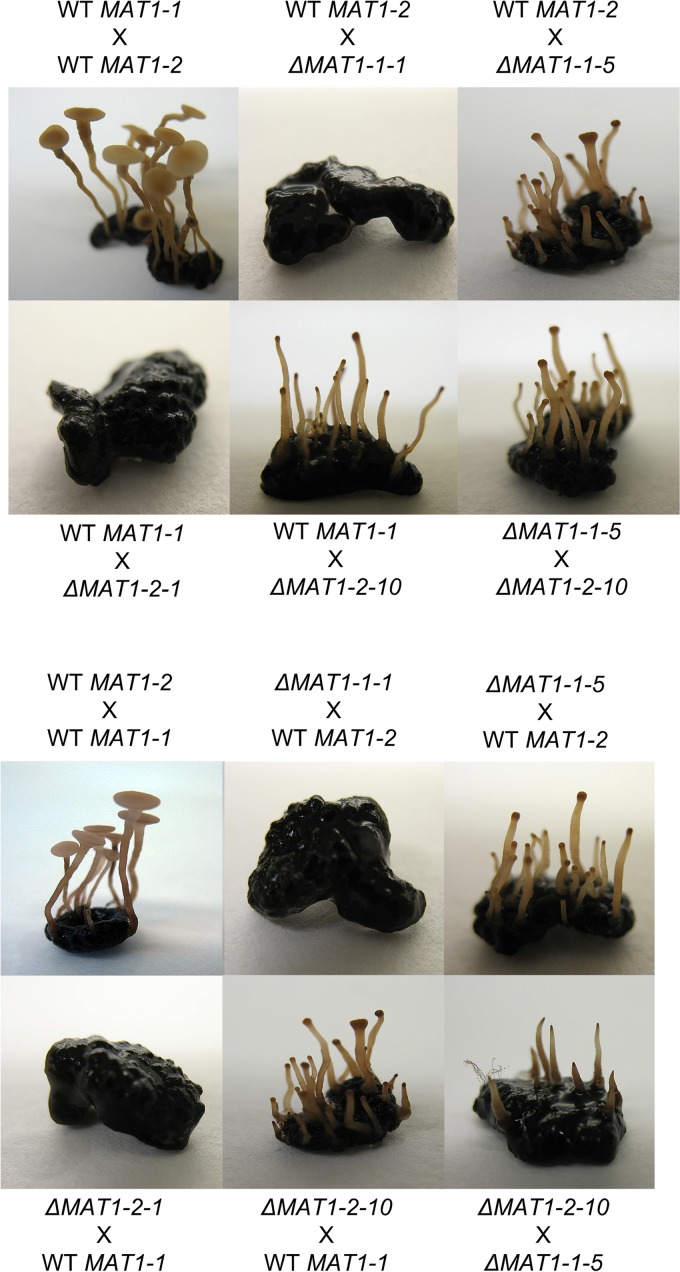
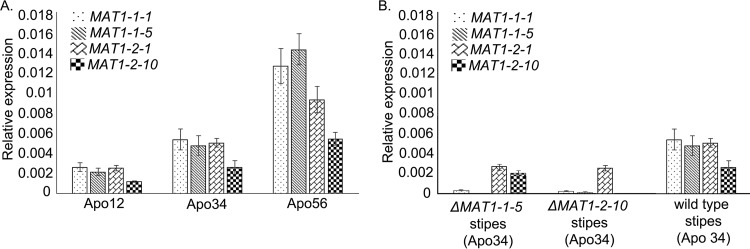
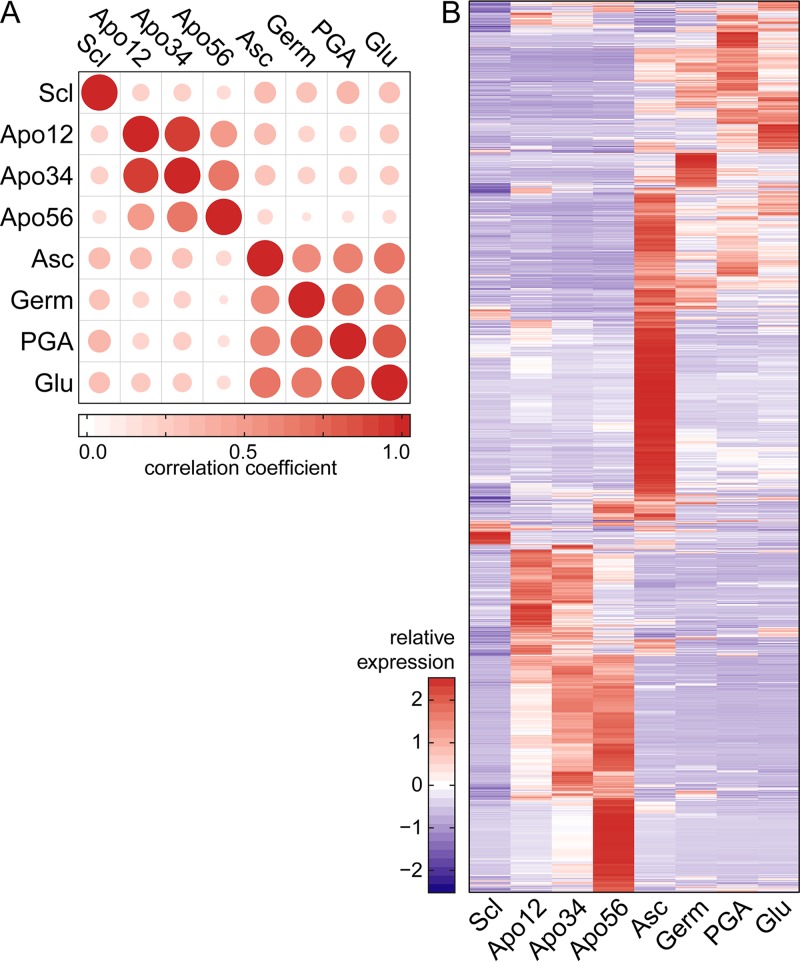
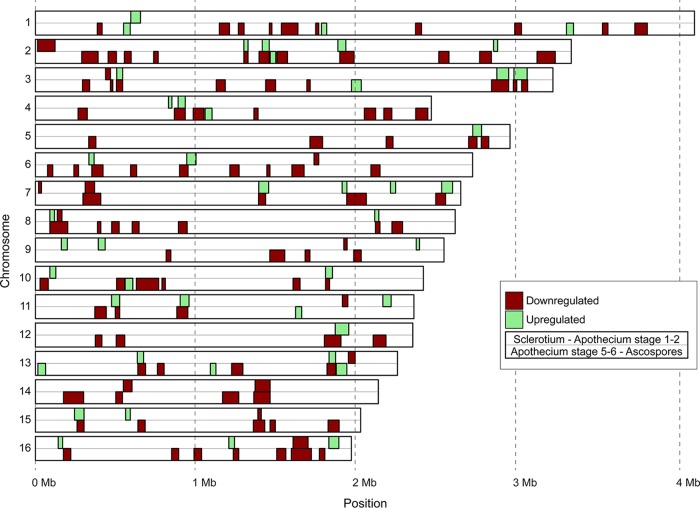
is a plant-pathogenic fungus producing apothecia as sexual fruiting bodies. To study the function of mating type () genes, single-gene deletion mutants were generated in both genes of the locus and both genes of the locus. Deletion mutants in two genes were entirely sterile, while mutants in the other two genes were able to develop stipes but never formed an apothecial disk. Little was known about the reprogramming of gene expression during apothecium development. We analyzed transcriptomes of sclerotia, three stages of apothecium development (primordia, stipes, and apothecial disks), and ascospores by RNA sequencing. Ten secondary metabolite gene clusters were upregulated at the onset of sexual development and downregulated in ascospores released from apothecia. Notably, more than 3,900 genes were differentially expressed in ascospores compared to mature apothecial disks. Among the genes that were upregulated in ascospores were numerous genes encoding virulence factors, which reveals that ascospores are transcriptionally primed for infection prior to their arrival on a host plant. Strikingly, the massive transcriptional changes at the initiation and completion of the sexual cycle often affected clusters of genes, rather than randomly dispersed genes. Thirty-five clusters of genes were jointly upregulated during the onset of sexual reproduction, while 99 clusters of genes (comprising >900 genes) were jointly downregulated in ascospores. These transcriptional changes coincided with changes in expression of genes encoding enzymes participating in chromatin organization, hinting at the occurrence of massive epigenetic regulation of gene expression during sexual reproduction. Fungal fruiting bodies are formed by sexual reproduction. We studied the development of fruiting bodies ("apothecia") of the ubiquitous plant-pathogenic ascomycete The role of mating type genes in apothecium development was investigated by targeted mutation. Two genes are essential for the initiation of sexual development; mutants in these genes are sterile. Two other genes were not essential for development of stipes; however, they were essential for stipes to develop a disk and produce sexual ascospores. We examined gene expression profiles during apothecium development, as well as in ascospores sampled from apothecia. We provide the first study ever of the transcriptome of pure ascospores in a filamentous fungus. The expression of numerous genes involved in plant infection was induced in the ascospores, implying that ascospores are developmentally primed for infection before their release from apothecia.
是一种产生子囊盘作为有性生殖体的植物病原真菌。为了研究交配型()基因的功能,在 座的两个基因和 座的两个基因中都产生了单基因缺失突变体。两个 基因缺失突变体完全不育,而其他两个 基因的突变体能够发育出菌柄,但从未形成子囊盘。关于子囊盘发育过程中基因表达的重编程知之甚少。我们通过 RNA 测序分析了菌核、子囊盘发育的三个阶段(原基、菌柄和子囊盘)和子囊孢子的转录组。在有性发育开始时,10 个次级代谢物基因簇上调,而从子囊盘中释放的子囊孢子下调。值得注意的是,与成熟子囊盘中的转录组相比,子囊孢子中有 3900 多个基因差异表达。在子囊孢子中上调的基因中有许多编码毒力因子的基因,这表明子囊孢子在到达宿主植物之前就已经转录激活以进行感染。引人注目的是,在有性循环的开始和完成时发生的大量转录变化通常影响基因簇,而不是随机分散的基因。在有性繁殖开始时,有 35 个基因簇共同上调,而在子囊孢子中,有 99 个基因簇(包含>900 个基因)共同下调。这些转录变化与参与染色质组织的酶编码基因的表达变化相吻合,暗示在有性生殖过程中发生了大规模的表观遗传调控基因表达。真菌子实体是通过有性繁殖形成的。我们研究了普遍存在的植物病原子囊菌的子实体(“子囊盘”)的发育。通过靶向突变研究了交配型基因在子囊盘发育中的作用。两个基因对于有性发育的启动是必需的;这些基因的突变体是不育的。另外两个基因对于菌柄的发育不是必需的;然而,它们对于菌柄发育成一个盘并产生有性子囊孢子是必需的。我们检查了子囊盘发育过程中的基因表达谱,以及从子囊盘中采集的子囊孢子。我们提供了丝状真菌中纯子囊孢子转录组的首次研究。许多参与植物感染的基因的表达在子囊孢子中被诱导,这表明子囊孢子在从子囊盘中释放之前就已经为感染做好了发育准备。