University of Southern California, Los Angeles, California 90089, USA.
University of California, Irvine, Irvine, California 92697, USA.
Sci Data. 2018 Feb 20;5:180011. doi: 10.1038/sdata.2018.11.
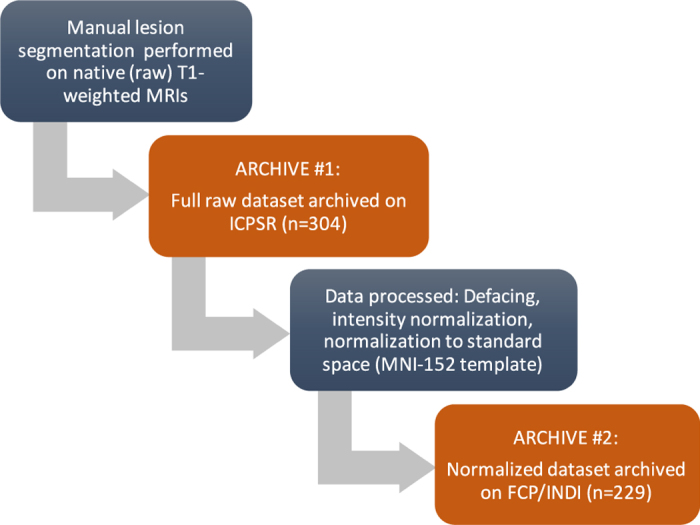
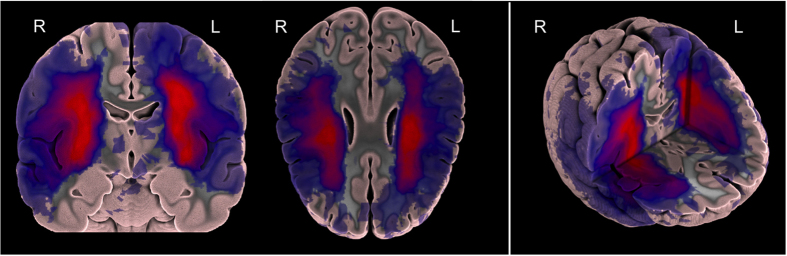
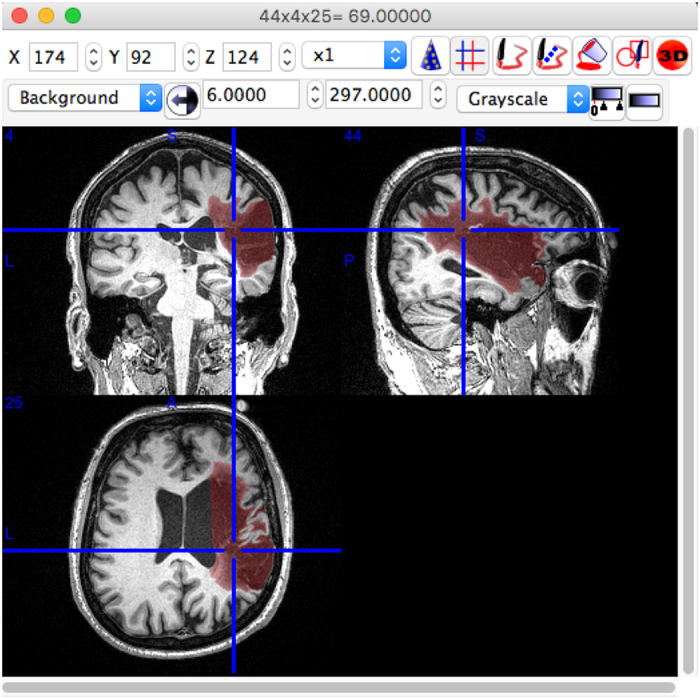
Stroke is the leading cause of adult disability worldwide, with up to two-thirds of individuals experiencing long-term disabilities. Large-scale neuroimaging studies have shown promise in identifying robust biomarkers (e.g., measures of brain structure) of long-term stroke recovery following rehabilitation. However, analyzing large rehabilitation-related datasets is problematic due to barriers in accurate stroke lesion segmentation. Manually-traced lesions are currently the gold standard for lesion segmentation on T1-weighted MRIs, but are labor intensive and require anatomical expertise. While algorithms have been developed to automate this process, the results often lack accuracy. Newer algorithms that employ machine-learning techniques are promising, yet these require large training datasets to optimize performance. Here we present ATLAS (Anatomical Tracings of Lesions After Stroke), an open-source dataset of 304 T1-weighted MRIs with manually segmented lesions and metadata. This large, diverse dataset can be used to train and test lesion segmentation algorithms and provides a standardized dataset for comparing the performance of different segmentation methods. We hope ATLAS release 1.1 will be a useful resource to assess and improve the accuracy of current lesion segmentation methods.
中风是全球导致成年人残疾的主要原因,多达三分之二的患者会长期残疾。大规模的神经影像学研究表明,在康复后识别长期中风恢复的强大生物标志物(例如大脑结构的测量值)方面具有前景。然而,由于在准确的中风损伤分割方面存在障碍,分析大规模的康复相关数据集是有问题的。手动追踪的损伤目前是 T1 加权 MRI 上损伤分割的金标准,但这项工作非常耗费人力,且需要具备解剖学专业知识。虽然已经开发了算法来自动完成此过程,但结果通常准确性不高。采用机器学习技术的较新算法很有前景,但这些算法需要大型训练数据集来优化性能。在这里,我们介绍了 ATLAS(中风后损伤的解剖追踪),这是一个包含 304 个 T1 加权 MRI 的开源数据集,具有手动分割的损伤和元数据。这个大型的、多样化的数据集可用于训练和测试损伤分割算法,并为比较不同分割方法的性能提供了一个标准化的数据集。我们希望 ATLAS 版本 1.1 将成为评估和提高当前损伤分割方法准确性的有用资源。