Department of Neuroscience, Physiology and Pharmacology, University College London, London, United Kingdom.
PLoS Biol. 2018 Mar 14;16(3):e2003586. doi: 10.1371/journal.pbio.2003586. eCollection 2018 Mar.
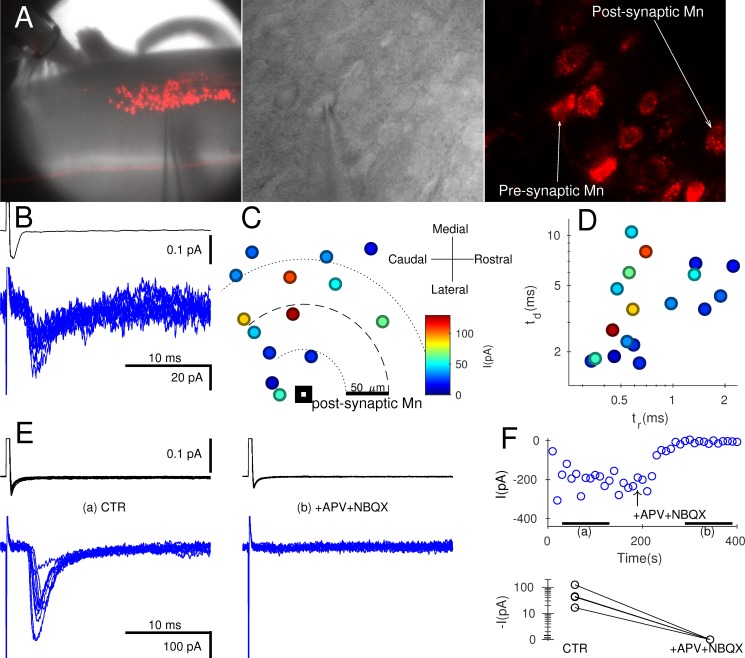
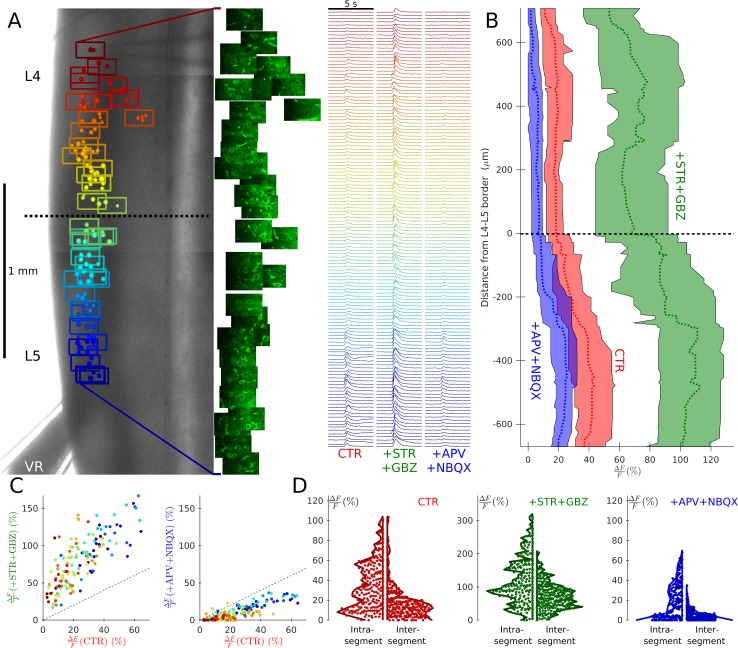
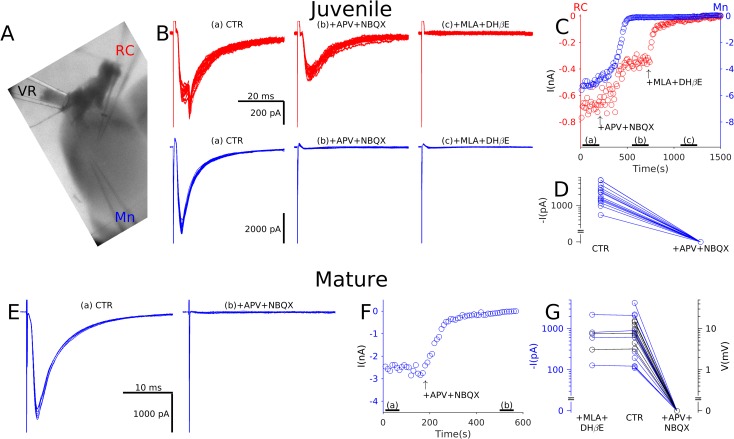
Spinal motoneurones (Mns) constitute the final output for the execution of motor tasks. In addition to innervating muscles, Mns project excitatory collateral connections to Renshaw cells (RCs) and other Mns, but the latter have received little attention. We show that Mns receive strong synaptic input from other Mns throughout development and into maturity, with fast-type Mns systematically receiving greater recurrent excitation than slow-type Mns. Optical recordings show that activation of Mns in one spinal segment can propagate to adjacent segments even in the presence of intact recurrent inhibition. While it is known that transmission at the neuromuscular junction is purely cholinergic and RCs are excited through both acetylcholine and glutamate receptors, here we show that neurotransmission between Mns is purely glutamatergic, indicating that synaptic transmission systems are differentiated at different postsynaptic targets of Mns.
脊髓运动神经元(Mns)是执行运动任务的最终输出。除了支配肌肉外,Mns 还向 Renshaw 细胞(RCs)和其他 Mns 投射兴奋性侧支连接,但后者受到的关注较少。我们表明,Mns 在整个发育过程中以及成熟后都会从其他 Mns 中接收到强烈的突触输入,快速型 Mns 比慢速型 Mns 系统地接收到更大的回返兴奋。光学记录显示,即使存在完整的回返抑制,一个脊髓节段中 Mns 的激活也可以传播到相邻节段。虽然已知神经肌肉接头的传递是纯胆碱能的,RCs 既通过乙酰胆碱又通过谷氨酸受体被兴奋,但在这里我们表明 Mns 之间的神经传递是纯谷氨酸能的,这表明突触传递系统在 Mns 的不同突触后靶标上是分化的。