• 文献检索
  • 文档翻译
  • 深度研究
  • 学术资讯
  • Suppr Zotero 插件Zotero 插件
  • 邀请有礼
  • 套餐&价格
  • 历史记录
应用&插件
Suppr Zotero 插件Zotero 插件浏览器插件Mac 客户端Windows 客户端微信小程序
定价
高级版会员购买积分包购买API积分包
服务
文献检索文档翻译深度研究API 文档MCP 服务
关于我们
关于 Suppr公司介绍联系我们用户协议隐私条款
关注我们

Suppr 超能文献

核心技术专利:CN118964589B侵权必究
粤ICP备2023148730 号-1Suppr @ 2026

文献检索

告别复杂PubMed语法,用中文像聊天一样搜索,搜遍4000万医学文献。AI智能推荐,让科研检索更轻松。

立即免费搜索

文件翻译

保留排版,准确专业,支持PDF/Word/PPT等文件格式,支持 12+语言互译。

免费翻译文档

深度研究

AI帮你快速写综述,25分钟生成高质量综述,智能提取关键信息,辅助科研写作。

立即免费体验

磁性纳米镊子用于在时空中研究生物过程。

Magnetic Nanotweezers for Interrogating Biological Processes in Space and Time.

机构信息

Center for NanoMedicine , Institute for Basic Science (IBS) , Seoul 03722 , Republic of Korea.

Yonsei-IBS Institute , Yonsei University , Seoul 03722 , Republic of Korea.

出版信息

Acc Chem Res. 2018 Apr 17;51(4):839-849. doi: 10.1021/acs.accounts.8b00004. Epub 2018 Mar 28.

DOI:10.1021/acs.accounts.8b00004
PMID:29589897
原文链接:https://pmc.ncbi.nlm.nih.gov/articles/PMC5917604/
Abstract

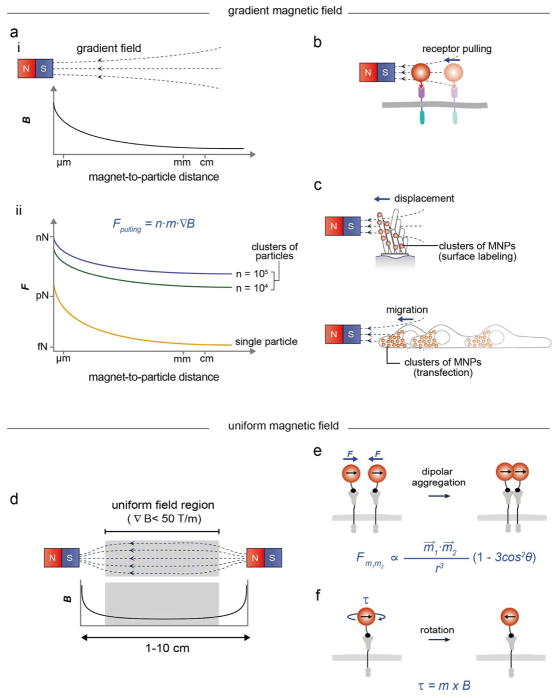
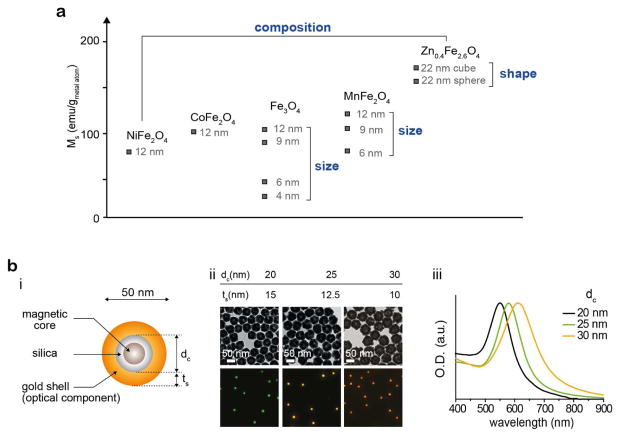
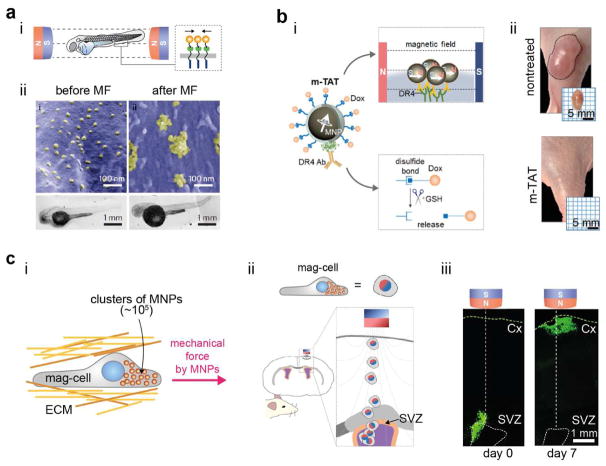
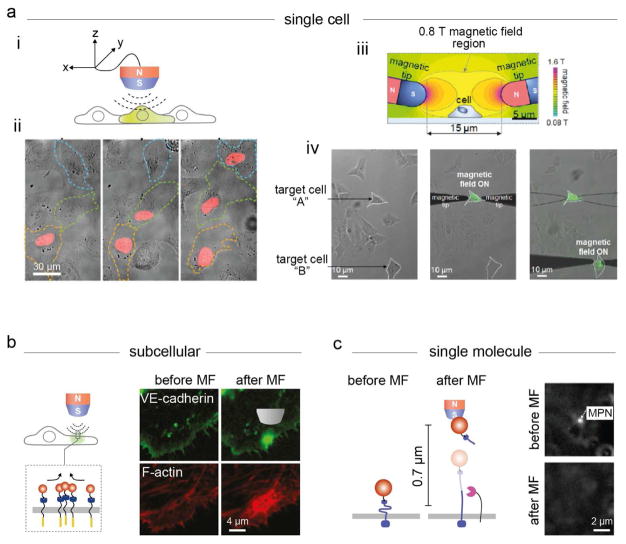
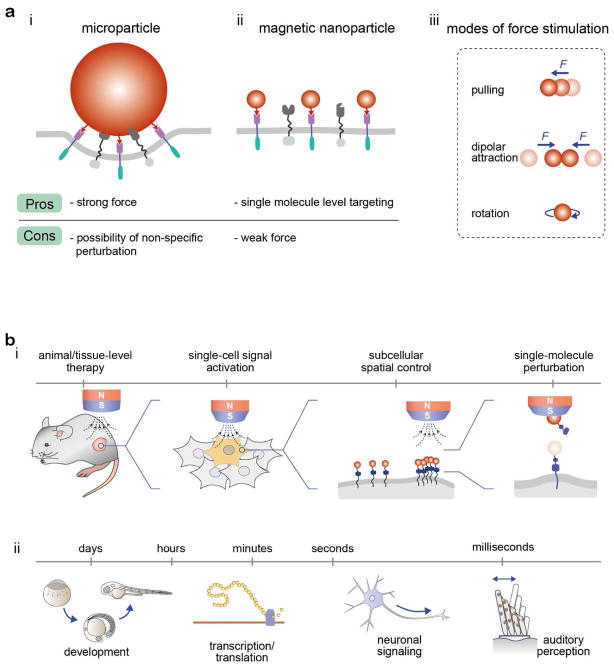
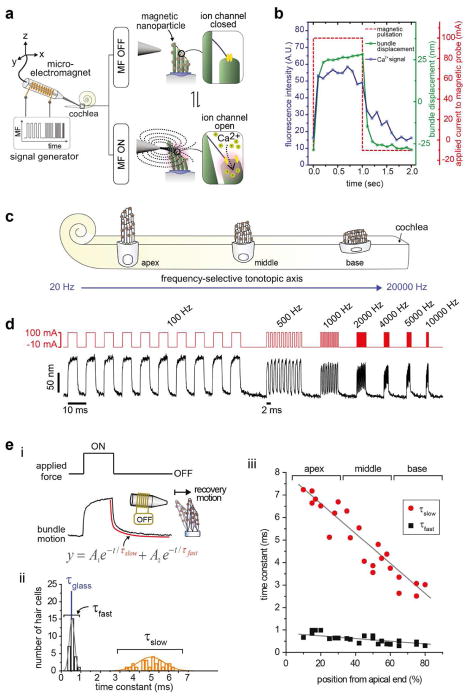
The ability to sense and manipulate the state of biological systems has been extensively advanced during the past decade with the help of recent developments in physical tools. Unlike standard genetic and pharmacological perturbation techniques-knockdown, overexpression, small molecule inhibition-that provide a basic on/off switching capability, these physical tools provide the capacity to control the spatial, temporal, and mechanical properties of the biological targets. Among the various physical cues, magnetism offers distinct advantages over light or electricity. Magnetic fields freely penetrate biological tissues and are already used for clinical applications. As one of the unique features, magnetic fields can be transformed into mechanical stimuli which can serve as a cue in regulating biological processes. However, their biological applications have been limited due to a lack of high-performance magnetism-to-mechanical force transducers with advanced spatiotemporal capabilities. In this Account, we present recent developments in magnetic nanotweezers (MNTs) as a useful tool for interrogating the spatiotemporal control of cells in living tissue. MNTs are composed of force-generating magnetic nanoparticles and field generators. Through proper design and the integration of individual components, MNTs deliver controlled mechanical stimulation to targeted biomolecules at any desired space and time. We first discuss about MNT configuration with different force-stimulation modes. By modulating geometry of the magnetic field generator, MNTs exert pulling, dipole-dipole attraction, and rotational forces to the target specifically and quantitatively. We discuss the key physical parameters determining force magnitude, which include magnetic field strength, magnetic field gradient, magnetic moment of the magnetic particle, as well as distance between the field generator and the particle. MNTs also can be used over a wide range of biological time scales. By simply adjusting the amplitude and phase of the applied current, MNTs based on electromagnets allow for dynamic control of the magnetic field from microseconds to hours. Chemical design and the nanoscale effects of magnetic particles are also essential for optimizing MNT performance. We discuss key strategies to develop magnetic nanoparticles with improved force-generation capabilities with a particular focus on the effects of size, shape, and composition of the nanoparticles. We then introduce various strategies and design considerations for target-specific biomechanical stimulations with MNTs. One-to-one particle-receptor engagement for delivering a defined force to the targeted receptor and the small size of the nanoparticles are important. Finally, we demonstrate the utility of MNTs for manipulating biological functions and activities with various spatial (single molecule/cell to organisms) and temporal resolution (microseconds to days). MNTs have the potential to be utilized in many exciting applications across diverse biological systems spanning from fundamental biology investigations of spatial and mechanical signaling dynamics at the single-cell and systems levels to in vivo therapeutic applications.
https://cdn.ncbi.nlm.nih.gov/pmc/blobs/2da4/5917604/bb0ed0a226c4/nihms960841f6.jpg
https://cdn.ncbi.nlm.nih.gov/pmc/blobs/2da4/5917604/d45b5e5783e5/nihms960841f1.jpg
https://cdn.ncbi.nlm.nih.gov/pmc/blobs/2da4/5917604/13bb8cfe6f66/nihms960841f2.jpg
https://cdn.ncbi.nlm.nih.gov/pmc/blobs/2da4/5917604/297315447042/nihms960841f3.jpg
https://cdn.ncbi.nlm.nih.gov/pmc/blobs/2da4/5917604/c0a5140b0e5b/nihms960841f4.jpg
https://cdn.ncbi.nlm.nih.gov/pmc/blobs/2da4/5917604/9b0af5e3e26e/nihms960841f5.jpg
https://cdn.ncbi.nlm.nih.gov/pmc/blobs/2da4/5917604/bb0ed0a226c4/nihms960841f6.jpg
https://cdn.ncbi.nlm.nih.gov/pmc/blobs/2da4/5917604/d45b5e5783e5/nihms960841f1.jpg
https://cdn.ncbi.nlm.nih.gov/pmc/blobs/2da4/5917604/13bb8cfe6f66/nihms960841f2.jpg
https://cdn.ncbi.nlm.nih.gov/pmc/blobs/2da4/5917604/297315447042/nihms960841f3.jpg
https://cdn.ncbi.nlm.nih.gov/pmc/blobs/2da4/5917604/c0a5140b0e5b/nihms960841f4.jpg
https://cdn.ncbi.nlm.nih.gov/pmc/blobs/2da4/5917604/9b0af5e3e26e/nihms960841f5.jpg
https://cdn.ncbi.nlm.nih.gov/pmc/blobs/2da4/5917604/bb0ed0a226c4/nihms960841f6.jpg
摘要

过去十年,随着物理工具的最新发展,人们已经极大地提高了感知和操纵生物系统状态的能力。与标准的遗传和药理学扰动技术(敲低、过表达、小分子抑制)不同,这些物理工具提供了控制生物靶标空间、时间和机械特性的能力,它们提供了基本的开/关切换能力。在各种物理线索中,磁场比光或电具有明显的优势。磁场可以自由穿透生物组织,并且已经用于临床应用。作为独特的特征之一,磁场可以转化为机械刺激,作为调节生物过程的一个线索。然而,由于缺乏具有先进时空能力的高性能磁-机械力换能器,它们的生物应用受到了限制。在本报告中,我们介绍了磁性纳米镊子(MNTs)作为一种有用的工具,用于研究活组织中细胞的时空控制。MNTs 由产生力的磁性纳米粒子和场发生器组成。通过适当的设计和单个组件的集成,MNTs 可以在任何所需的空间和时间向靶向生物分子提供受控的机械刺激。我们首先讨论了具有不同力刺激模式的 MNT 配置。通过调节磁场发生器的几何形状,MNTs 可以特异性和定量地向目标施加拉力、偶极力吸引和旋转力。我们讨论了决定力大小的关键物理参数,包括磁场强度、磁场梯度、磁性粒子的磁矩以及场发生器和粒子之间的距离。MNTs 也可以在广泛的生物时间尺度上使用。通过简单地调整施加电流的幅度和相位,基于电磁体的 MNTs 允许从微秒到小时的动态控制磁场。化学设计和磁性粒子的纳米尺度效应也是优化 MNT 性能的关键。我们讨论了开发具有改进力产生能力的磁性纳米粒子的关键策略,特别关注纳米粒子的尺寸、形状和组成的影响。然后,我们介绍了使用 MNTs 进行靶向生物力学刺激的各种策略和设计考虑因素。用于向靶向受体传递定义力的单个粒子-受体结合以及纳米粒子的小尺寸很重要。最后,我们展示了 MNTs 在利用各种空间(单细胞/细胞到生物体)和时间分辨率(微秒到天)的生物功能和活性方面的效用。MNTs 有可能在从基础生物学研究单细胞和系统水平的空间和机械信号动力学到体内治疗应用的各种生物系统中得到广泛应用。

相似文献

1
Magnetic Nanotweezers for Interrogating Biological Processes in Space and Time.磁性纳米镊子用于在时空中研究生物过程。
Acc Chem Res. 2018 Apr 17;51(4):839-849. doi: 10.1021/acs.accounts.8b00004. Epub 2018 Mar 28.
2
In Vivo Observations of Rapid Scattered Light Changes Associated with Neurophysiological Activity与神经生理活动相关的快速散射光变化的体内观察
3
Mechanical Immunoengineering of T cells for Therapeutic Applications.T 细胞的机械免疫工程用于治疗应用。
Acc Chem Res. 2020 Dec 15;53(12):2777-2790. doi: 10.1021/acs.accounts.0c00486. Epub 2020 Dec 1.
4
Translational Metabolomics of Head Injury: Exploring Dysfunctional Cerebral Metabolism with Ex Vivo NMR Spectroscopy-Based Metabolite Quantification头部损伤的转化代谢组学:基于体外核磁共振波谱的代谢物定量分析探索脑代谢功能障碍
5
Engineering Aspects of Olfaction嗅觉的工程学方面
6
Magnetic anisotropy considerations in magnetic force microscopy studies of single superparamagnetic nanoparticles.在单超顺磁纳米粒子的磁力显微镜研究中考虑磁各向异性。
Nanotechnology. 2012 Dec 14;23(49):495704. doi: 10.1088/0957-4484/23/49/495704. Epub 2012 Nov 13.
7
Optical forces on small magnetodielectric particles.小磁电介质颗粒上的光学力。
Opt Express. 2010 May 24;18(11):11428-43. doi: 10.1364/OE.18.011428.
8
Magnetic nanoparticles for ultrafast mechanical control of inner ear hair cells.用于内耳毛细胞超快机械控制的磁性纳米颗粒。
ACS Nano. 2014 Jul 22;8(7):6590-8. doi: 10.1021/nn5020616. Epub 2014 Jul 8.
9
Magnetogenetics: remote activation of cellular functions triggered by magnetic switches.磁遗传学:通过磁开关触发的细胞功能的远程激活。
Nanoscale. 2022 Feb 10;14(6):2091-2118. doi: 10.1039/d1nr06303k.
10
An Introduction to Magnetic Tweezers.磁镊简介。
Methods Mol Biol. 2024;2694:375-401. doi: 10.1007/978-1-0716-3377-9_18.

引用本文的文献

1
Microfabrication Technologies for Nanoinvasive and High-Resolution Magnetic Neuromodulation.用于纳米侵入性和高分辨率磁神经调节的微制造技术
Adv Sci (Weinh). 2024 Dec;11(46):e2404254. doi: 10.1002/advs.202404254. Epub 2024 Oct 24.
2
Static magnetic field assisted thawing improves cryopreservation of mouse whole ovaries.静磁场辅助解冻可改善小鼠整个卵巢的冷冻保存。
Bioeng Transl Med. 2023 Oct 18;9(1):e10613. doi: 10.1002/btm2.10613. eCollection 2024 Jan.
3
Trends in mechanobiology guided tissue engineering and tools to study cell-substrate interactions: a brief review.

本文引用的文献

1
Design of Magnetically Labeled Cells (Mag-Cells) for in Vivo Control of Stem Cell Migration and Differentiation.用于体内控制干细胞迁移和分化的磁标记细胞(Mag-Cells)的设计。
Nano Lett. 2018 Feb 14;18(2):838-845. doi: 10.1021/acs.nanolett.7b04089. Epub 2018 Feb 2.
2
Single-cell mechanogenetics using monovalent magnetoplasmonic nanoparticles.使用单价磁等离子体纳米颗粒的单细胞机械遗传学
Nat Protoc. 2017 Sep;12(9):1871-1889. doi: 10.1038/nprot.2017.071. Epub 2017 Aug 17.
3
Studying the mechanical responses of proteins using magnetic tweezers.
机械生物学指导的组织工程趋势及细胞-基质相互作用研究工具:简要综述
Biomater Res. 2023 Jun 1;27(1):55. doi: 10.1186/s40824-023-00393-8.
4
Adherens junctions organize size-selective proteolytic hotspots critical for Notch signalling.黏着连接形成大小选择性蛋白水解热点,对 Notch 信号通路至关重要。
Nat Cell Biol. 2022 Dec;24(12):1739-1753. doi: 10.1038/s41556-022-01031-6. Epub 2022 Dec 1.
5
Magnetic nanomaterials for wireless thermal and mechanical neuromodulation.用于无线热和机械神经调节的磁性纳米材料。
iScience. 2022 Oct 25;25(11):105401. doi: 10.1016/j.isci.2022.105401. eCollection 2022 Nov 18.
6
Magneto-Mechanical Approach in Biomedicine: Benefits, Challenges, and Future Perspectives.磁机械方法在生物医学中的应用:益处、挑战和未来展望。
Int J Mol Sci. 2022 Sep 22;23(19):11134. doi: 10.3390/ijms231911134.
7
Sub-second temporal magnetic field microscopy using quantum defects in diamond.利用金刚石中的量子缺陷进行亚秒级时间磁场显微镜成像。
Sci Rep. 2022 May 24;12(1):8743. doi: 10.1038/s41598-022-12609-3.
8
Parallel Multichannel Assessment of Rotationally Manipulated Magnetic Nanoparticles.旋转操控磁性纳米颗粒的并行多通道评估
Nanotechnol Sci Appl. 2022 Apr 19;15:1-15. doi: 10.2147/NSA.S358931. eCollection 2022.
9
Magnetogenetics: remote activation of cellular functions triggered by magnetic switches.磁遗传学:通过磁开关触发的细胞功能的远程激活。
Nanoscale. 2022 Feb 10;14(6):2091-2118. doi: 10.1039/d1nr06303k.
10
Nanoparticle-Based Approaches towards the Treatment of Atherosclerosis.基于纳米颗粒的动脉粥样硬化治疗方法。
Pharmaceutics. 2020 Nov 5;12(11):1056. doi: 10.3390/pharmaceutics12111056.
使用磁镊研究蛋白质的力学响应。
Nanotechnology. 2017 Oct 13;28(41):414002. doi: 10.1088/1361-6528/aa837e. Epub 2017 Aug 2.
4
Magnetic Tandem Apoptosis for Overcoming Multidrug-Resistant Cancer.磁联靶向凋亡克服多药耐药性肿瘤。
Nano Lett. 2016 Dec 14;16(12):7455-7460. doi: 10.1021/acs.nanolett.6b03122. Epub 2016 Nov 28.
5
Magnetic Force Nanoprobe for Direct Observation of Audio Frequency Tonotopy of Hair Cells.用于直接观察毛细胞音频频率调谐的磁力纳米探针。
Nano Lett. 2016 Jun 8;16(6):3885-91. doi: 10.1021/acs.nanolett.6b01392. Epub 2016 May 24.
6
A Mechanogenetic Toolkit for Interrogating Cell Signaling in Space and Time.一种用于在空间和时间上探究细胞信号传导的机械遗传学工具包。
Cell. 2016 Jun 2;165(6):1507-1518. doi: 10.1016/j.cell.2016.04.045. Epub 2016 May 12.
7
SnapShot: Timescales in Cell Biology.简讯:细胞生物学中的时间尺度
Cell. 2016 Mar 10;164(6):1302-1302.e1. doi: 10.1016/j.cell.2016.02.058.
8
A RIAM/lamellipodin-talin-integrin complex forms the tip of sticky fingers that guide cell migration.RIAM/片层状肌动蛋白结合蛋白-踝蛋白-整合素复合物构成引导细胞迁移的黏着指状结构的尖端。
Nat Commun. 2015 Sep 30;6:8492. doi: 10.1038/ncomms9492.
9
Integration of actin dynamics and cell adhesion by a three-dimensional, mechanosensitive molecular clutch.通过三维机械敏感分子离合器整合肌动蛋白动力学与细胞黏附
Nat Cell Biol. 2015 Aug;17(8):955-63. doi: 10.1038/ncb3191. Epub 2015 Jun 29.
10
Undulatory Locomotion of Magnetic Multilink Nanoswimmers.磁多链接纳米游泳者的波动运动。
Nano Lett. 2015 Jul 8;15(7):4829-33. doi: 10.1021/acs.nanolett.5b01981. Epub 2015 Jun 4.