Kim Dokyoon, Kim Jonghoon, Park Yong Il, Lee Nohyun, Hyeon Taeghwan
Center for Nanoparticle Research, Institute for Basic Science (IBS), Seoul 08826, Republic of Korea.
School of Chemical and Biological Engineering, and Institute of Chemical Processes, Seoul National University, Seoul 08826, Republic of Korea.
ACS Cent Sci. 2018 Mar 28;4(3):324-336. doi: 10.1021/acscentsci.7b00574. Epub 2018 Jan 23.
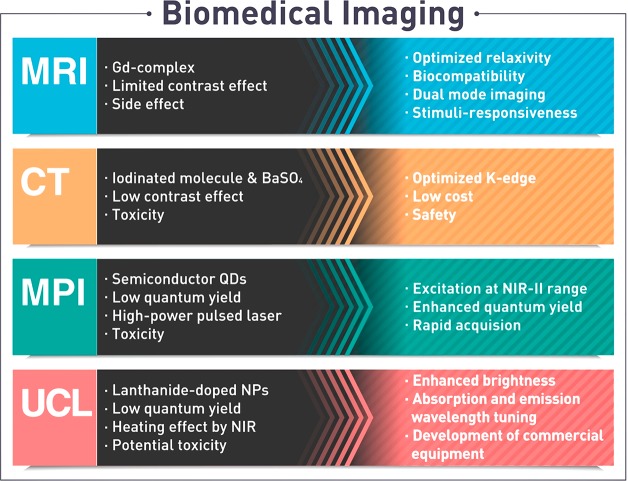
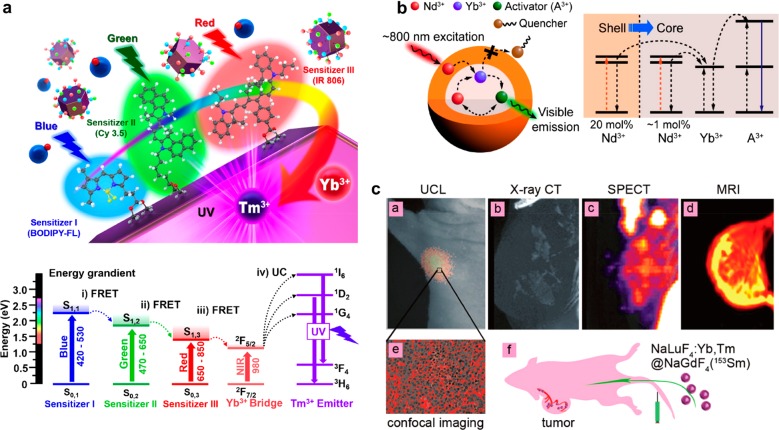
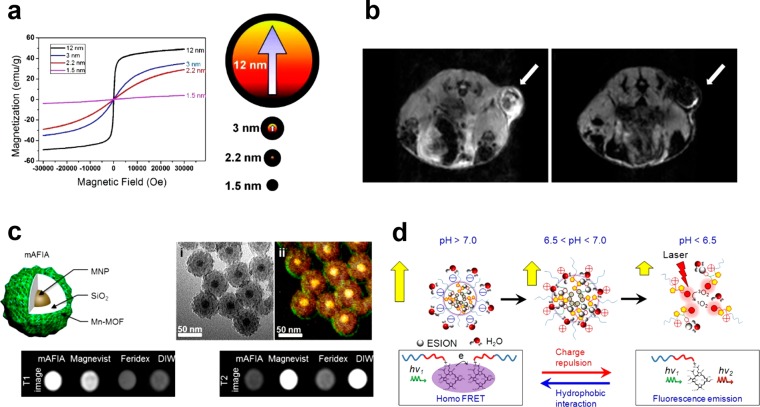
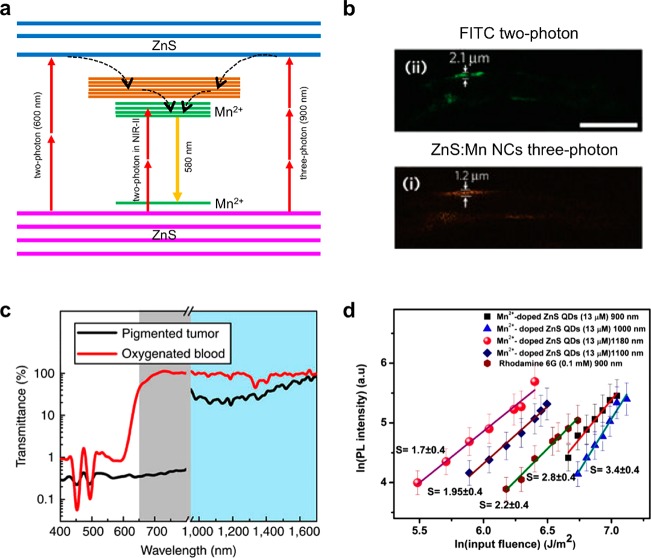
Inorganic nanoparticle-based biomedical imaging probes have been studied extensively as a potential alternative to conventional molecular imaging probes. Not only can they provide better imaging performance but they can also offer greater versatility of multimodal, stimuli-responsive, and targeted imaging. However, inorganic nanoparticle-based probes are still far from practical use in clinics due to safety concerns and less-optimized efficiency. In this context, it would be valuable to look over the underlying issues. This outlook highlights the recent advances in the development of inorganic nanoparticle-based probes for MRI, CT, and anti-Stokes shift-based optical imaging. Various issues and possibilities regarding the construction of imaging probes are discussed, and future research directions are suggested.
基于无机纳米颗粒的生物医学成像探针作为传统分子成像探针的潜在替代品已经得到了广泛研究。它们不仅能提供更好的成像性能,还能在多模态、刺激响应和靶向成像方面展现出更大的通用性。然而,由于安全问题和效率不够优化,基于无机纳米颗粒的探针在临床实际应用中仍相距甚远。在此背景下,审视潜在问题将很有价值。本综述重点介绍了用于磁共振成像(MRI)、计算机断层扫描(CT)和基于反斯托克斯位移的光学成像的无机纳米颗粒探针开发的最新进展。讨论了成像探针构建方面的各种问题和可能性,并提出了未来的研究方向。