Mycotoxin Prevention and Applied Microbiology, National Center for Agricultural Utilization Research, U.S. Department of Agriculture, Peoria, Illinois, United States of America.
Area of Microbiology, University School of Agricultural Engineers, University of León, Campus de Ponferrada, Ponferrada, Spain.
PLoS Pathog. 2018 Apr 12;14(4):e1006946. doi: 10.1371/journal.ppat.1006946. eCollection 2018 Apr.
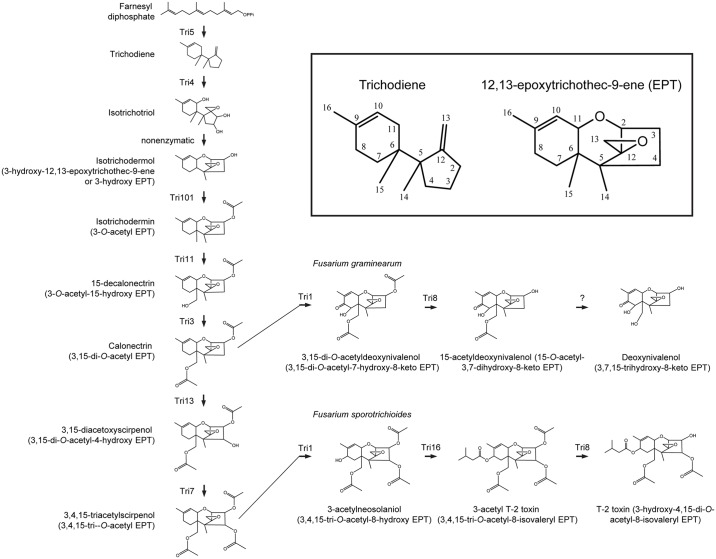
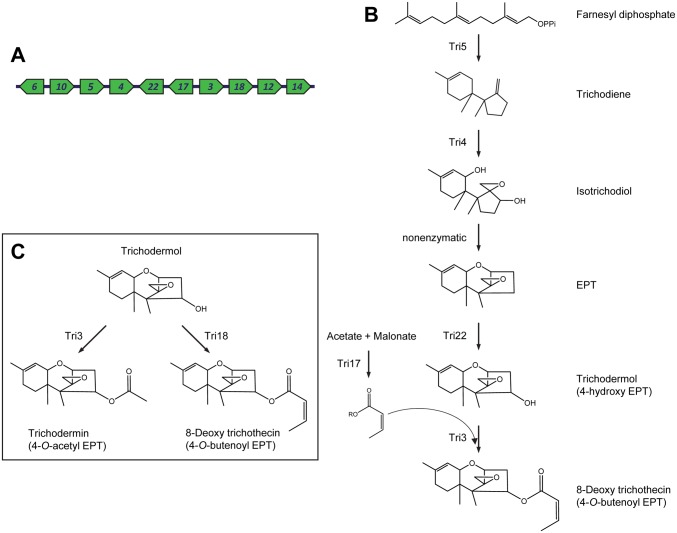
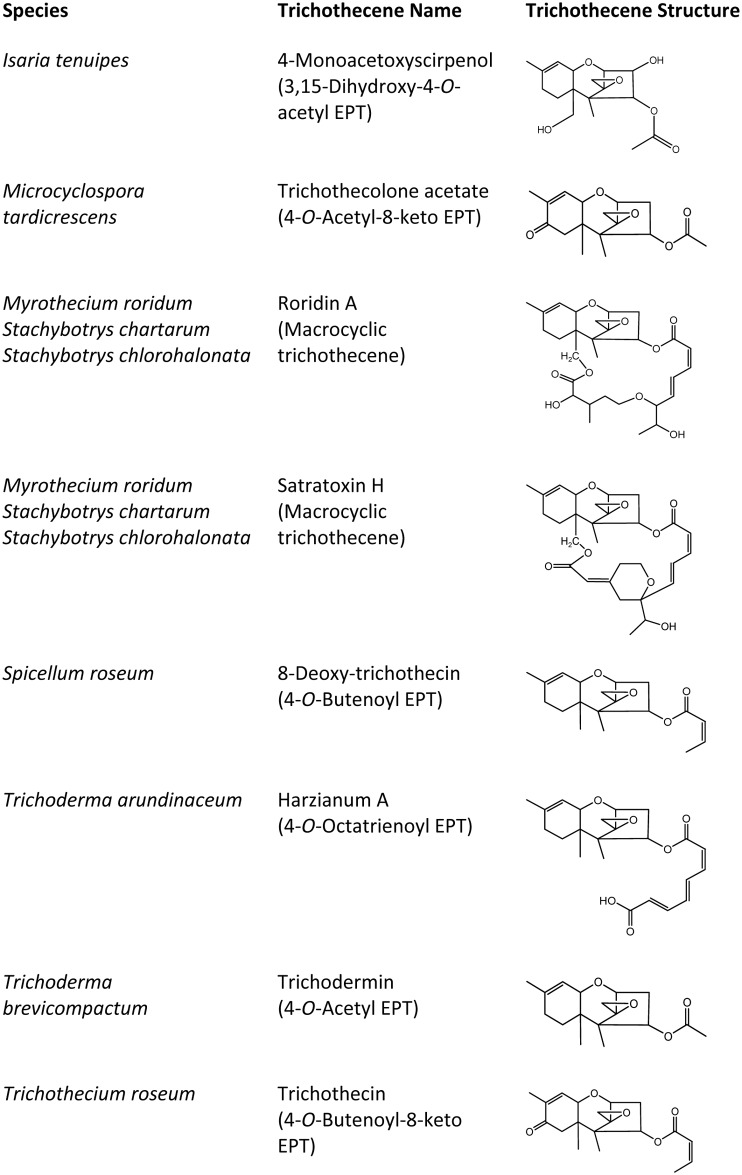
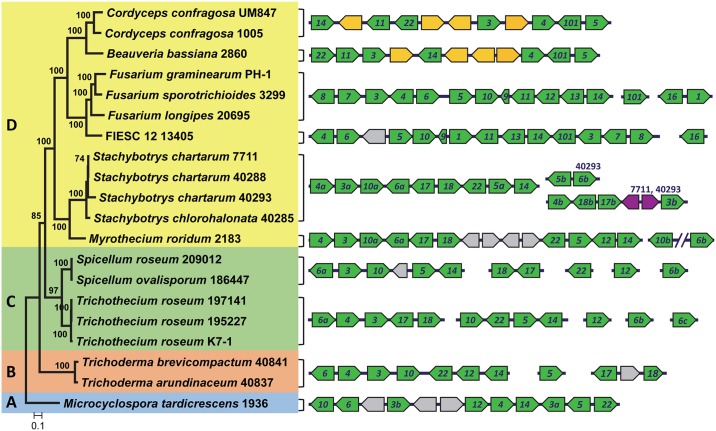
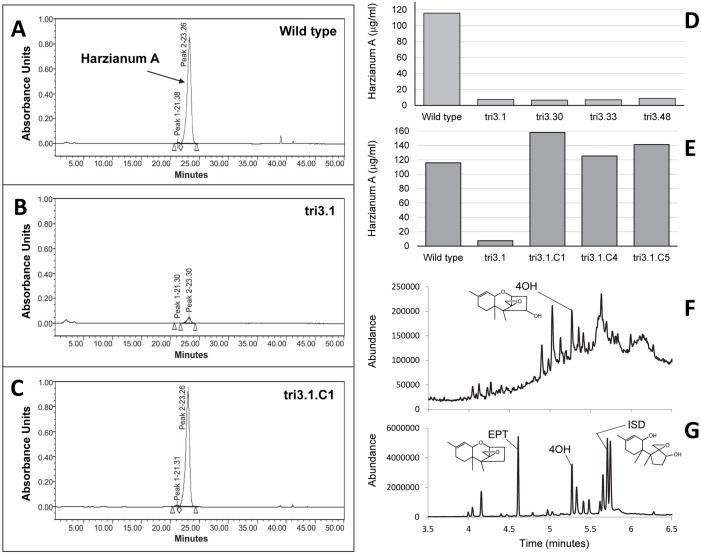
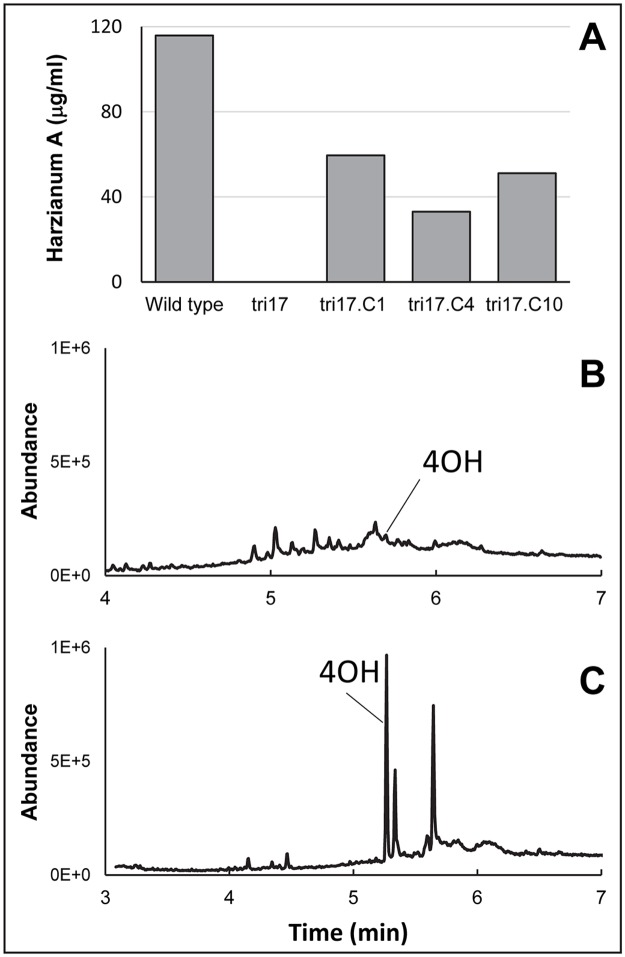
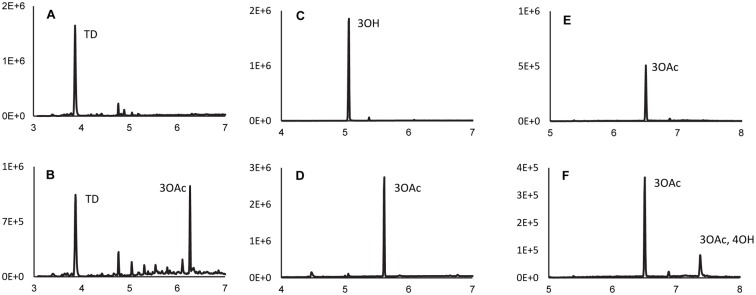
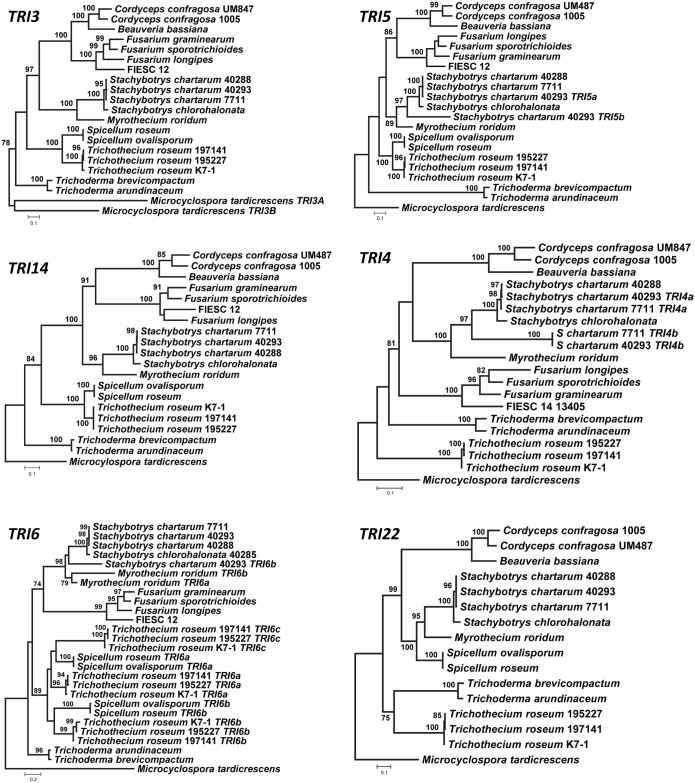
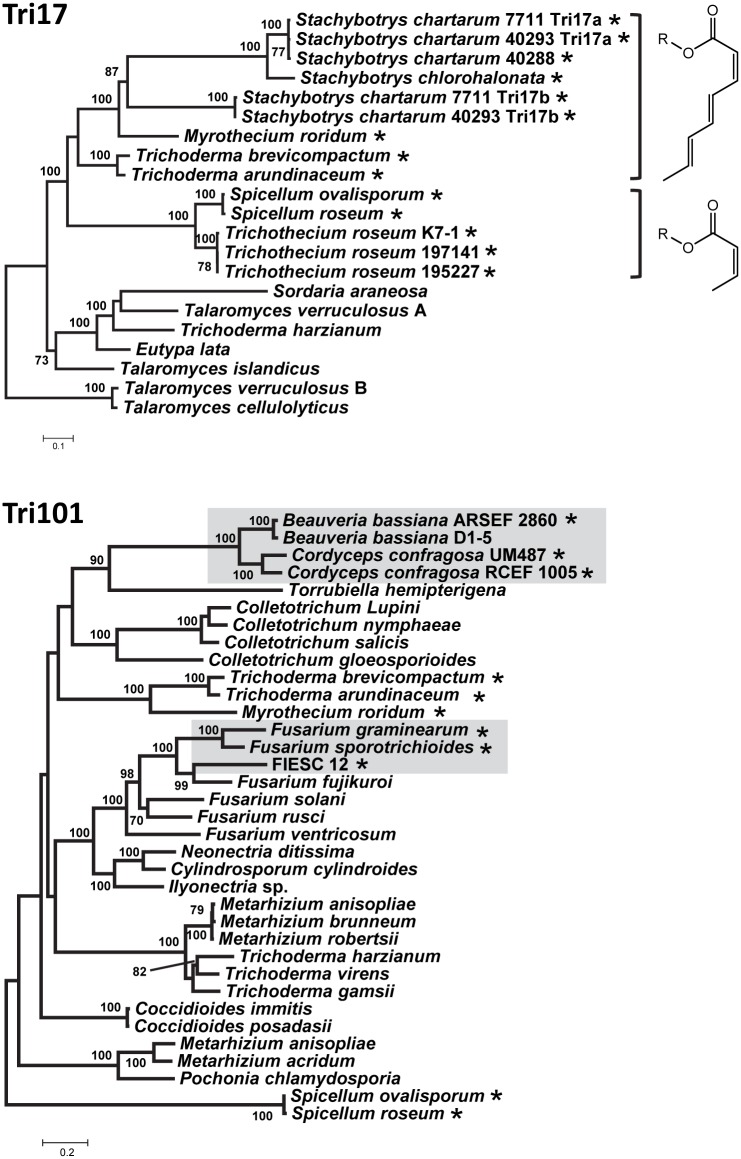
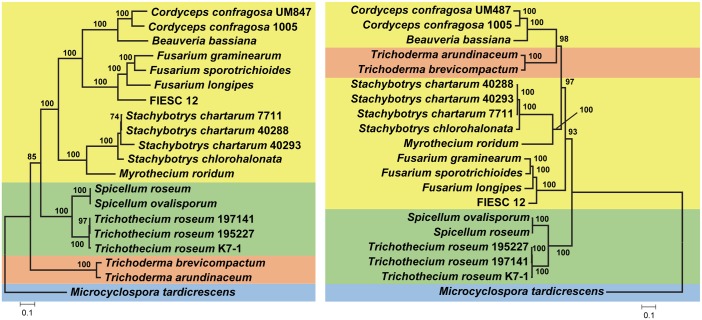
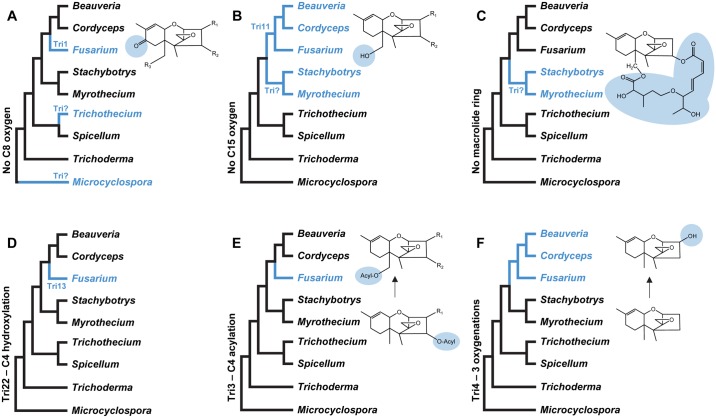
Trichothecenes are a family of terpenoid toxins produced by multiple genera of fungi, including plant and insect pathogens. Some trichothecenes produced by the fungus Fusarium are among the mycotoxins of greatest concern to food and feed safety because of their toxicity and frequent occurrence in cereal crops, and trichothecene production contributes to pathogenesis of some Fusarium species on plants. Collectively, fungi produce over 150 trichothecene analogs: i.e., molecules that share the same core structure but differ in patterns of substituents attached to the core structure. Here, we carried out genomic, phylogenetic, gene-function, and analytical chemistry studies of strains from nine fungal genera to identify genetic variation responsible for trichothecene structural diversity and to gain insight into evolutionary processes that have contributed to the variation. The results indicate that structural diversity has resulted from gain, loss, and functional changes of trichothecene biosynthetic (TRI) genes. The results also indicate that the presence of some substituents has arisen independently in different fungi by gain of different genes with the same function. Variation in TRI gene duplication and number of TRI loci was also observed among the fungi examined, but there was no evidence that such genetic differences have contributed to trichothecene structural variation. We also inferred ancestral states of the TRI cluster and trichothecene biosynthetic pathway, and proposed scenarios for changes in trichothecene structures during divergence of TRI cluster homologs. Together, our findings provide insight into evolutionary processes responsible for structural diversification of toxins produced by pathogenic fungi.
三萜烯是一类由多种真菌属产生的萜类毒素,包括植物和昆虫病原体。真菌镰刀菌产生的一些三萜烯是对食品和饲料安全最关注的霉菌毒素之一,因为它们具有毒性,并且经常出现在谷物作物中,而且三萜烯的产生有助于某些镰刀菌属在植物上的发病机制。真菌总共产生了超过 150 种三萜烯类似物,即具有相同核心结构但核心结构上连接的取代基模式不同的分子。在这里,我们对来自九个真菌属的菌株进行了基因组、系统发育、基因功能和分析化学研究,以确定负责三萜烯结构多样性的遗传变异,并深入了解有助于变异的进化过程。结果表明,结构多样性是由于三萜烯生物合成(TRI)基因的获得、丧失和功能变化引起的。结果还表明,某些取代基的存在是通过具有相同功能的不同基因的获得在不同真菌中独立出现的。在所检查的真菌中,还观察到 TRI 基因重复和 TRI 基因座数量的变化,但没有证据表明这种遗传差异有助于三萜烯的结构变异。我们还推断了 TRI 簇和三萜烯生物合成途径的祖先状态,并提出了在 TRI 簇同源物分化过程中三萜烯结构变化的情景。总之,我们的研究结果提供了对致病真菌产生的毒素结构多样化的进化过程的深入了解。