Department of Population Health, NYU School of Medicine, 650 First Avenue, Room 518, New York, NY, 10016, USA.
Epidemiology Research Program, American Cancer Society, 250 Williams Street NW, Atlanta, GA, 30303, USA.
Microbiome. 2018 Apr 24;6(1):59. doi: 10.1186/s40168-018-0448-x.
Dysbiosis of the oral microbiome can lead to local oral disease and potentially to cancers of the head, neck, and digestive tract. However, little is known regarding exogenous factors contributing to such microbial imbalance.
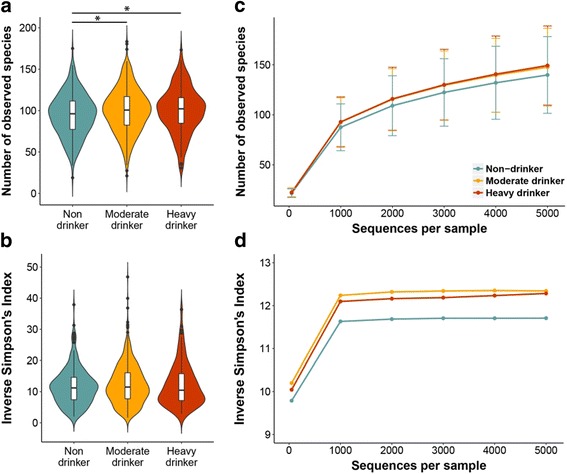
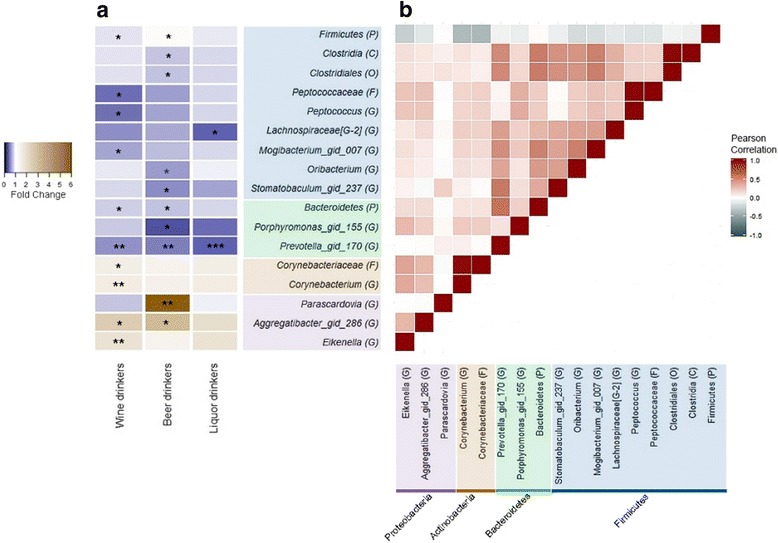
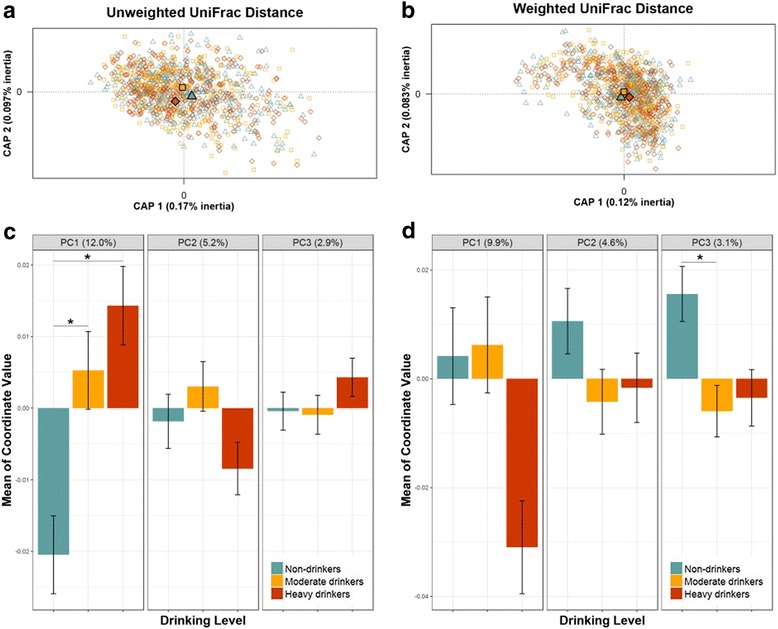
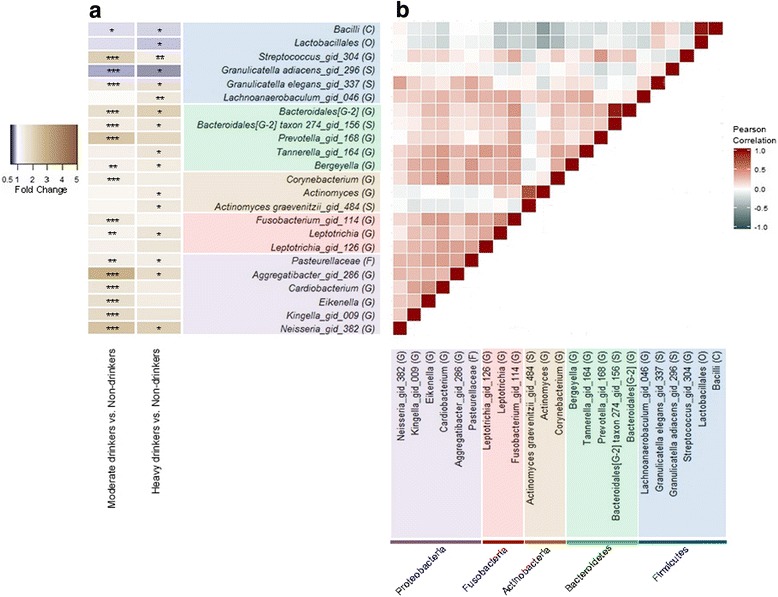
We examined the impact of alcohol consumption on the oral microbiome in a cross-sectional study of 1044 US adults. Bacterial 16S rRNA genes from oral wash samples were amplified, sequenced, and assigned to bacterial taxa. We tested the association of alcohol drinking level (non-drinker, moderate drinker, or heavy drinker) and type (liquor, beer, or wine) with overall microbial composition and individual taxon abundance. The diversity of oral microbiota and overall bacterial profiles differed between heavy drinkers and non-drinkers (α-diversity richness p = 0.0059 and β-diversity unweighted UniFrac p = 0.0036), and abundance of commensal order Lactobacillales tends to be decreased with higher alcohol consumption (fold changes = 0.89 and 0.94 for heavy and moderate drinkers, p trend = 0.005 [q = 0.064]). Additionally, certain genera were enriched in subjects with higher alcohol consumption, including Actinomyces, Leptotrichia, Cardiobacterium, and Neisseria; some of these genera contain oral pathogens, while Neisseria can synthesize the human carcinogen acetaldehyde from ethanol. Wine drinkers may differ from non-drinkers in microbial diversity and profiles (α-diversity richness p = 0.048 and β-diversity unweighted UniFrac p = 0.059) after controlling for drinking amount, while liquor and beer drinkers did not. All significant differences between drinkers and non-drinkers remained after exclusion of current smokers.
Our results, from a large human study of alcohol consumption and the oral microbiome, indicate that alcohol consumption, and heavy drinking in particular, may influence the oral microbiome composition. These findings may have implications for better understanding the potential role that oral bacteria play in alcohol-related diseases.
口腔微生物组的失调可导致局部口腔疾病,并可能导致头颈部和消化道癌症。然而,对于导致这种微生物失衡的外源性因素知之甚少。
我们在一项针对 1044 名美国成年人的横断面研究中,研究了饮酒对口腔微生物组的影响。从口腔冲洗样本中扩增、测序并分配细菌 16S rRNA 基因,以确定细菌分类群。我们检测了饮酒水平(非饮酒者、中度饮酒者或重度饮酒者)和类型(烈酒、啤酒或葡萄酒)与整体微生物组成和个体分类群丰度的关联。重度饮酒者和非饮酒者的口腔微生物多样性和整体细菌谱不同(α多样性丰富度 p = 0.0059 和β多样性非加权 UniFrac p = 0.0036),随着酒精摄入量的增加,共生菌目乳杆菌的丰度趋于降低(重度和中度饮酒者的倍数变化分别为 0.89 和 0.94,p 趋势 = 0.005[q = 0.064])。此外,某些属在酒精摄入量较高的受试者中富集,包括放线菌属、勒克氏菌属、心杆菌属和奈瑟菌属;其中一些属包含口腔病原体,而奈瑟菌可以从乙醇中合成人类致癌物乙醛。在控制饮酒量后,与非饮酒者相比,葡萄酒饮用者的微生物多样性和谱(α多样性丰富度 p = 0.048 和β多样性非加权 UniFrac p = 0.059)可能存在差异,而烈酒和啤酒饮用者则没有。在排除当前吸烟者后,饮酒者与非饮酒者之间的所有显著差异仍然存在。
我们的研究结果来自一项关于饮酒和口腔微生物组的大型人类研究,表明饮酒,特别是重度饮酒,可能会影响口腔微生物组的组成。这些发现可能有助于更好地理解口腔细菌在酒精相关疾病中可能发挥的作用。