Voutilainen Liisa, Henttonen Pentti, Kahri Mikko, Ravaja Niklas, Sams Mikko, Peräkylä Anssi
Faculty of Social Sciences, University of Helsinki, Helsinki, Finland.
Faculty of Arts, University of Helsinki, Helsinki, Finland.
Front Psychol. 2018 Apr 11;9:530. doi: 10.3389/fpsyg.2018.00530. eCollection 2018.
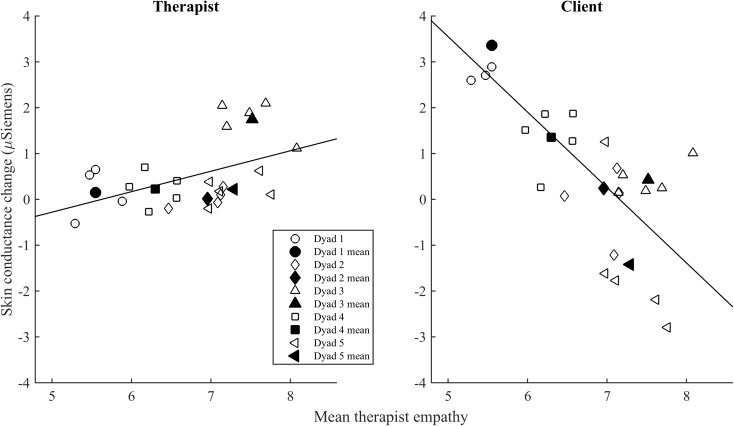
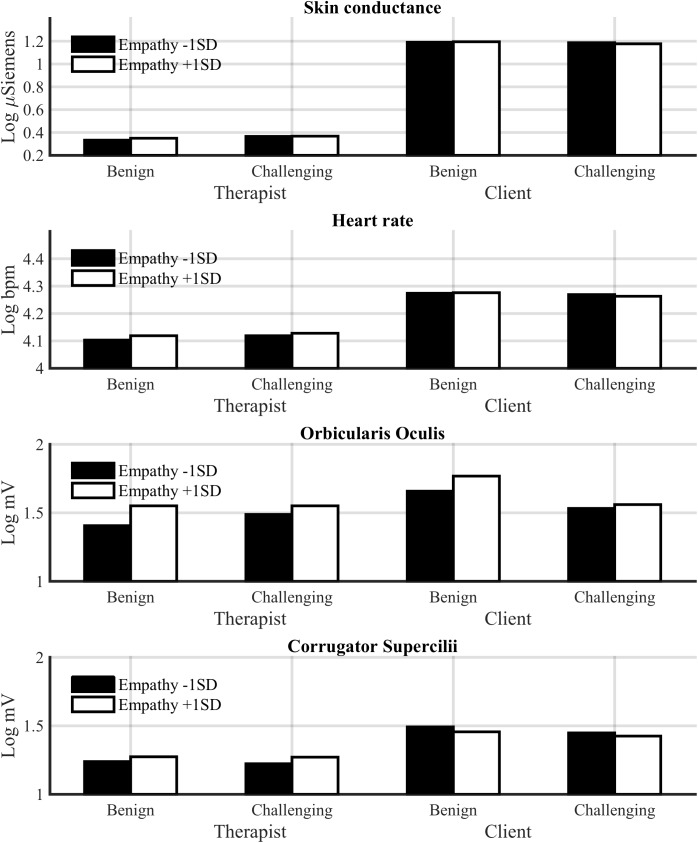
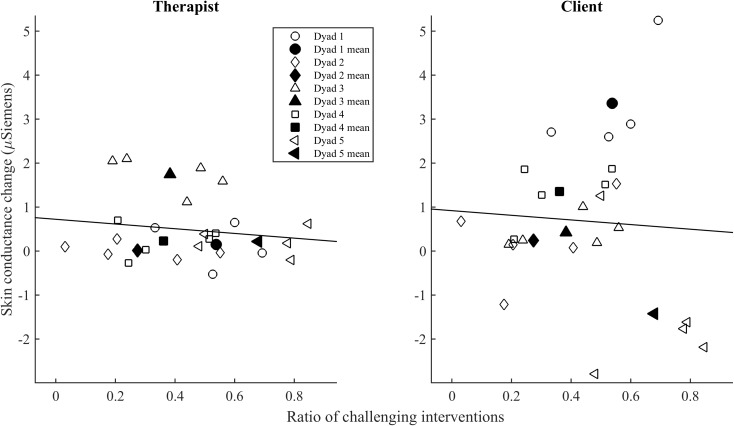
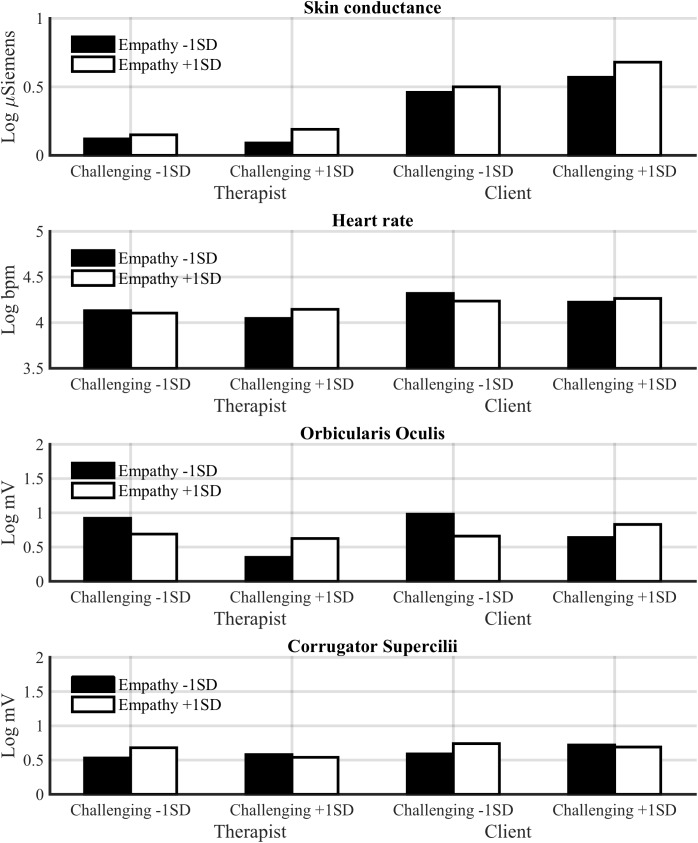
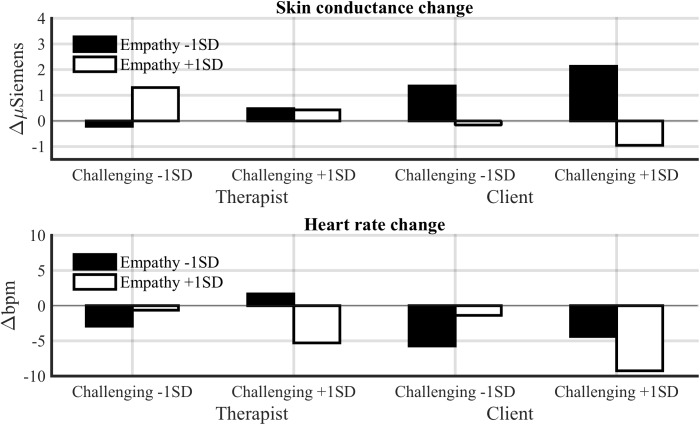
Two central dimensions in psychotherapeutic work are a therapist's empathy with clients and challenging their judgments. We investigated how they influence psychophysiological responses in the participants. Data were from psychodynamic therapy sessions, 24 sessions from 5 dyads, from which 694 therapist's interventions were coded. Heart rate and electrodermal activity (EDA) of the participants were used to index emotional arousal. Facial muscle activity (electromyography) was used to index positive and negative emotional facial expressions. Electrophysiological data were analyzed in two time frames: (a) during the therapists' interventions and (b) across the whole psychotherapy session. Both empathy and challenge had an effect on psychophysiological responses in the participants. Therapists' empathy decreased clients' and increased their own EDA across the session. Therapists' challenge increased their own EDA in response to the interventions, but not across the sessions. Clients, on the other hand, did not respond to challenges during interventions, but challenges tended to increase EDA across a session. Furthermore, there was an interaction effect between empathy and challenge. Heart rate decreased and positive facial expressions increased in sessions where empathy and challenge were coupled, i.e., the amount of both empathy and challenge was either high or low. This suggests that these two variables work together. The results highlight the therapeutic functions and interrelation of empathy and challenge, and in line with the dyadic system theory by Beebe and Lachmann (2002), the systemic linkage between interactional expression and individual regulation of emotion.
心理治疗工作中的两个核心维度是治疗师对来访者的共情以及对他们判断的质疑。我们研究了它们如何影响参与者的心理生理反应。数据来自精神动力治疗 sessions,5个二元组的24个 sessions,从中对694次治疗师的干预进行了编码。参与者的心率和皮肤电活动(EDA)被用来衡量情绪唤醒。面部肌肉活动(肌电图)被用来衡量积极和消极的情绪面部表情。电生理数据在两个时间框架内进行分析:(a)在治疗师干预期间;(b)在整个心理治疗过程中。共情和质疑都对参与者的心理生理反应产生了影响。治疗师的共情在整个疗程中降低了来访者的EDA并增加了他们自己的EDA。治疗师的质疑在干预期间增加了他们自己的EDA,但在整个疗程中没有。另一方面,来访者在干预期间对质疑没有反应,但质疑在一个疗程中往往会增加EDA。此外,共情和质疑之间存在交互作用。在共情和质疑相结合的疗程中,即共情和质疑的程度要么高要么低时,心率下降,积极的面部表情增加。这表明这两个变量共同起作用。结果突出了共情和质疑的治疗功能及相互关系,并且与Beebe和Lachmann(2002)的二元系统理论一致,即互动表达与个体情绪调节之间的系统联系。