Smith Richard D, Cornelsen Laura, Quirmbach Diana, Jebb Susan A, Marteau Theresa M
Faculty of Public Health and Policy, London School of Hygiene and Tropical Medicine, London, UK.
Behaviour and Health Research Unit, Institute of Public Health, University of Cambridge, Cambridge, UK.
BMJ Open. 2018 Apr 26;8(4):e019788. doi: 10.1136/bmjopen-2017-019788.
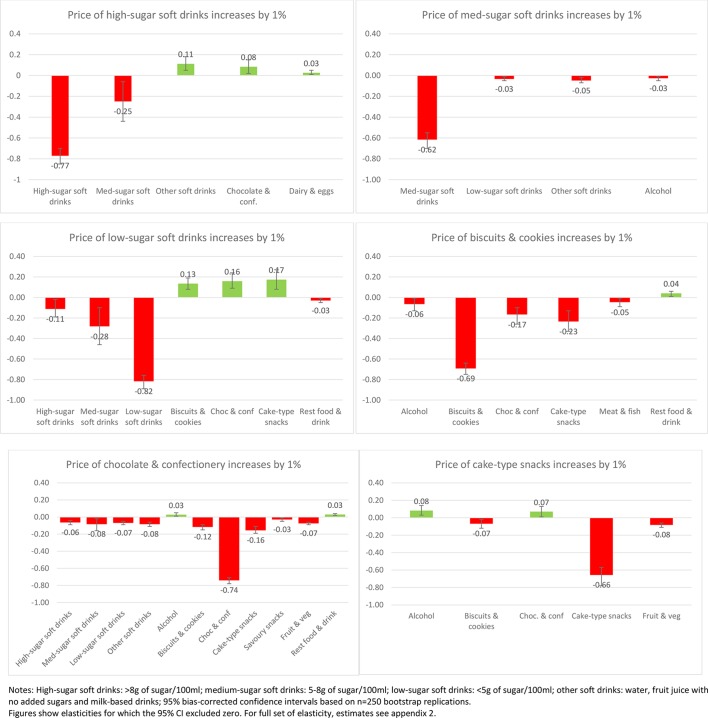
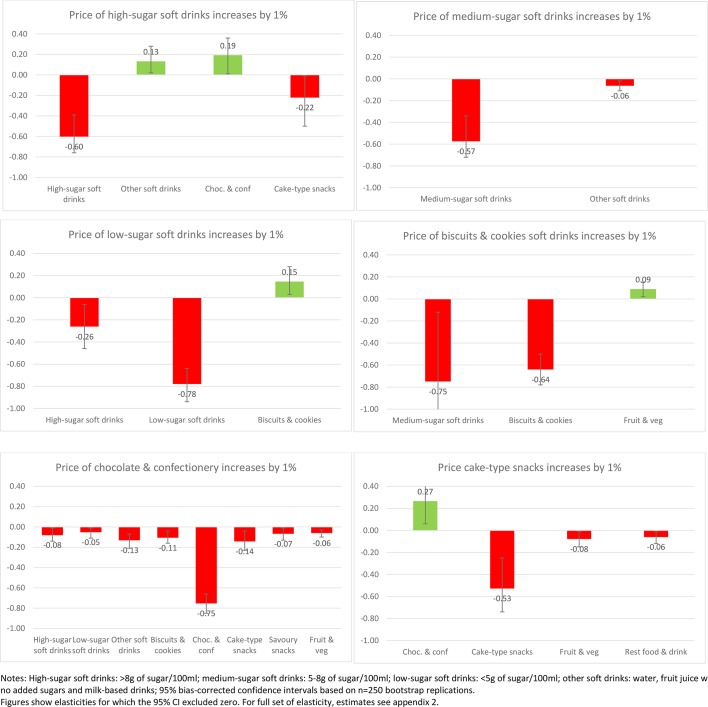
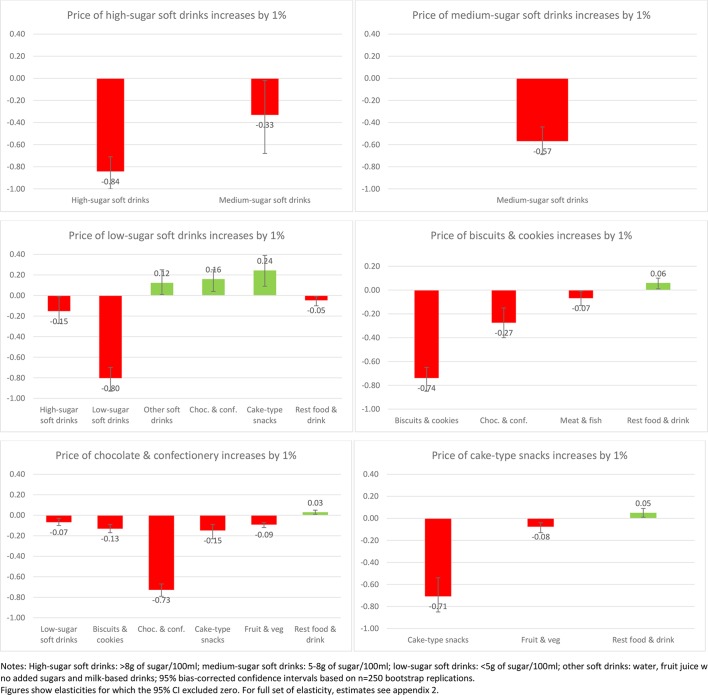
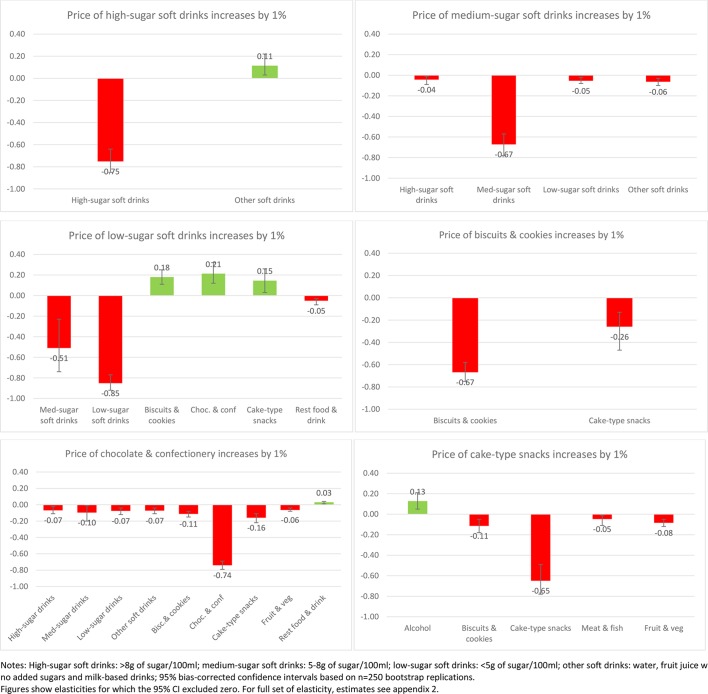
Taxing sugar-sweetened beverages (SSBs) is now advocated, and implemented, in many countries as a measure to reduce the purchase and consumption of sugar to tackle obesity. To date, there has been little consideration of the potential impact that such a measure could have if extended to other sweet foods, such as confectionery, cakes and biscuits that contribute more sugar to the diet than SSBs. The objective of this study is to compare changes in the demand for sweet snacks and SSBs arising from potential price increases.
Secondary data on household itemised purchases of all foods and beverages from 2012 to 2013.
Representative sample of 32 249 households in Great Britain.
Change in food and beverage purchases due to changes in their own price and the price of other foods or beverages measured as price elasticity of demand for the full sample and by income groups.
Chocolate and confectionery, cakes and biscuits have similar price sensitivity as SSBs, across all income groups. Unlike the case of SSBs, price increases in these categories are also likely to prompt reductions in the purchase of other sweet snacks and SSBs, which magnify the overall impact. The effects of price increases are greatest in the low-income group.
Policies that lead to increases in the price of chocolate and confectionery, cakes and biscuits may lead to additional and greater health gains than similar increases in the price of SSBs through direct reductions in the purchases of these foods and possible positive multiplier effects that reduce demand for other products. Although some uncertainty remains, the associations found in this analysis are sufficiently robust to suggest that policies-and research-concerning the use of fiscal measures should consider a broader range of products than is currently the case.
对含糖饮料征税目前在许多国家得到倡导并实施,作为减少糖分购买和消费以应对肥胖问题的一项措施。迄今为止,几乎没有人考虑过如果将这项措施扩展到其他甜食,如糖果、蛋糕和饼干(这些食品在饮食中贡献的糖分比含糖饮料更多)可能产生的潜在影响。本研究的目的是比较潜在价格上涨导致的甜味零食和含糖饮料需求变化。
2012年至2013年家庭所有食品和饮料分项购买的二手数据。
英国32249户家庭的代表性样本。
食品和饮料购买量因自身价格变化以及其他食品或饮料价格变化而产生的变化,以全样本及不同收入群体的需求价格弹性来衡量。
在所有收入群体中,巧克力及糖果、蛋糕和饼干与含糖饮料具有相似的价格敏感性。与含糖饮料的情况不同,这些品类的价格上涨还可能促使其他甜味零食和含糖饮料的购买量减少,从而放大总体影响。价格上涨对低收入群体的影响最大。
导致巧克力及糖果、蛋糕和饼干价格上涨的政策,可能比类似幅度的含糖饮料价格上涨带来更多、更大的健康益处,这是通过直接减少这些食品的购买以及可能减少对其他产品需求的正向乘数效应实现的。尽管仍存在一些不确定性,但本分析中发现的关联足够有力,表明有关财政措施使用的政策及研究应考虑比目前更广泛的产品范围。