Iowa State University, Mechanical Engineering Department, Ames, 50011, USA.
Iowa State University, Plant Pathology and Microbiology Department, Ames, 50011, USA.
Sci Rep. 2018 Jun 14;8(1):9145. doi: 10.1038/s41598-018-27272-w.
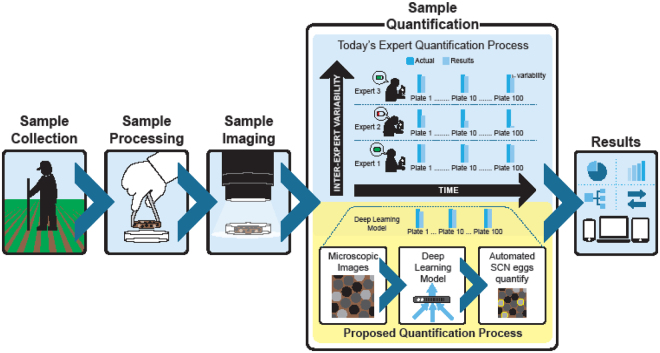
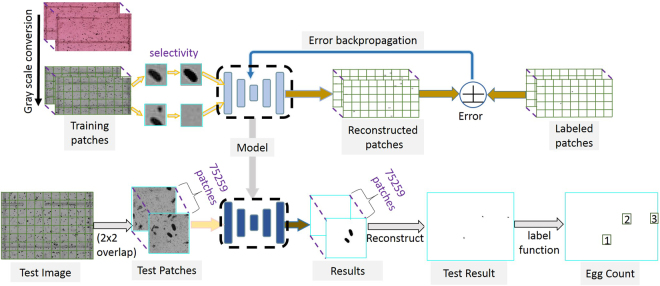
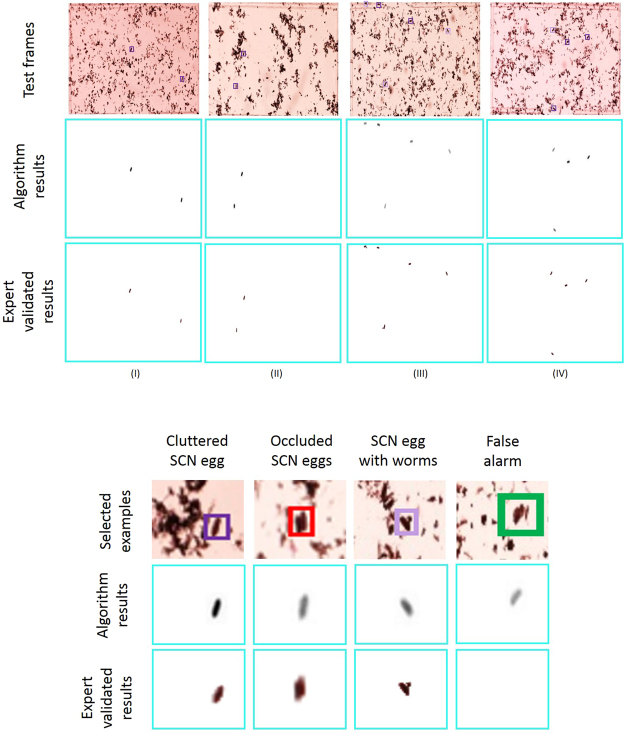
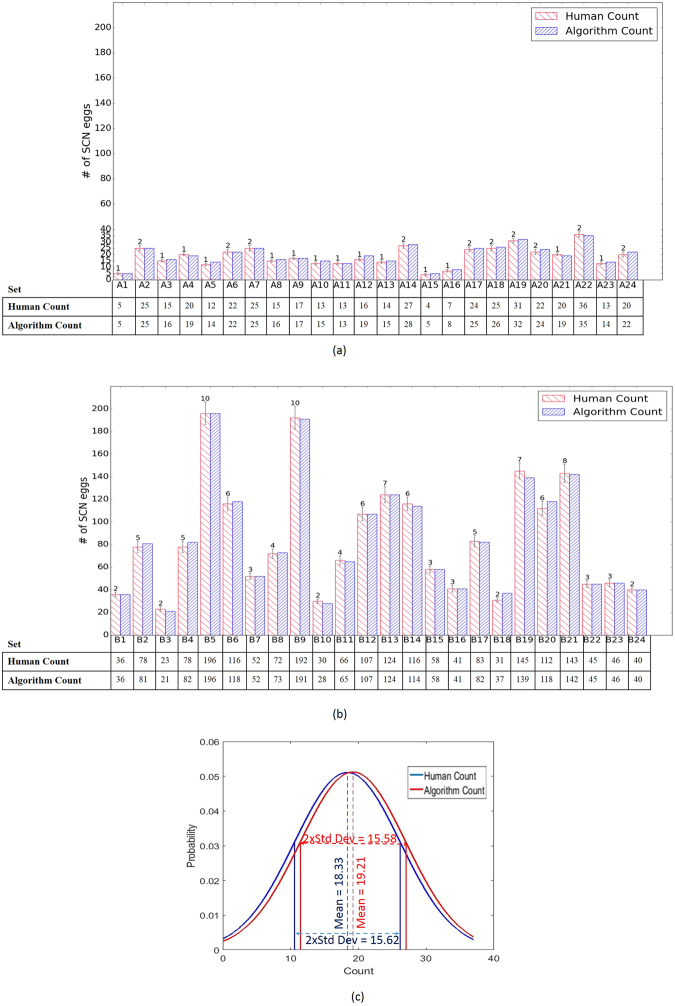
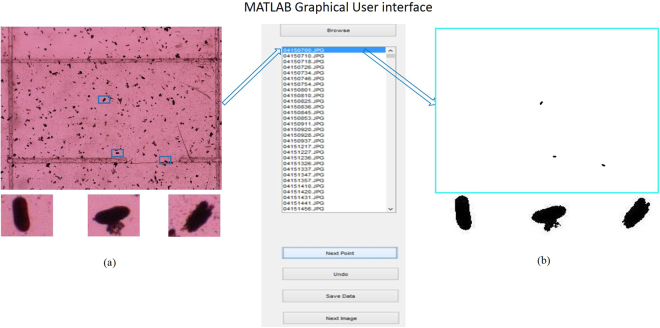
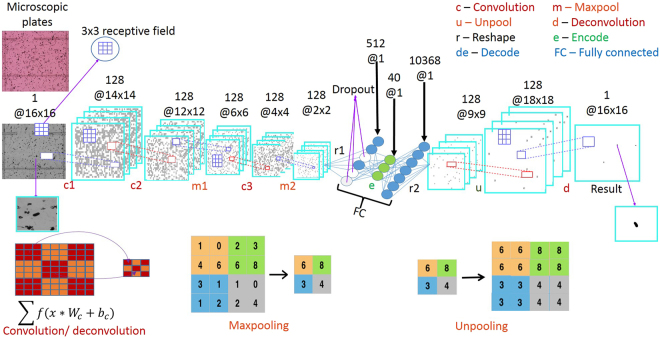
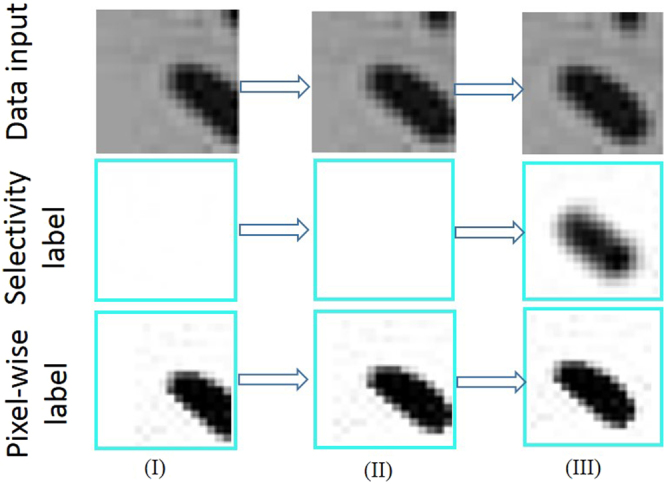
In order to identify and control the menace of destructive pests via microscopic image-based identification state-of-the art deep learning architecture is demonstrated on the parasitic worm, the soybean cyst nematode (SCN), Heterodera glycines. Soybean yield loss is negatively correlated with the density of SCN eggs that are present in the soil. While there has been progress in automating extraction of egg-filled cysts and eggs from soil samples counting SCN eggs obtained from soil samples using computer vision techniques has proven to be an extremely difficult challenge. Here we show that a deep learning architecture developed for rare object identification in clutter-filled images can identify and count the SCN eggs. The architecture is trained with expert-labeled data to effectively build a machine learning model for quantifying SCN eggs via microscopic image analysis. We show dramatic improvements in the quantification time of eggs while maintaining human-level accuracy and avoiding inter-rater and intra-rater variabilities. The nematode eggs are correctly identified even in complex, debris-filled images that are often difficult for experts to identify quickly. Our results illustrate the remarkable promise of applying deep learning approaches to phenotyping for pest assessment and management.
为了通过基于微观图像的识别来识别和控制破坏性害虫的威胁,展示了最先进的深度学习架构,用于寄生线虫,大豆胞囊线虫(SCN),大豆胞囊线虫。大豆产量的损失与土壤中存在的 SCN 卵的密度呈负相关。虽然在自动化提取充满卵的胞囊和从土壤样本中提取卵方面已经取得了进展,但使用计算机视觉技术从土壤样本中计数 SCN 卵被证明是一项极其困难的挑战。在这里,我们展示了一种专为杂乱图像中稀有物体识别而开发的深度学习架构,可以识别和计数 SCN 卵。该架构使用经过专家标记的数据进行训练,可有效构建用于通过微观图像分析量化 SCN 卵的机器学习模型。我们展示了在保持人类水平的准确性和避免评级者间和评级者内变异性的同时,量化卵的时间有了显著的提高。即使在专家也难以快速识别的复杂、充满碎屑的图像中,线虫卵也能被正确识别。我们的结果说明了将深度学习方法应用于害虫评估和管理的表型分析的巨大潜力。