Center for Cardiology, Cardiology I - Laboratory of Molecular Cardiology, University Medical Center of the Johannes Gutenberg-University Mainz, Langenbeckstr. 1, Mainz, Germany.
German Center for Cardiovascular Research (DZHK), Partner Site Rhine-Main, Langenbeckstr. 1, Mainz, Germany.
Eur Heart J. 2018 Oct 7;39(38):3528-3539. doi: 10.1093/eurheartj/ehy333.
Aircraft noise causes endothelial dysfunction, oxidative stress, and inflammation. Transportation noise increases the incidence of coronary artery disease, hypertension, and stroke. The underlying mechanisms are not well understood. Herein, we investigated effects of phagocyte-type NADPH oxidase (Nox2) knockout and different noise protocols (around-the-clock, sleep/awake phase noise) on vascular and cerebral complications in mice.
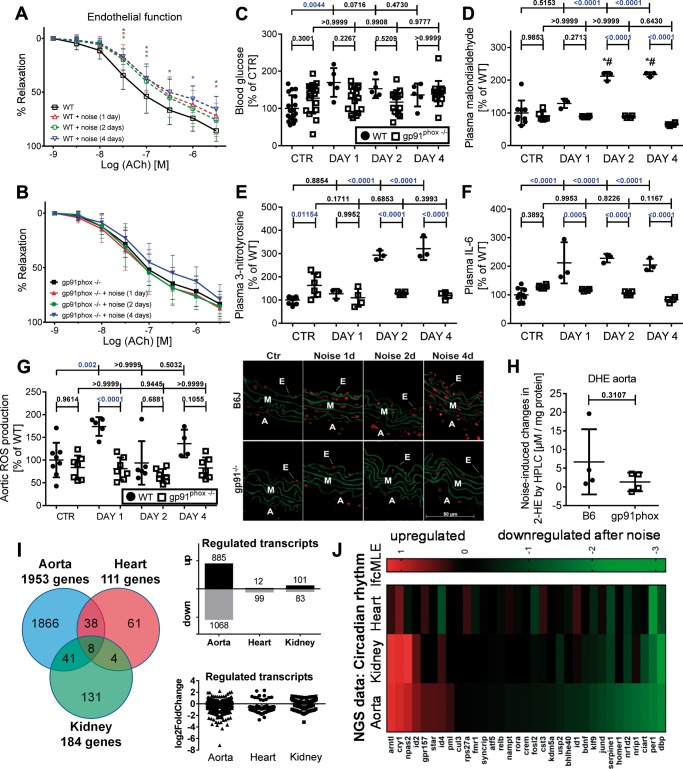
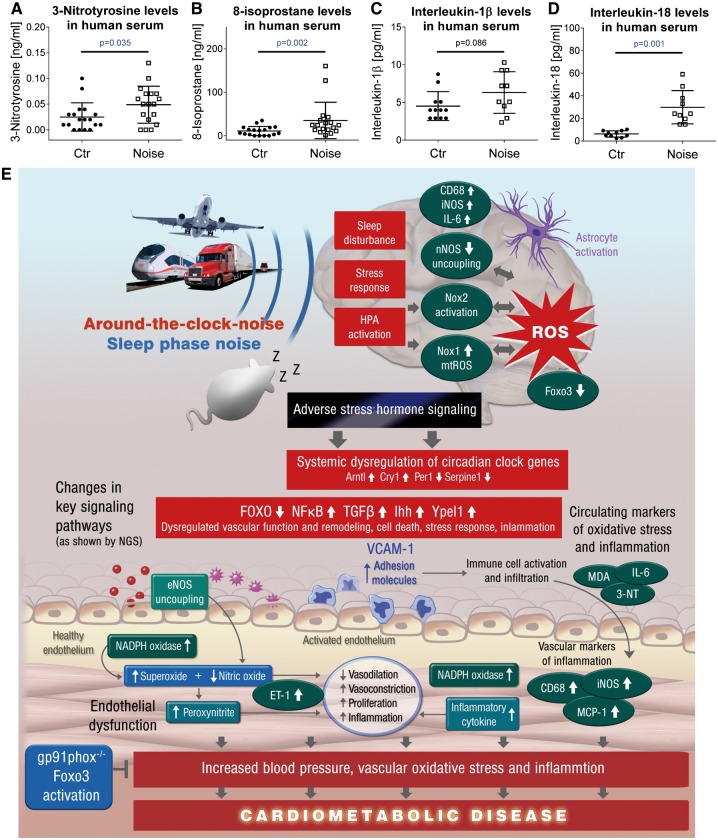
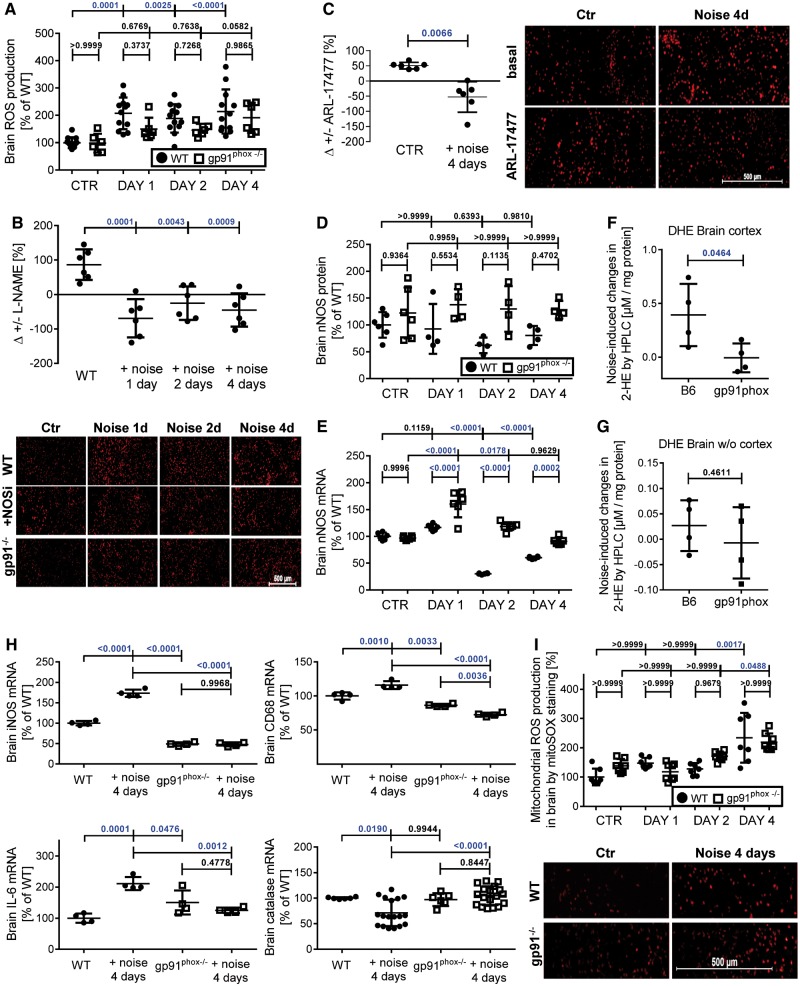
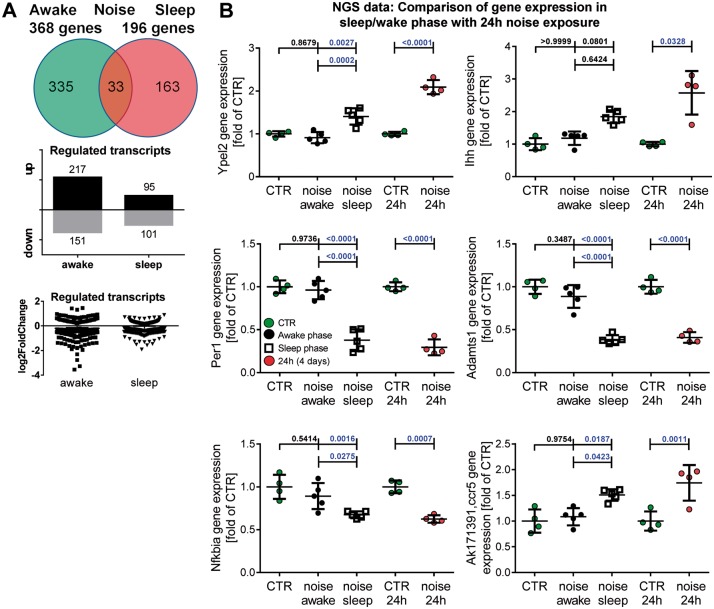
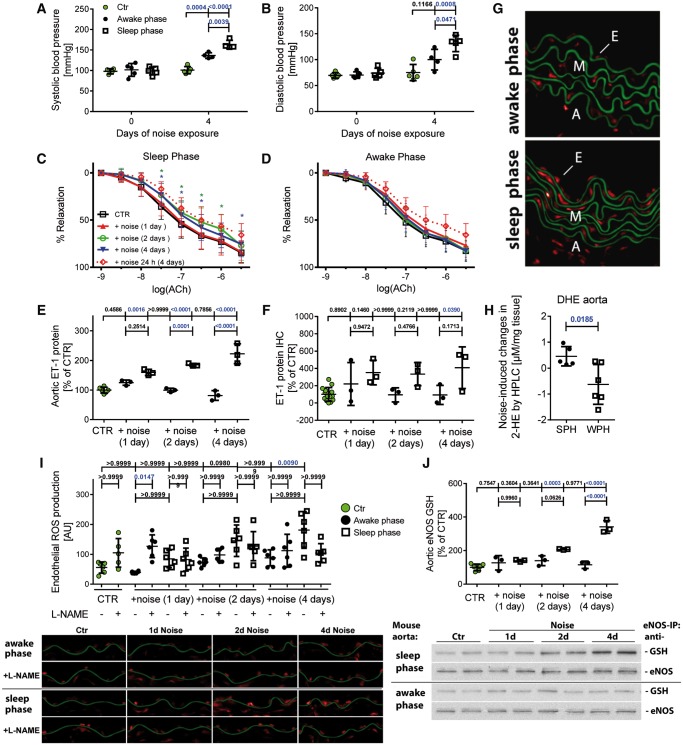
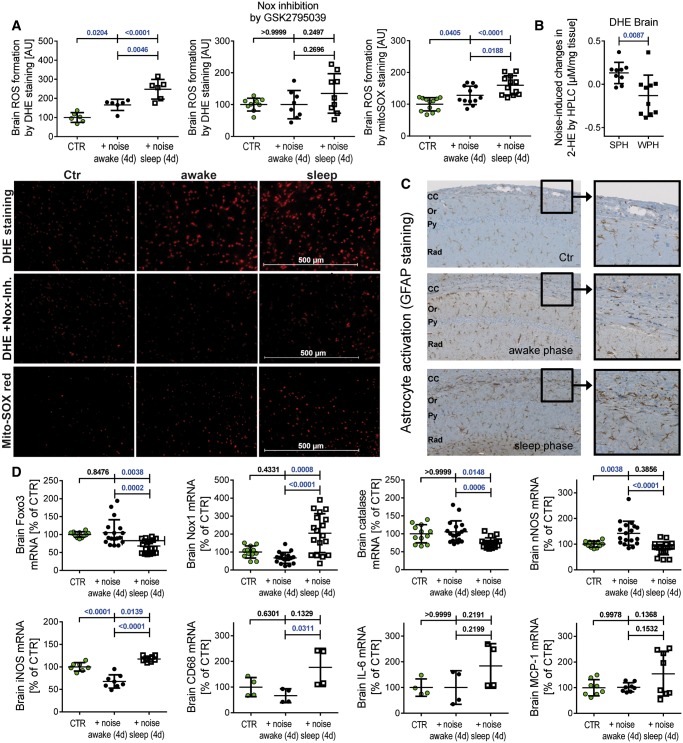
C57BL/6j and Nox2-/- (gp91phox-/-) mice were exposed to aircraft noise (maximum sound level of 85 dB(A), average sound pressure level of 72 dB(A)) around-the-clock or during sleep/awake phases for 1, 2, and 4 days. Adverse effects of around-the-clock noise on the vasculature and brain were mostly prevented by Nox2 deficiency. Around-the-clock aircraft noise of the mice caused the most pronounced vascular effects and dysregulation of Foxo3/circadian clock as revealed by next generation sequencing (NGS), suggesting impaired sleep quality in exposed mice. Accordingly, sleep but not awake phase noise caused increased blood pressure, endothelial dysfunction, increased markers of vascular/systemic oxidative stress, and inflammation. Noise also caused cerebral oxidative stress and inflammation, endothelial and neuronal nitric oxide synthase (e/nNOS) uncoupling, nNOS mRNA and protein down-regulation, and Nox2 activation. NGS revealed similarities in adverse gene regulation between around-the-clock and sleep phase noise. In patients with established coronary artery disease, night-time aircraft noise increased oxidative stress, and inflammation biomarkers in serum.
Aircraft noise increases vascular and cerebral oxidative stress via Nox2. Sleep deprivation and/or fragmentation caused by noise triggers vascular dysfunction. Thus, preventive measures that reduce night-time aircraft noise are warranted.
飞机噪音会导致内皮功能障碍、氧化应激和炎症。交通噪音会增加冠状动脉疾病、高血压和中风的发病率。其潜在机制尚不清楚。在此,我们研究了吞噬细胞型 NADPH 氧化酶 (Nox2) 敲除和不同噪声方案(昼夜噪声、睡眠/觉醒相噪声)对小鼠血管和大脑并发症的影响。
C57BL/6j 和 Nox2-/-(gp91phox-/-)小鼠接受昼夜飞机噪声(最大声级 85dB(A),平均声压级 72dB(A))、睡眠/觉醒相噪声 1、2 和 4 天。Nox2 缺乏可预防昼夜噪声对血管和大脑的大部分不良影响。昼夜飞机噪声对小鼠的血管和生物钟的影响最明显,这是通过下一代测序(NGS)揭示的,表明暴露于噪声中的小鼠睡眠质量受损。因此,睡眠相而不是觉醒相噪声会导致血压升高、内皮功能障碍、血管/全身氧化应激标志物增加和炎症。噪声还会导致大脑氧化应激和炎症、内皮和神经元型一氧化氮合酶(e/nNOS)解偶联、nNOS mRNA 和蛋白下调以及 Nox2 激活。NGS 揭示了昼夜噪声和睡眠相噪声之间相似的不良基因调控。在已确诊的冠状动脉疾病患者中,夜间飞机噪声会增加血清中的氧化应激和炎症生物标志物。
飞机噪声通过 Nox2 增加血管和大脑的氧化应激。噪声引起的睡眠剥夺和/或碎片化会引发血管功能障碍。因此,有必要采取预防措施减少夜间飞机噪声。