Chung Heewon, Ko Hoon, Jeon Se Jeong, Yoon Kwon-Ha, Lee Jinseok
Department of Biomedical EngineeringWonkwang University College of MedicineIksan54538South Korea.
Department of RadiologyWonkwang University College of MedicineIksan54538South Korea.
IEEE J Transl Eng Health Med. 2018 May 18;6:1800513. doi: 10.1109/JTEHM.2018.2837901. eCollection 2018.
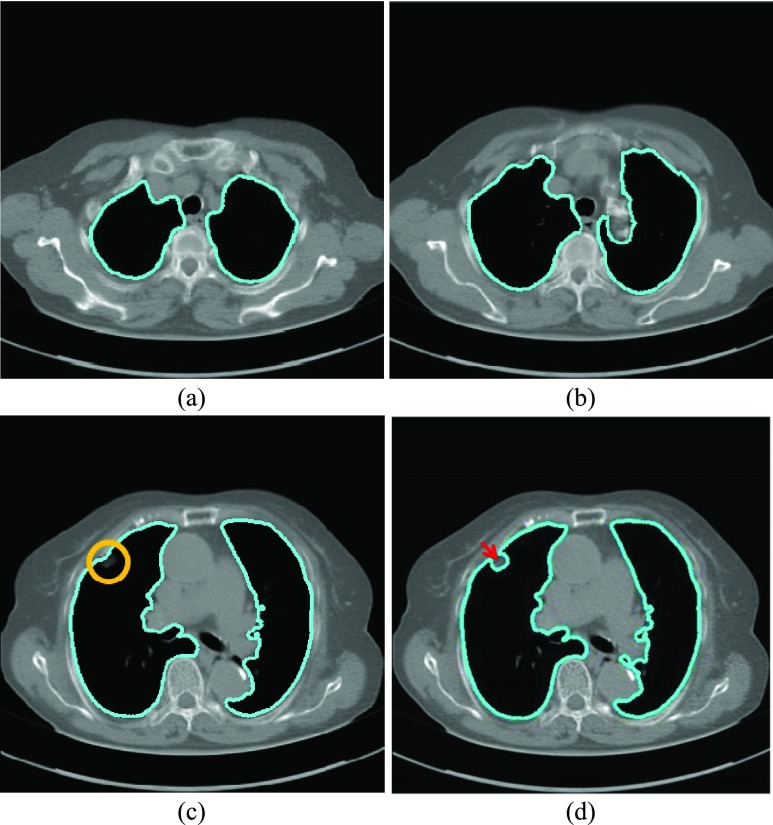
chest computed tomography (CT) images and their quantitative analyses have become increasingly important for a variety of purposes, including lung parenchyma density analysis, airway analysis, diaphragm mechanics analysis, and nodule detection for cancer screening. Lung segmentation is an important prerequisite step for automatic image analysis. We propose a novel lung segmentation method to minimize the juxta-pleural nodule issue, a notorious challenge in the applications.
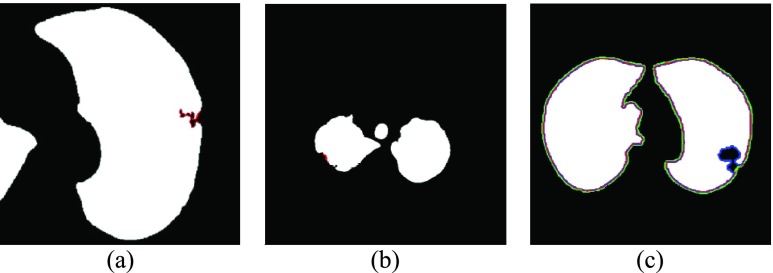
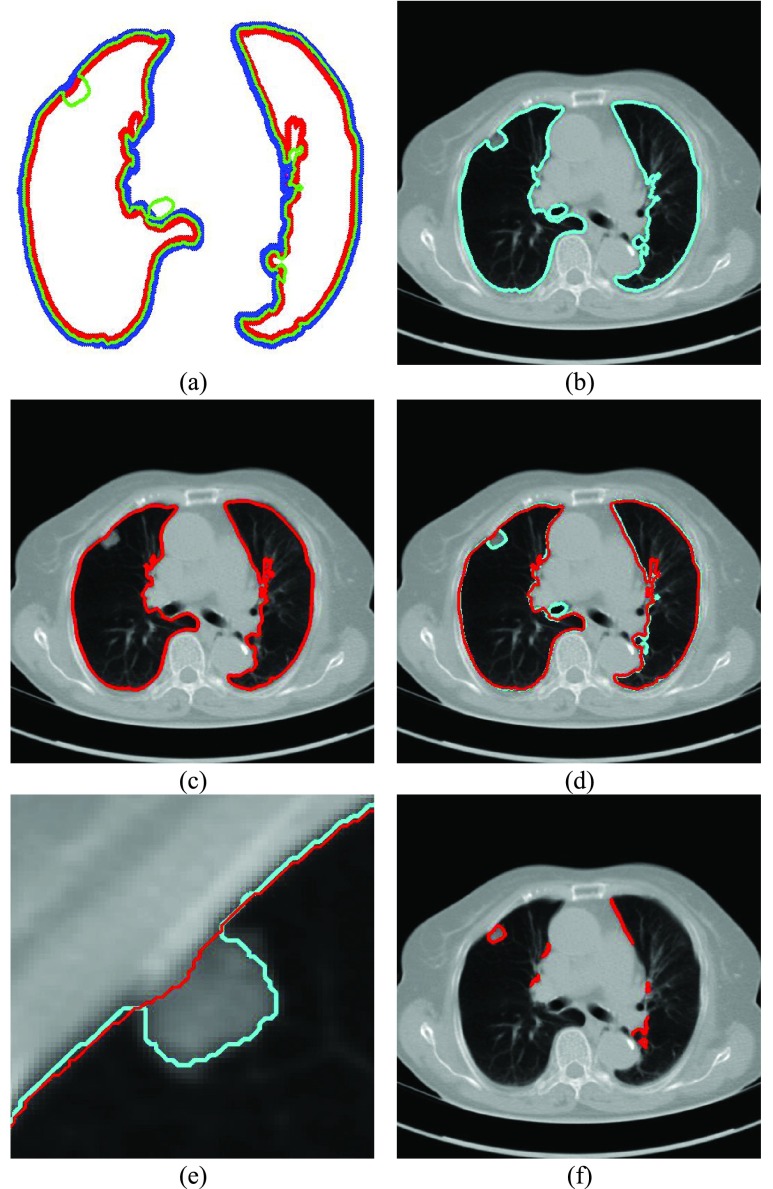
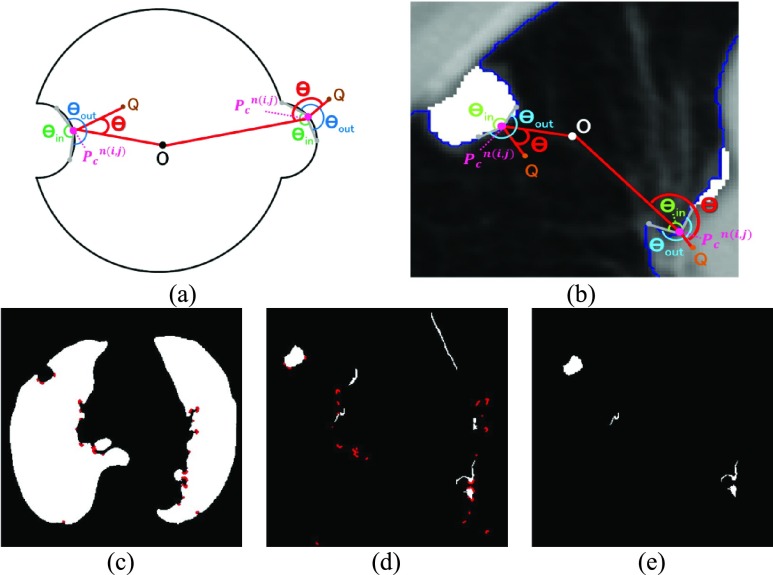
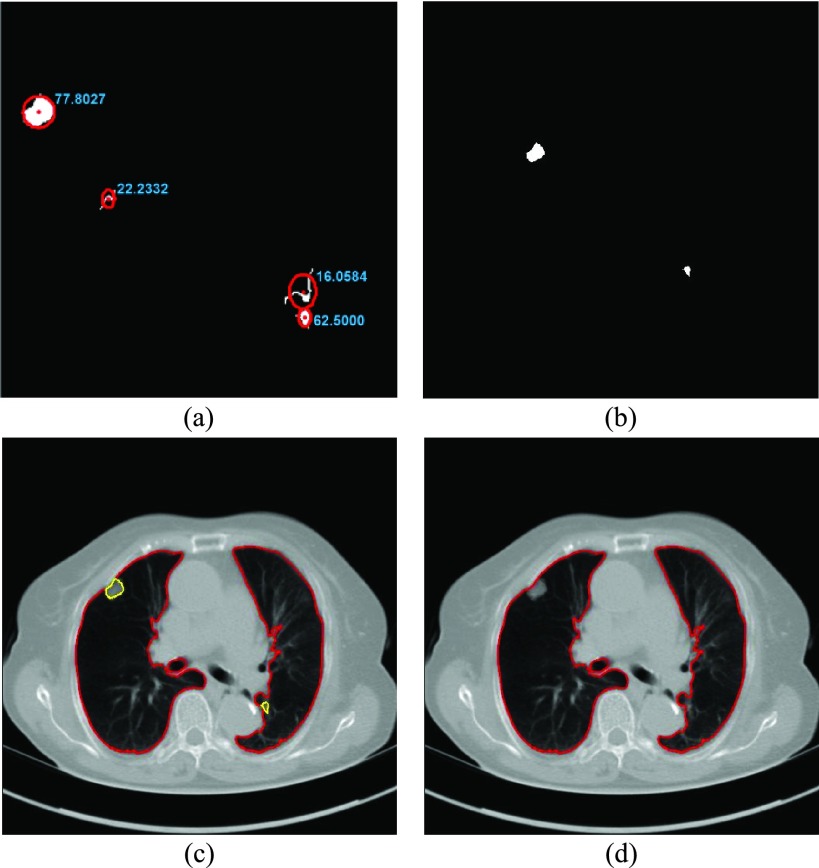
we initially used the Chan-Vese (CV) model for active lung contours and adopted a Bayesian approach based on the CV model results, which predicts the lung image based on the segmented lung contour in the previous frame image or neighboring upper frame image. Among the resultant juxta-pleural nodule candidates, false positives were eliminated through concave points detection and circle/ellipse Hough transform. Finally, the lung contour was modified by adding the final nodule candidates to the area of the CV model results.
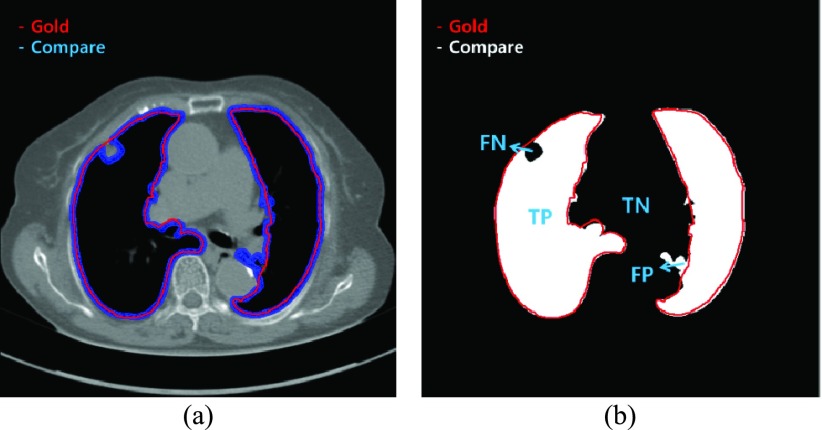
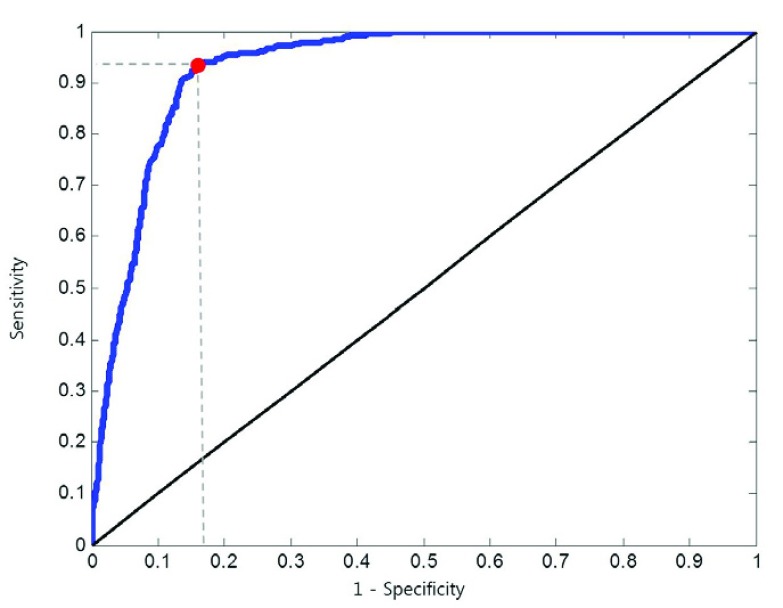
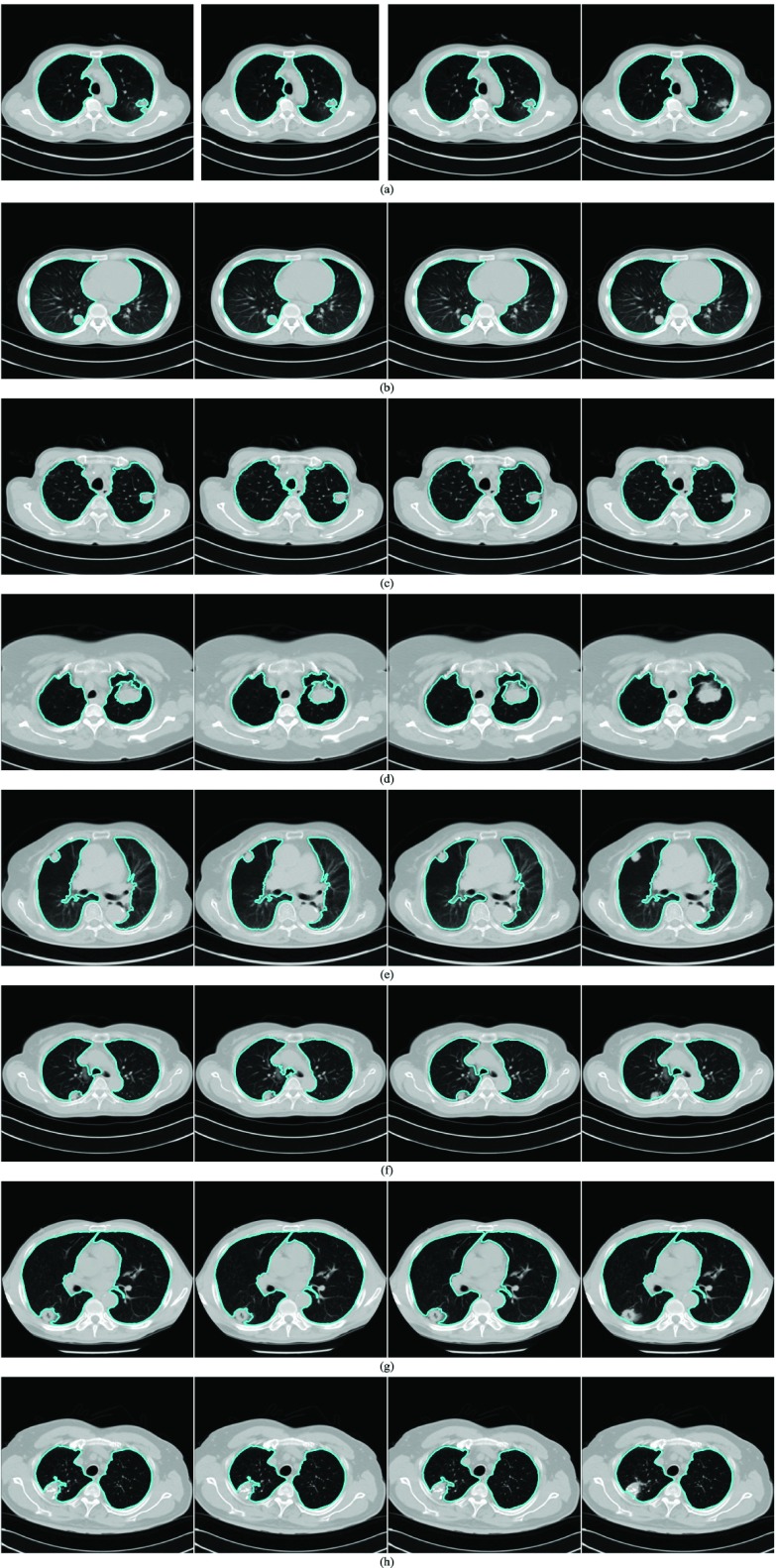
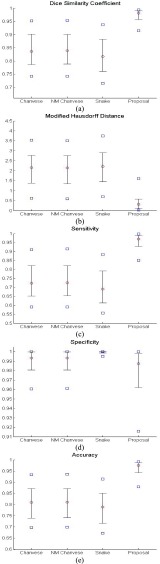
to evaluate the proposed method, we collected chest CT digital imaging and communications in medicine images of 84 anonymous subjects, including 42 subjects with juxta-pleural nodules. There were 16 873 images in total. Among the images, 314 included juxta-pleural nodules. Our method exhibited a disc similarity coefficient of 0.9809, modified hausdorff distance of 0.4806, sensitivity of 0.9785, specificity of 0.9981, accuracy of 0.9964, and juxta-pleural nodule detection rate of 96%. It outperformed existing methods, such as the CV model used alone, the normalized CV model, and the snake algorithm. Clinical impact: the high accuracy with the juxta-pleural nodule detection in the lung segmentation can be beneficial for any computer aided diagnosis system that uses lung segmentation as an initial step.
胸部计算机断层扫描(CT)图像及其定量分析在多种用途中变得越来越重要,包括肺实质密度分析、气道分析、膈肌力学分析以及癌症筛查中的结节检测。肺分割是自动图像分析的重要前提步骤。我们提出了一种新颖的肺分割方法,以尽量减少胸膜旁结节问题,这是应用中一个臭名昭著的挑战。
我们最初使用Chan-Vese(CV)模型进行主动肺轮廓提取,并基于CV模型结果采用贝叶斯方法,该方法根据前一帧图像或相邻上一帧图像中的分割肺轮廓来预测肺图像。在所得的胸膜旁结节候选区域中,通过凹点检测和圆形/椭圆形霍夫变换消除假阳性。最后,通过将最终的结节候选区域添加到CV模型结果区域来修改肺轮廓。
为了评估所提出的方法,我们收集了84名匿名受试者的胸部CT医学数字成像和通信图像,其中包括42名有胸膜旁结节的受试者。总共有16873张图像。在这些图像中,314张包含胸膜旁结节。我们的方法表现出圆盘相似系数为0.9809,修正豪斯多夫距离为0.4806,灵敏度为0.9785,特异性为0.9981,准确率为0.9964,胸膜旁结节检测率为96%。它优于现有方法,如单独使用的CV模型、归一化CV模型和蛇形算法。临床影响:在肺分割中对胸膜旁结节检测具有高准确性,这对任何将肺分割作为初始步骤的计算机辅助诊断系统都可能有益。