Lescano Caroline H, Freitas de Lima Fernando, Mendes-Silvério Camila B, Justo Alberto F O, da Silva Baldivia Débora, Vieira Cristiano P, Sanjinez-Argandoña Eliana J, Cardoso Claudia A L, Mónica Fabíola Z, Pires de Oliveira Ivan
Department of Pharmacology, University of Campinas, Campinas, Brazil.
Department of Chemical Engineering, University of Campinas, Campinas, Brazil.
Front Pharmacol. 2018 Jun 12;9:617. doi: 10.3389/fphar.2018.00617. eCollection 2018.
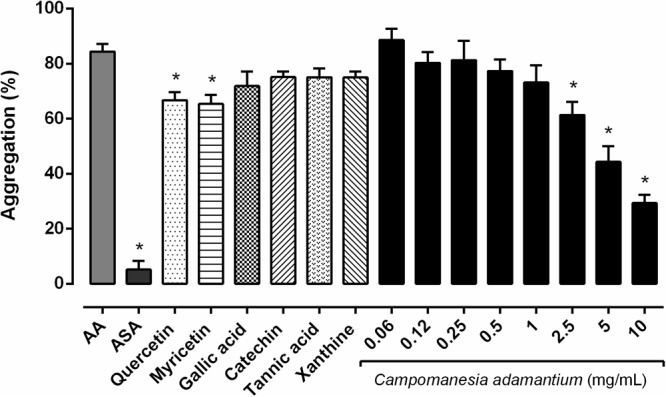
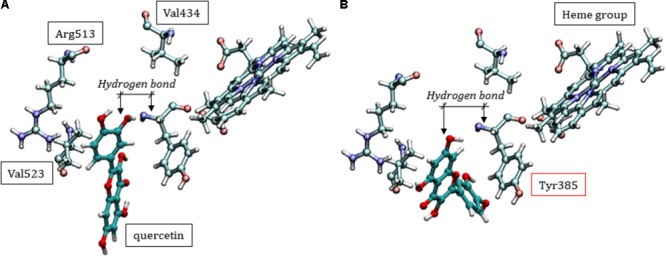
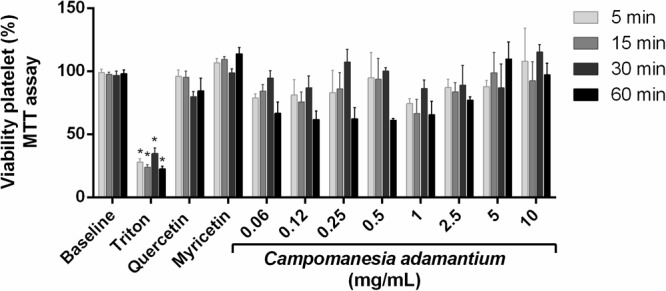
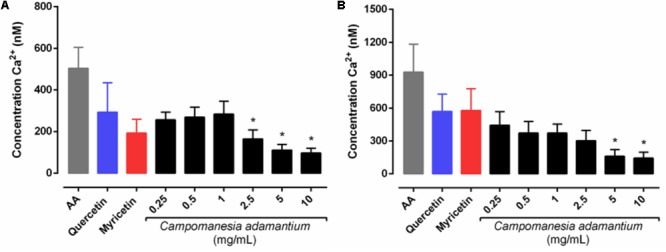
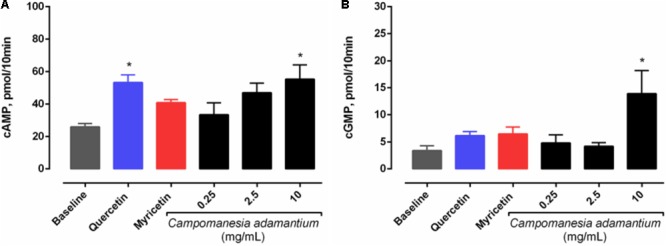
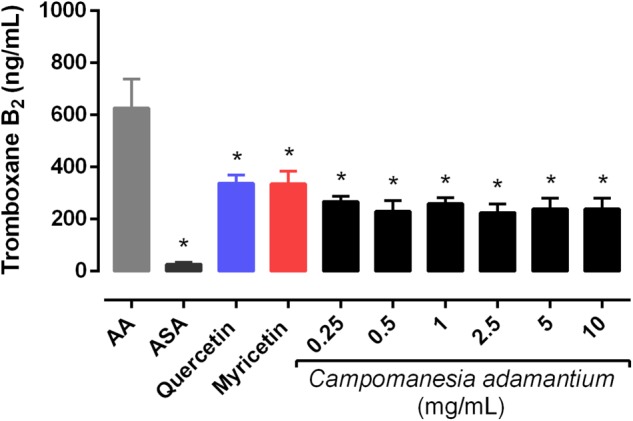
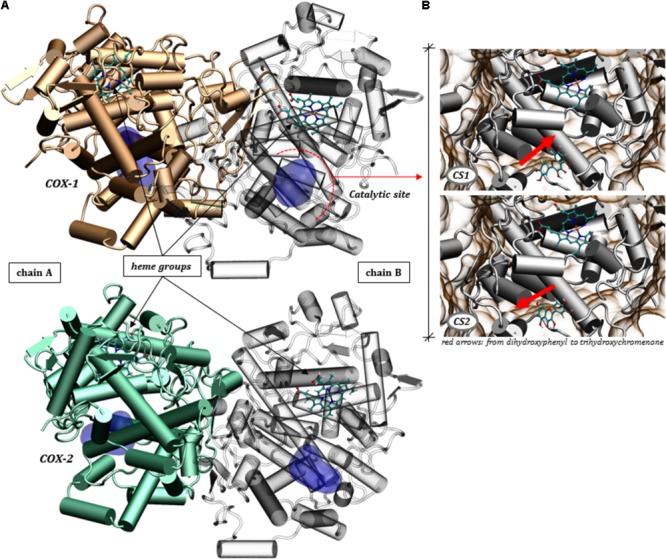
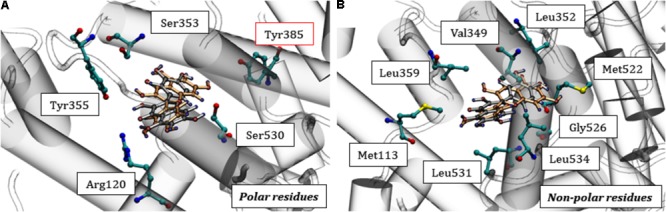
is a medicinal plant of the Brazilian Cerrado. Different parts of its fruits are used in popular medicine to treat gastrointestinal disorders, rheumatism, urinary tract infections and inflammations. Despite its widespread use by the local population, the mechanisms involving platelet aggregation and the inhibition of cyclooxygenase by are unknown. This study evaluated the chemical composition, antioxidant activities and potential benefits of the peel extract (CAPE) and its components in the platelet aggregation induced by arachidonic acid in platelet-rich plasma. Aspects of the pharmacological mechanism were investigated as follows: platelet viability, calcium mobilization, levels of the cyclic nucleotides cAMP and cGMP, thromboxane B levels, and the inhibitory effects on COX-1 and COX-2 were studied and using molecular docking in the catalytic domain of these proteins. The major CAPE constituents standing out from the chemical analysis are the flavonoids, namely those of the flavones and chalcones class. The results showed that CAPE, quercetin and myricetin significantly decreased arachidonic acid-induced platelet aggregation; the assays showed that CAPE and quercetin decreased the mobilization of calcium and thromboxane B levels in platelets and increased cAMP and cGMP levels. Moreover, CAPE inhibited the activity of COX-1 and COX-2, highlighting that quercetin could potentially prevent the access of arachidonic acid more to the catalytic site of COX-1 than COX-2. These results highlight CAPE's potential as a promising therapeutic candidate for the prevention and treatment of diseases associated with platelet aggregation.
是一种巴西塞拉多地区的药用植物。其果实的不同部位在民间医学中用于治疗胃肠道疾病、风湿病、尿路感染和炎症。尽管当地居民广泛使用它,但其涉及血小板聚集以及对环氧化酶抑制作用的机制尚不清楚。本研究评估了果皮提取物(CAPE)及其成分在富含血小板血浆中花生四烯酸诱导的血小板聚集中的化学成分、抗氧化活性和潜在益处。研究了药理机制的以下方面:血小板活力、钙动员、环核苷酸cAMP和cGMP水平、血栓素B水平以及对COX - 1和COX - 2的抑制作用,并在这些蛋白质的催化结构域中使用分子对接进行研究。化学分析中突出的主要CAPE成分是黄酮类化合物,即黄酮类和查耳酮类。结果表明,CAPE、槲皮素和杨梅素显著降低花生四烯酸诱导的血小板聚集;实验表明,CAPE和槲皮素降低了血小板中钙的动员和血栓素B水平,并提高了cAMP和cGMP水平。此外,CAPE抑制了COX - 1和COX - 2的活性,突出表明槲皮素可能比COX - 2更能阻止花生四烯酸进入COX - 1的催化位点。这些结果突出了CAPE作为预防和治疗与血小板聚集相关疾病的有前途的治疗候选物的潜力。