Department of Biomedical Engineering, Faculty of Medicine, Shahid Beheshti University of Medical Sciences, Tehran 1985717443, Iran.
Department of Biomedical Engineering, University of Connecticut, Storrs, CT 06269, USA.
Sensors (Basel). 2018 Jun 29;18(7):2090. doi: 10.3390/s18072090.
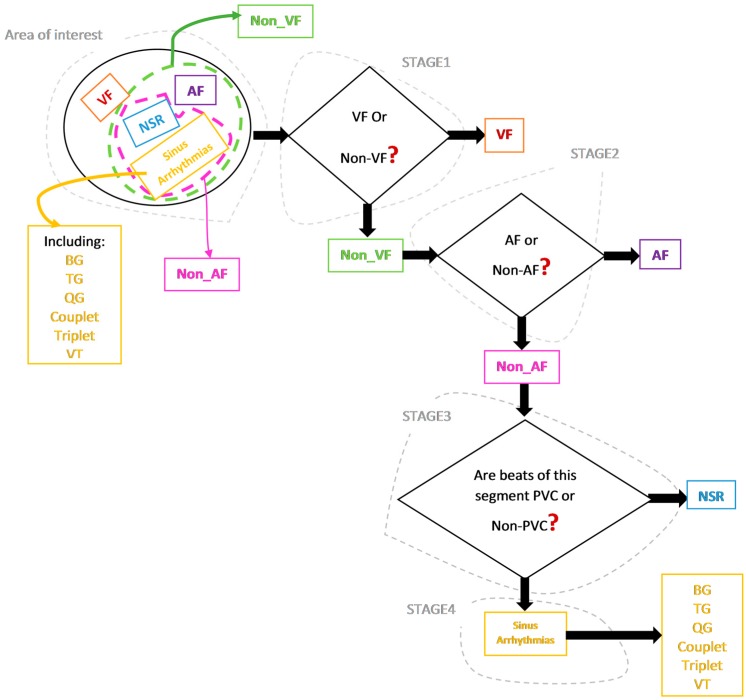
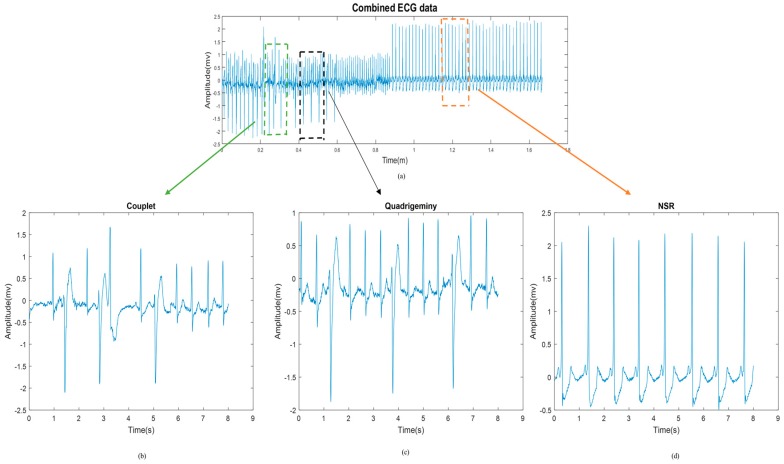
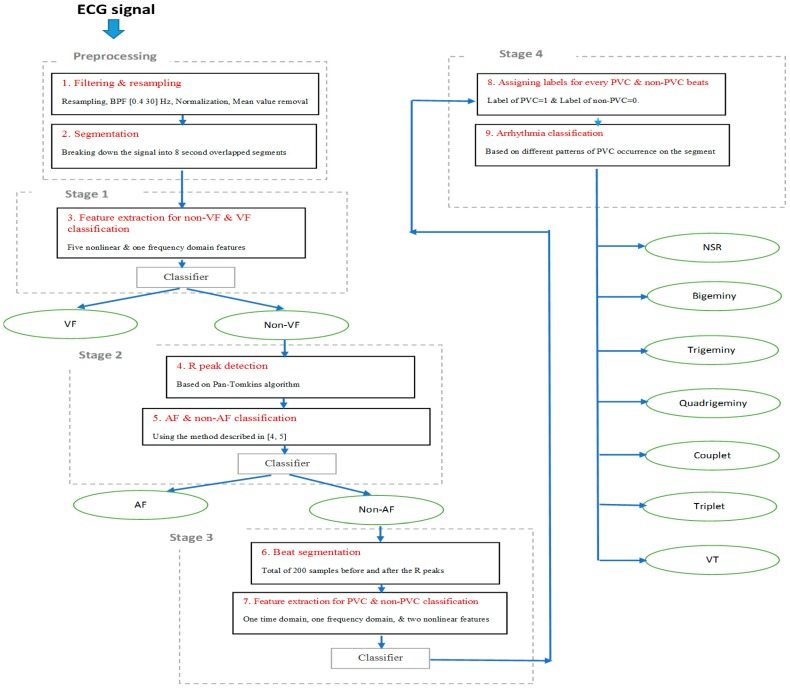
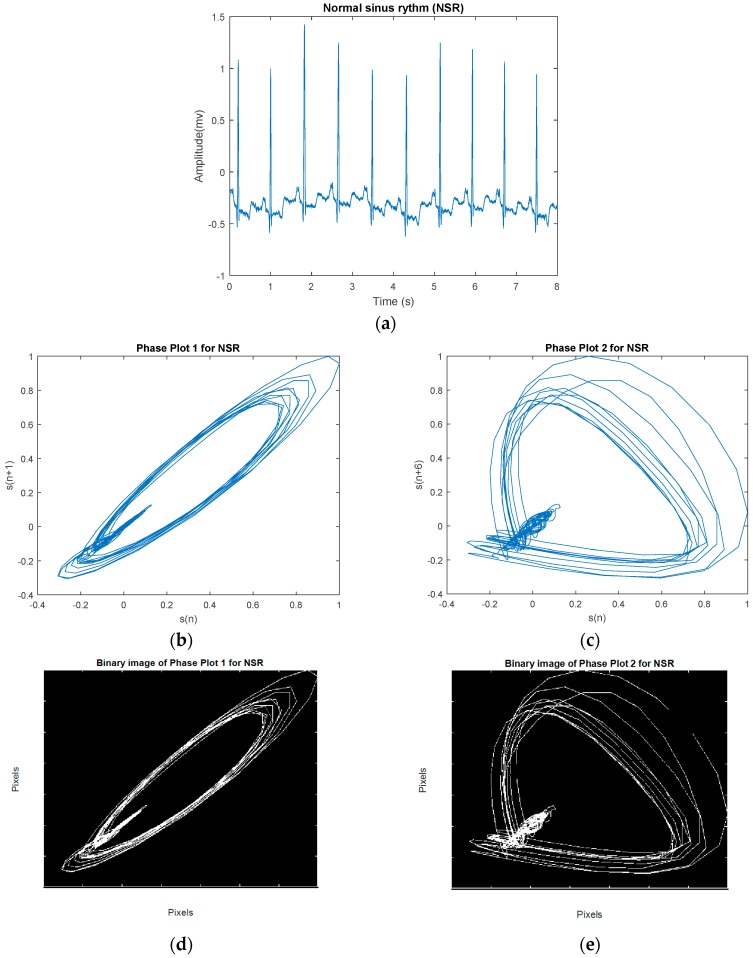
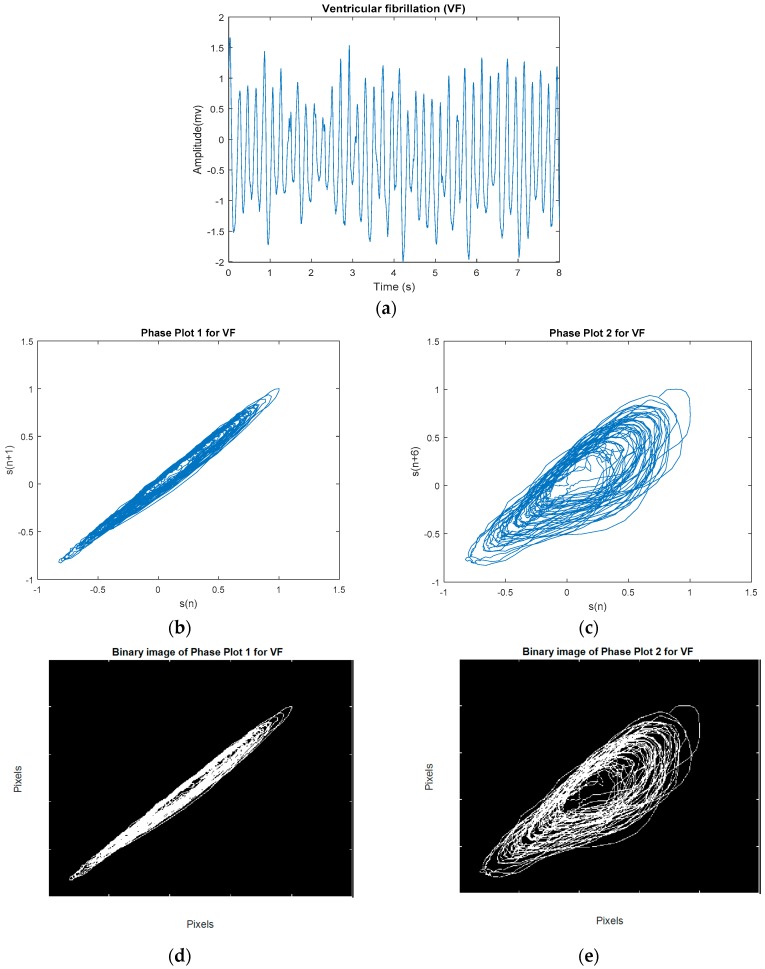
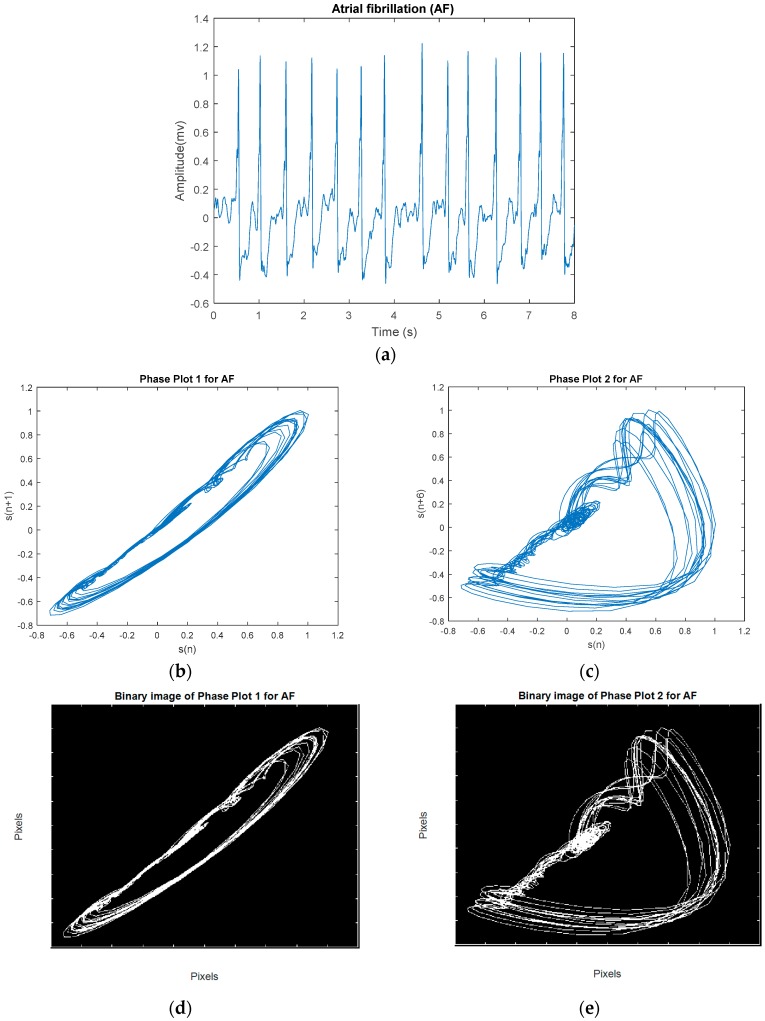
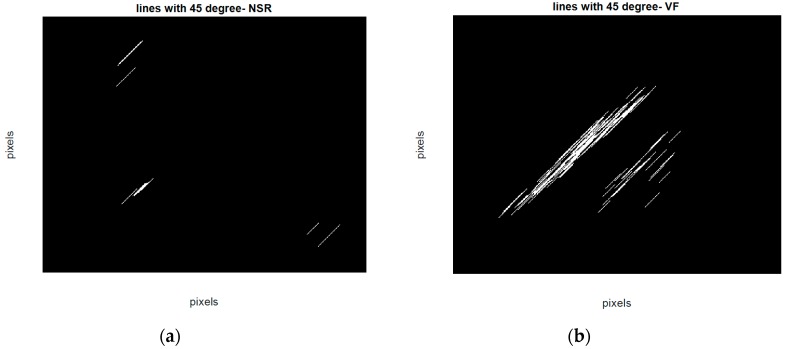
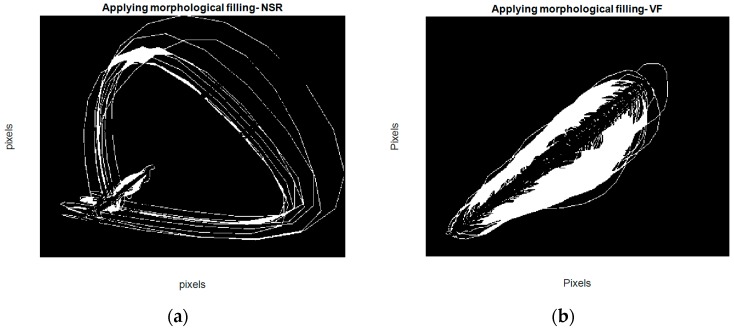
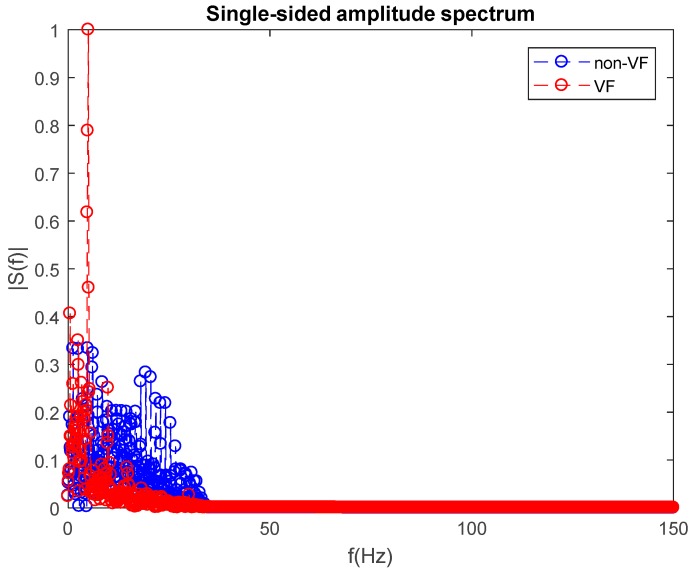
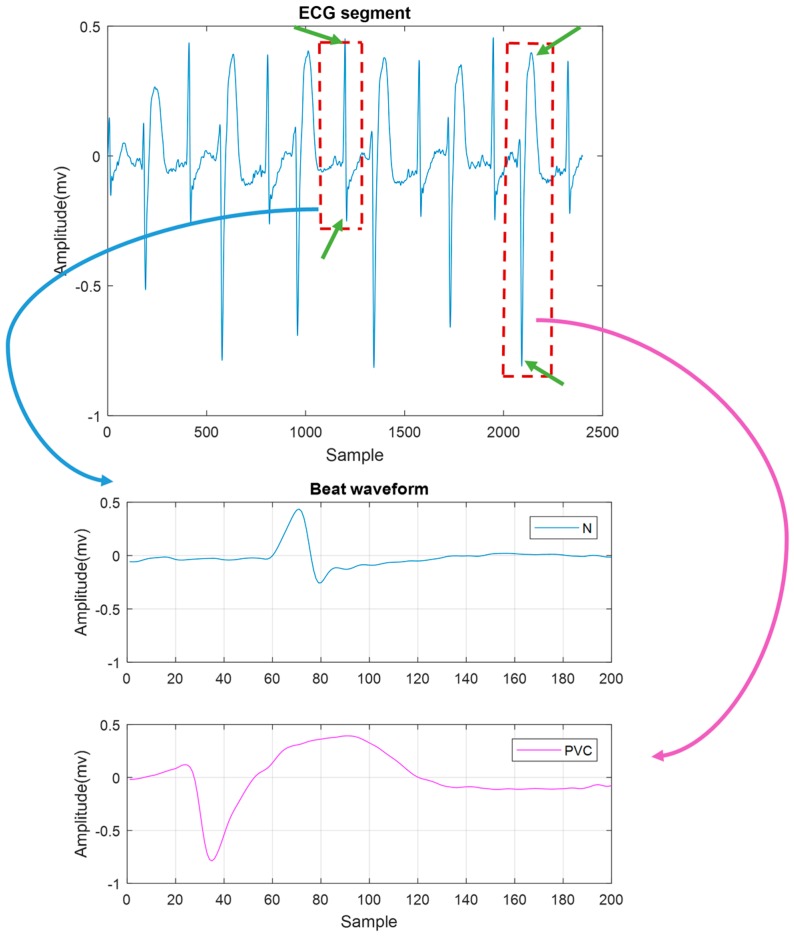
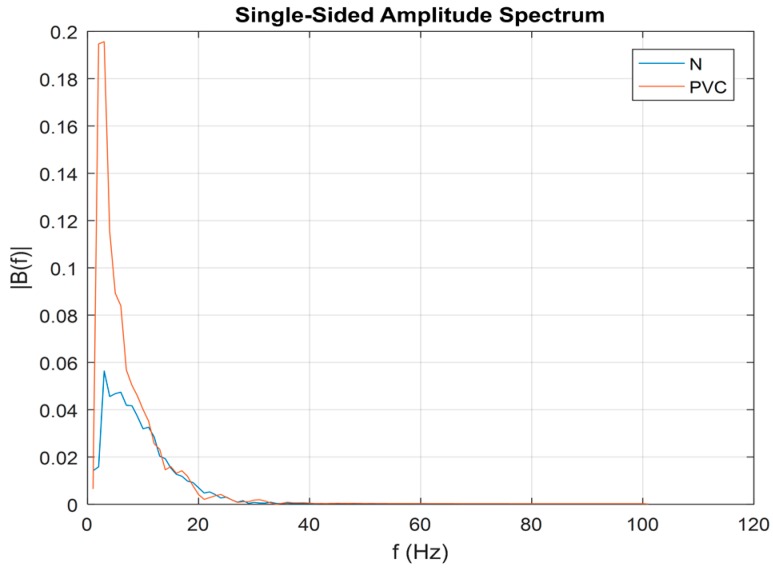
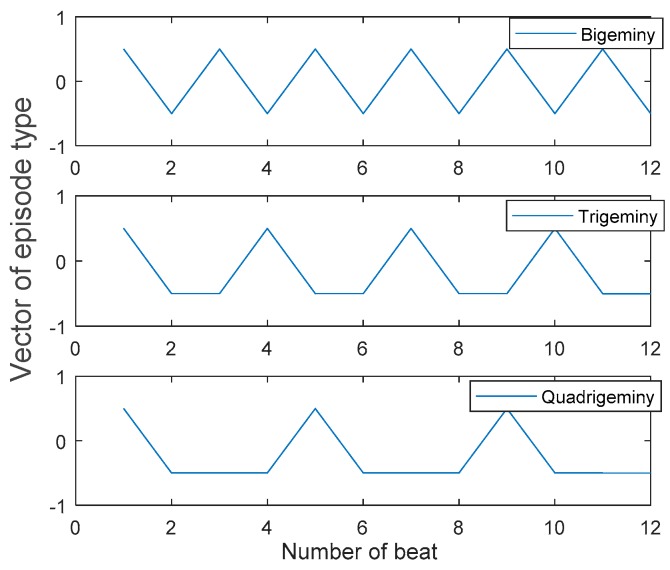
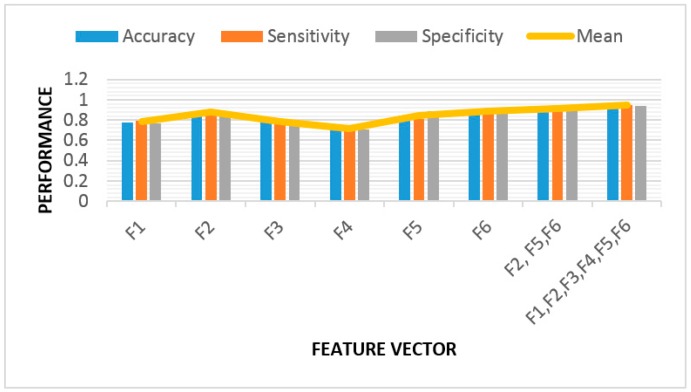
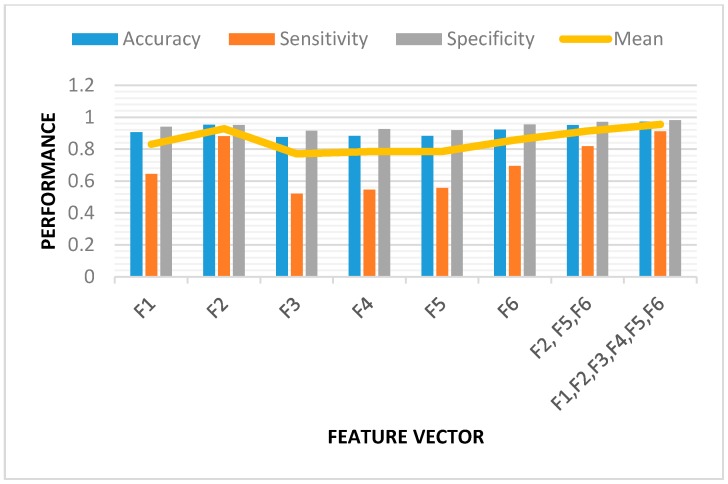
We developed an automated approach to differentiate between different types of arrhythmic episodes in electrocardiogram (ECG) signals, because, in real-life scenarios, a software application does not know in advance the type of arrhythmia a patient experiences. Our approach has four main stages: (1) Classification of ventricular fibrillation (VF) versus non-VF segments—including atrial fibrillation (AF), ventricular tachycardia (VT), normal sinus rhythm (NSR), and sinus arrhythmias, such as bigeminy, trigeminy, quadrigeminy, couplet, triplet—using four image-based phase plot features, one frequency domain feature, and the Shannon entropy index. (2) Classification of AF versus non-AF segments. (3) Premature ventricular contraction (PVC) detection on every non-AF segment, using a time domain feature, a frequency domain feature, and two features that characterize the nonlinearity of the data. (4) Determination of the PVC patterns, if present, to categorize distinct types of sinus arrhythmias and NSR. We used the Massachusetts Institute of Technology-Beth Israel Hospital (MIT-BIH) arrhythmia database, Creighton University’s VT arrhythmia database, the MIT-BIH atrial fibrillation database, and the MIT-BIH malignant ventricular arrhythmia database to test our algorithm. Binary decision tree (BDT) and support vector machine (SVM) classifiers were used in both stage 1 and stage 3. We also compared our proposed algorithm’s performance to other published algorithms. Our VF detection algorithm was accurate, as in balanced datasets (and unbalanced, in parentheses) it provided an accuracy of 95.1% (97.1%), sensitivity of 94.5% (91.1%), and specificity of 94.2% (98.2%). The AF detection was accurate, as the sensitivity and specificity in balanced datasets (and unbalanced, in parentheses) were found to be 97.8% (98.6%) and 97.21% (97.1%), respectively. Our PVC detection algorithm was also robust, as the accuracy, sensitivity, and specificity were found to be 99% (98.1%), 98.0% (96.2%), and 98.4% (99.4%), respectively, for balanced and (unbalanced) datasets.
我们开发了一种自动方法,用于区分心电图(ECG)信号中的不同类型的心律失常事件,因为在实际情况下,软件应用程序事先不知道患者经历的心律失常类型。我们的方法有四个主要阶段:(1)使用基于图像的相位图四个特征、一个频域特征和香农熵指数对心室颤动(VF)与非 VF 段(包括心房颤动(AF)、室性心动过速(VT)、正常窦性节律(NSR)和窦性心律失常,如二联律、三联律、四联律、成对、三联律)进行分类。(2)对 AF 与非 AF 段进行分类。(3)对每个非 AF 段使用时域特征、频域特征和两个特征进行早搏(PVC)检测,这些特征可以描述数据的非线性。(4)确定 PVC 模式,如果存在,则对不同类型的窦性心律失常和 NSR 进行分类。我们使用了麻省理工学院-贝斯以色列医院(MIT-BIH)心律失常数据库、克赖顿大学的 VT 心律失常数据库、MIT-BIH 心房颤动数据库和 MIT-BIH 恶性室性心律失常数据库来测试我们的算法。二项决策树(BDT)和支持向量机(SVM)分类器用于第 1 阶段和第 3 阶段。我们还将我们提出的算法的性能与其他已发表的算法进行了比较。我们的 VF 检测算法是准确的,在平衡数据集(括号中不平衡)中,其准确性为 95.1%(97.1%),敏感性为 94.5%(91.1%),特异性为 94.2%(98.2%)。AF 检测也是准确的,在平衡数据集(括号中不平衡)中的敏感性和特异性分别为 97.8%(98.6%)和 97.21%(97.1%)。我们的 PVC 检测算法也很稳健,在平衡和(不平衡)数据集上,准确性、敏感性和特异性分别为 99%(98.1%)、98.0%(96.2%)和 98.4%(99.4%)。