• 文献检索
  • 文档翻译
  • 深度研究
  • 学术资讯
  • Suppr Zotero 插件Zotero 插件
  • 邀请有礼
  • 套餐&价格
  • 历史记录
应用&插件
Suppr Zotero 插件Zotero 插件浏览器插件Mac 客户端Windows 客户端微信小程序
定价
高级版会员购买积分包购买API积分包
服务
文献检索文档翻译深度研究API 文档MCP 服务
关于我们
关于 Suppr公司介绍联系我们用户协议隐私条款
关注我们

Suppr 超能文献

核心技术专利:CN118964589B侵权必究
粤ICP备2023148730 号-1Suppr @ 2026

文献检索

告别复杂PubMed语法,用中文像聊天一样搜索,搜遍4000万医学文献。AI智能推荐,让科研检索更轻松。

立即免费搜索

文件翻译

保留排版,准确专业,支持PDF/Word/PPT等文件格式,支持 12+语言互译。

免费翻译文档

深度研究

AI帮你快速写综述,25分钟生成高质量综述,智能提取关键信息,辅助科研写作。

立即免费体验

通过大学生全球定位系统轨迹预测社交焦虑:可行性研究

Predicting Social Anxiety From Global Positioning System Traces of College Students: Feasibility Study.

作者信息

Boukhechba Mehdi, Chow Philip, Fua Karl, Teachman Bethany A, Barnes Laura E

机构信息

Systems and Information Engineering Department, School of Engineering and Applied Science, University of Virginia, Charlottesville, VA, United States.

Department of Psychology, University of Virginia, Charlottesville, VA, United States.

出版信息

JMIR Ment Health. 2018 Jul 4;5(3):e10101. doi: 10.2196/10101.

DOI:10.2196/10101
PMID:29973337
原文链接:https://pmc.ncbi.nlm.nih.gov/articles/PMC6053606/
Abstract

BACKGROUND

Social anxiety is highly prevalent among college students. Current methodologies for detecting symptoms are based on client self-report in traditional clinical settings. Self-report is subject to recall bias, while visiting a clinic requires a high level of motivation. Assessment methods that use passively collected data hold promise for detecting social anxiety symptoms and supplementing self-report measures. Continuously collected location data may provide a fine-grained and ecologically valid way to assess social anxiety in situ.

OBJECTIVE

The objective of our study was to examine the feasibility of leveraging noninvasive mobile sensing technology to passively assess college students' social anxiety levels. Specifically, we explored the different relationships between mobility and social anxiety to build a predictive model that assessed social anxiety from passively generated Global Positioning System (GPS) data.

METHODS

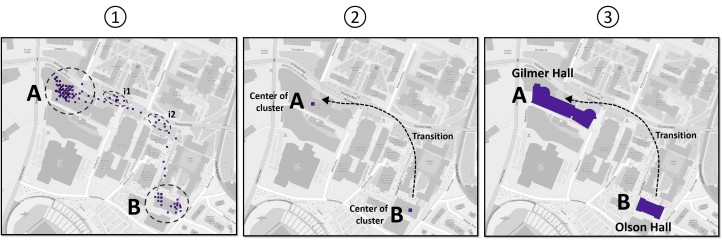
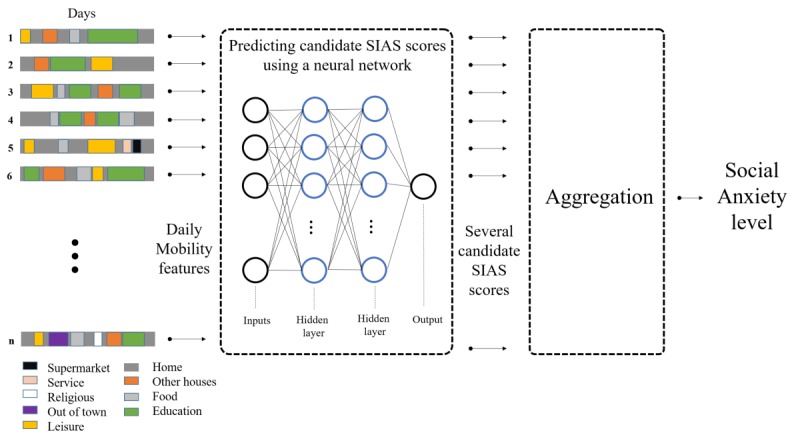
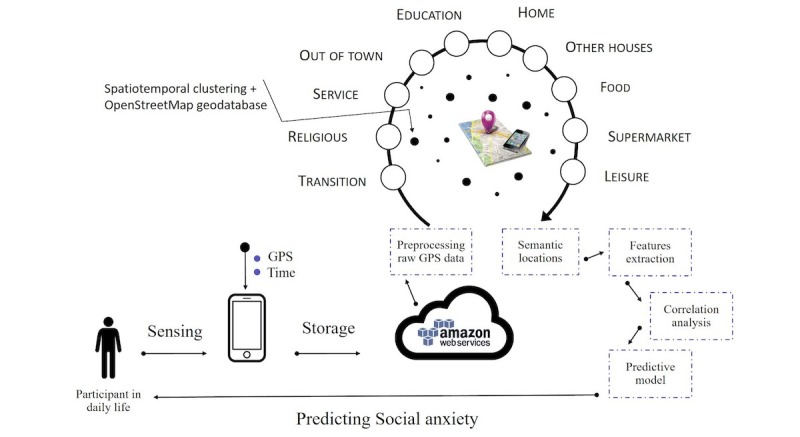
We recruited 228 undergraduate participants from a Southeast American university. Social anxiety symptoms were assessed using self-report instruments at a baseline laboratory session. An app installed on participants' personal mobile phones passively sensed data from the GPS sensor for 2 weeks. The proposed framework supports longitudinal, dynamic tracking of college students to evaluate the relationship between their social anxiety and movement patterns in the college campus environment. We first extracted the following mobility features: (1) cumulative staying time at each different location, (2) the distribution of visits over time, (3) the entropy of locations, and (4) the frequency of transitions between locations. Next, we studied the correlation between these features and participants' social anxiety scores to enhance the understanding of how students' social anxiety levels are associated with their mobility. Finally, we used a neural network-based prediction method to predict social anxiety symptoms from the extracted daily mobility features.

RESULTS

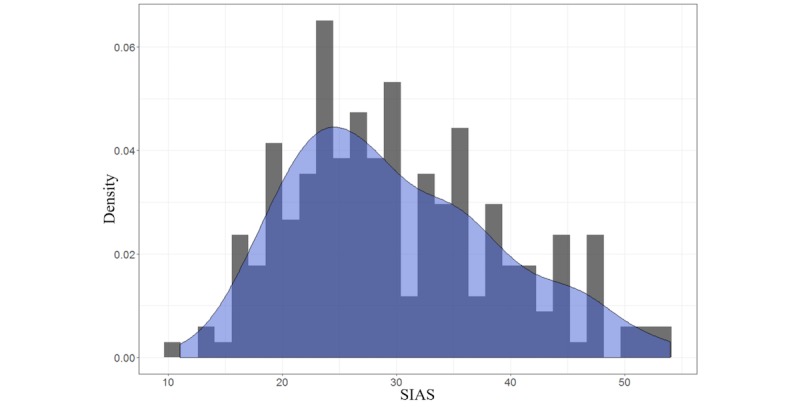
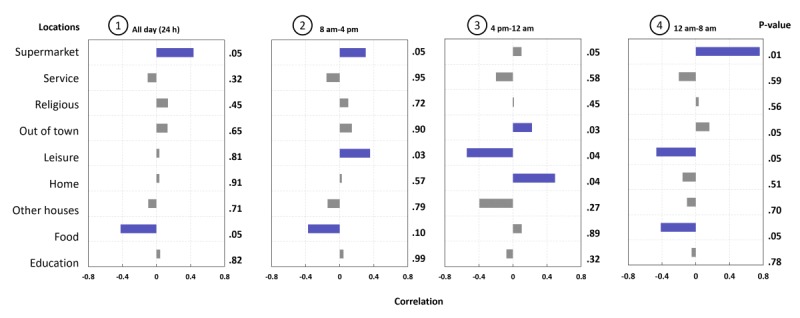
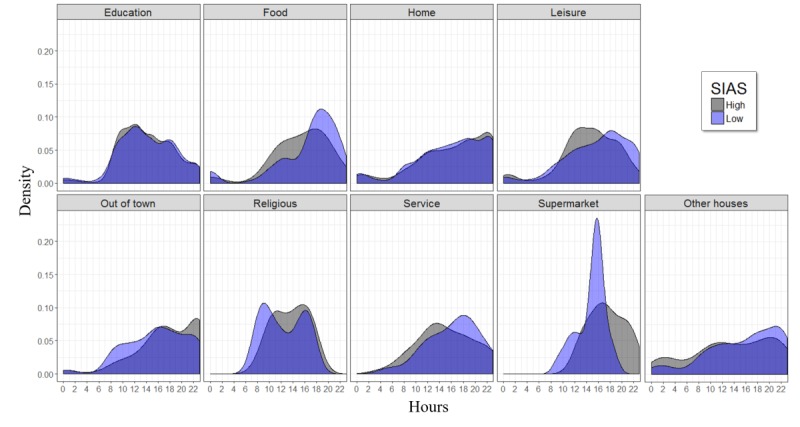
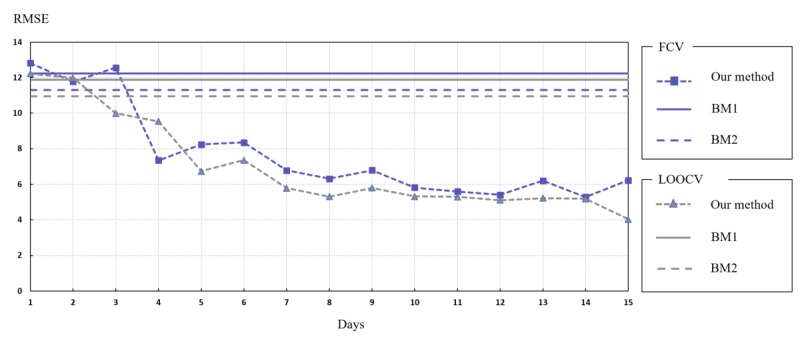
Several mobility features correlated with social anxiety levels. Location entropy was negatively associated with social anxiety (during weekdays, r=-0.67; and during weekends, r=-0.51). More (vs less) socially anxious students were found to avoid public areas and engage in less leisure activities during evenings and weekends, choosing instead to spend more time at home after school (4 pm-12 am). Our prediction method based on extracted mobility features from GPS trajectories successfully classified participants as high or low socially anxious with an accuracy of 85% and predicted their social anxiety score (on a scale of 0-80) with a root-mean-square error of 7.06.

CONCLUSIONS

Results indicate that extracting and analyzing mobility features may help to reveal how social anxiety symptoms manifest in the daily lives of college students. Given the ubiquity of mobile phones in our society, understanding how to leverage passively sensed data has strong potential to address the growing needs for mental health monitoring and treatment.
https://cdn.ncbi.nlm.nih.gov/pmc/blobs/c218/6053606/0ef190a285cf/mental_v5i3e10101_fig7.jpg
https://cdn.ncbi.nlm.nih.gov/pmc/blobs/c218/6053606/c2d6e34bb3d7/mental_v5i3e10101_fig1.jpg
https://cdn.ncbi.nlm.nih.gov/pmc/blobs/c218/6053606/2b4adb3bad5a/mental_v5i3e10101_fig2.jpg
https://cdn.ncbi.nlm.nih.gov/pmc/blobs/c218/6053606/965f07e3beb0/mental_v5i3e10101_fig3.jpg
https://cdn.ncbi.nlm.nih.gov/pmc/blobs/c218/6053606/2fae67eaf822/mental_v5i3e10101_fig4.jpg
https://cdn.ncbi.nlm.nih.gov/pmc/blobs/c218/6053606/183f942fc0e1/mental_v5i3e10101_fig5.jpg
https://cdn.ncbi.nlm.nih.gov/pmc/blobs/c218/6053606/decb5fff4f20/mental_v5i3e10101_fig6.jpg
https://cdn.ncbi.nlm.nih.gov/pmc/blobs/c218/6053606/0ef190a285cf/mental_v5i3e10101_fig7.jpg
https://cdn.ncbi.nlm.nih.gov/pmc/blobs/c218/6053606/c2d6e34bb3d7/mental_v5i3e10101_fig1.jpg
https://cdn.ncbi.nlm.nih.gov/pmc/blobs/c218/6053606/2b4adb3bad5a/mental_v5i3e10101_fig2.jpg
https://cdn.ncbi.nlm.nih.gov/pmc/blobs/c218/6053606/965f07e3beb0/mental_v5i3e10101_fig3.jpg
https://cdn.ncbi.nlm.nih.gov/pmc/blobs/c218/6053606/2fae67eaf822/mental_v5i3e10101_fig4.jpg
https://cdn.ncbi.nlm.nih.gov/pmc/blobs/c218/6053606/183f942fc0e1/mental_v5i3e10101_fig5.jpg
https://cdn.ncbi.nlm.nih.gov/pmc/blobs/c218/6053606/decb5fff4f20/mental_v5i3e10101_fig6.jpg
https://cdn.ncbi.nlm.nih.gov/pmc/blobs/c218/6053606/0ef190a285cf/mental_v5i3e10101_fig7.jpg
摘要

背景

社交焦虑在大学生中极为普遍。当前检测症状的方法基于传统临床环境中的患者自我报告。自我报告容易受到回忆偏差的影响,而前往诊所则需要高度的积极性。使用被动收集数据的评估方法有望检测社交焦虑症状并补充自我报告测量。持续收集的位置数据可能提供一种细粒度且生态有效的原位评估社交焦虑的方法。

目的

我们研究的目的是检验利用非侵入性移动传感技术被动评估大学生社交焦虑水平的可行性。具体而言,我们探索了移动性与社交焦虑之间的不同关系,以建立一个从被动生成的全球定位系统(GPS)数据评估社交焦虑的预测模型。

方法

我们从美国东南部一所大学招募了228名本科参与者。在基线实验室环节使用自我报告工具评估社交焦虑症状。安装在参与者个人手机上的应用程序被动感知来自GPS传感器的数据,为期2周。所提出的框架支持对大学生进行纵向、动态跟踪,以评估他们的社交焦虑与大学校园环境中运动模式之间的关系。我们首先提取了以下移动性特征:(1)在每个不同位置的累计停留时间,(2)随时间的访问分布,(3)位置的熵,以及(4)位置之间的转换频率。接下来,我们研究了这些特征与参与者社交焦虑得分之间的相关性,以加深对学生社交焦虑水平如何与其移动性相关联的理解。最后,我们使用基于神经网络的预测方法从提取的每日移动性特征预测社交焦虑症状。

结果

几个移动性特征与社交焦虑水平相关。位置熵与社交焦虑呈负相关(工作日期间,r = -0.67;周末期间,r = -0.51)。发现社交焦虑程度较高(相对于较低)的学生在晚上和周末会避开公共场所并减少休闲活动,而是选择放学后(下午4点至凌晨12点)更多时间待在家里。我们基于从GPS轨迹提取的移动性特征的预测方法成功将参与者分类为社交焦虑程度高或低,准确率为85%,并以7.06的均方根误差预测他们的社交焦虑得分(范围为0 - 80)。

结论

结果表明,提取和分析移动性特征可能有助于揭示社交焦虑症状在大学生日常生活中的表现方式。鉴于手机在我们社会中的普及,了解如何利用被动感知的数据具有强大的潜力来满足心理健康监测和治疗日益增长的需求。

相似文献

1
Predicting Social Anxiety From Global Positioning System Traces of College Students: Feasibility Study.通过大学生全球定位系统轨迹预测社交焦虑:可行性研究
JMIR Ment Health. 2018 Jul 4;5(3):e10101. doi: 10.2196/10101.
2
Using Mobile Sensing to Test Clinical Models of Depression, Social Anxiety, State Affect, and Social Isolation Among College Students.利用移动传感技术测试大学生抑郁症、社交焦虑症、状态情感和社交隔离的临床模型。
J Med Internet Res. 2017 Mar 3;19(3):e62. doi: 10.2196/jmir.6820.
3
Mobile Phone Sensor Correlates of Depressive Symptom Severity in Daily-Life Behavior: An Exploratory Study.日常生活行为中手机传感器与抑郁症状严重程度的相关性:一项探索性研究。
J Med Internet Res. 2015 Jul 15;17(7):e175. doi: 10.2196/jmir.4273.
4
A Mobile Sensing App to Monitor Youth Mental Health: Observational Pilot Study.一款用于监测青少年心理健康的移动感知应用:观察性试点研究。
JMIR Mhealth Uhealth. 2021 Oct 26;9(10):e20638. doi: 10.2196/20638.
5
Specific associations of passively sensed smartphone data with future symptoms of avoidance, fear, and physiological distress in social anxiety.被动感知的智能手机数据与社交焦虑中未来回避、恐惧和生理困扰症状的特定关联。
Internet Interv. 2023 Oct 13;34:100683. doi: 10.1016/j.invent.2023.100683. eCollection 2023 Dec.
6
Evaluation of Changes in Depression, Anxiety, and Social Anxiety Using Smartphone Sensor Features: Longitudinal Cohort Study.使用智能手机传感器特征评估抑郁、焦虑和社交焦虑的变化:纵向队列研究。
J Med Internet Res. 2021 Sep 3;23(9):e22844. doi: 10.2196/22844.
7
Identifying Behavioral Phenotypes of Loneliness and Social Isolation with Passive Sensing: Statistical Analysis, Data Mining and Machine Learning of Smartphone and Fitbit Data.利用被动感知技术识别孤独和社会隔离的行为表现:智能手机和 Fitbit 数据的统计分析、数据挖掘和机器学习。
JMIR Mhealth Uhealth. 2019 Jul 24;7(7):e13209. doi: 10.2196/13209.
8
Comparing the Data Quality of Global Positioning System Devices and Mobile Phones for Assessing Relationships Between Place, Mobility, and Health: Field Study.比较全球定位系统设备和手机在评估地点、移动性与健康之间关系时的数据质量:实地研究。
JMIR Mhealth Uhealth. 2018 Aug 13;6(8):e168. doi: 10.2196/mhealth.9771.
9
The relationship between mobile phone location sensor data and depressive symptom severity.手机位置传感器数据与抑郁症状严重程度之间的关系。
PeerJ. 2016 Sep 29;4:e2537. doi: 10.7717/peerj.2537. eCollection 2016.
10
Leveraging Ecological Momentary Assessment Data to Characterize Individual Mobility: Exploratory Pilot Study in Rural Uganda.利用生态瞬时评估数据描述个体流动性:乌干达农村地区的探索性试点研究。
JMIR Form Res. 2024 Jun 10;8:e54207. doi: 10.2196/54207.

引用本文的文献

1
Passive Sensing for Mental Health Monitoring Using Machine Learning With Wearables and Smartphones: Scoping Review.使用可穿戴设备和智能手机通过机器学习进行心理健康监测的被动传感:范围综述
J Med Internet Res. 2025 Aug 14;27:e77066. doi: 10.2196/77066.
2
A scoping review of digital interventions for the promotion of mental health and prevention of mental health conditions for young people.一项关于数字干预措施促进年轻人心理健康及预防精神疾病状况的范围综述。
Oxf Open Digit Health. 2025 Feb 2;3:oqaf005. doi: 10.1093/oodh/oqaf005. eCollection 2025.
3
Speech Detection via Respiratory Inductance Plethysmography, Thoracic Impedance, Accelerometers, and Gyroscopes: A Machine Learning-Informed Comparative Study.

本文引用的文献

1
Relapse prediction in schizophrenia through digital phenotyping: a pilot study.精神分裂症的数字化表型预测复发:一项试点研究。
Neuropsychopharmacology. 2018 Jul;43(8):1660-1666. doi: 10.1038/s41386-018-0030-z. Epub 2018 Feb 22.
2
Smartphone-based objective monitoring in bipolar disorder: status and considerations.基于智能手机的双相情感障碍客观监测:现状与思考。
Int J Bipolar Disord. 2018 Jan 23;6(1):6. doi: 10.1186/s40345-017-0110-8.
3
Digital Phenotyping: Technology for a New Science of Behavior.数字表型分析:行为新科学的技术
通过呼吸感应体积描记法、胸阻抗、加速度计和陀螺仪进行语音检测:一项基于机器学习的比较研究。
Psychophysiology. 2025 Feb;62(2):e70021. doi: 10.1111/psyp.70021.
4
GPT-4 shows potential for identifying social anxiety from clinical interview data.GPT-4在从临床访谈数据中识别社交焦虑方面显示出潜力。
Sci Rep. 2024 Dec 16;14(1):30498. doi: 10.1038/s41598-024-82192-2.
5
Decoding anxiety: A scoping review of observable cues.解读焦虑:可观察线索的范围综述
Digit Health. 2024 Nov 26;10:20552076241297006. doi: 10.1177/20552076241297006. eCollection 2024 Jan-Dec.
6
Measuring Environmental and Behavioral Drivers of Chronic Diseases Using Smartphone-Based Digital Phenotyping: Intensive Longitudinal Observational mHealth Substudy Embedded in 2 Prospective Cohorts of Adults.使用基于智能手机的数字表型测量慢性病的环境和行为驱动因素:嵌入在 2 项前瞻性成人队列中的密集纵向观察性移动健康子研究。
JMIR Public Health Surveill. 2024 Oct 11;10:e55170. doi: 10.2196/55170.
7
Use of smartphone sensor data in detecting and predicting depression and anxiety in young people (12-25 years): A scoping review.利用智能手机传感器数据检测和预测年轻人(12 - 25岁)的抑郁和焦虑:一项范围综述。
Heliyon. 2024 Jul 30;10(15):e35472. doi: 10.1016/j.heliyon.2024.e35472. eCollection 2024 Aug 15.
8
Multiclassification of the symptom severity of social anxiety disorder using digital phenotypes and feature representation learning.利用数字表型和特征表示学习对社交焦虑障碍症状严重程度进行多分类
Digit Health. 2024 May 22;10:20552076241256730. doi: 10.1177/20552076241256730. eCollection 2024 Jan-Dec.
9
COVID Student Study: A Year in the Life of College Students during the COVID-19 Pandemic Through the Lens of Mobile Phone Sensing.新冠疫情下的大学生研究:通过手机传感视角看新冠疫情期间大学生的一年生活
Proc SIGCHI Conf Hum Factor Comput Syst. 2022 Apr;2022. doi: 10.1145/3491102.3502043. Epub 2022 Apr 28.
10
Studies of Social Anxiety Using Ambulatory Assessment: Systematic Review.使用动态评估研究社交焦虑症:系统评价。
JMIR Ment Health. 2024 Apr 4;11:e46593. doi: 10.2196/46593.
JAMA. 2017 Oct 3;318(13):1215-1216. doi: 10.1001/jama.2017.11295.
4
Mobile Phone Detection of Semantic Location and Its Relationship to Depression and Anxiety.手机对语义位置的检测及其与抑郁和焦虑的关系。
JMIR Mhealth Uhealth. 2017 Aug 10;5(8):e112. doi: 10.2196/mhealth.7297.
5
Personal Sensing: Understanding Mental Health Using Ubiquitous Sensors and Machine Learning.个人传感:利用无处不在的传感器和机器学习理解心理健康
Annu Rev Clin Psychol. 2017 May 8;13:23-47. doi: 10.1146/annurev-clinpsy-032816-044949. Epub 2017 Mar 17.
6
Mobile Sensing and Support for People With Depression: A Pilot Trial in the Wild.移动感知与抑郁症患者支持:野外初步试验
JMIR Mhealth Uhealth. 2016 Sep 21;4(3):e111. doi: 10.2196/mhealth.5960.
7
Mobile Phone Sensor Correlates of Depressive Symptom Severity in Daily-Life Behavior: An Exploratory Study.日常生活行为中手机传感器与抑郁症状严重程度的相关性:一项探索性研究。
J Med Internet Res. 2015 Jul 15;17(7):e175. doi: 10.2196/jmir.4273.
8
The social ties that bind: social anxiety and academic achievement across the university years.维系纽带:社会焦虑与大学期间的学业成绩。
J Youth Adolesc. 2015 May;44(5):1139-52. doi: 10.1007/s10964-015-0262-8. Epub 2015 Feb 18.
9
Bonferroni, Holm, and Hochberg corrections: fun names, serious changes to p values.邦费罗尼校正、霍尔姆校正和霍奇伯格校正:名字有趣,p值却有重大变化。
PM R. 2014 Jun;6(6):544-6. doi: 10.1016/j.pmrj.2014.04.006. Epub 2014 Apr 22.
10
Differentiating emotions across contexts: comparing adults with and without social anxiety disorder using random, social interaction, and daily experience sampling.跨情境辨别情绪:使用随机、社交互动和日常经验采样比较有和无社交焦虑障碍的成年人。
Emotion. 2014 Jun;14(3):629-638. doi: 10.1037/a0035796. Epub 2014 Feb 10.