Institute: School of Pharmaceutical Sciences, Guangzhou University of Chinese Medicine, Guangzhou, China.
Guangdong Lewwin Pharmaceutical Research Institute Co., Ltd, Guangzhou, China.
Sci Rep. 2018 Jul 4;8(1):10082. doi: 10.1038/s41598-018-28414-w.
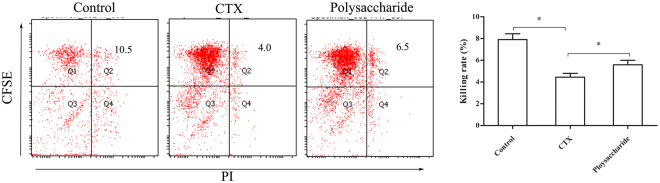
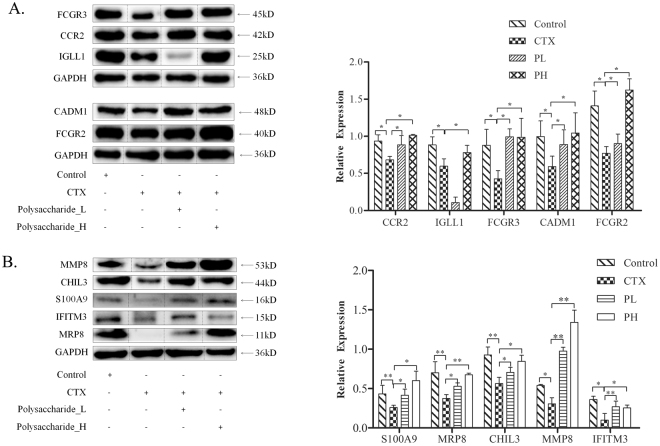
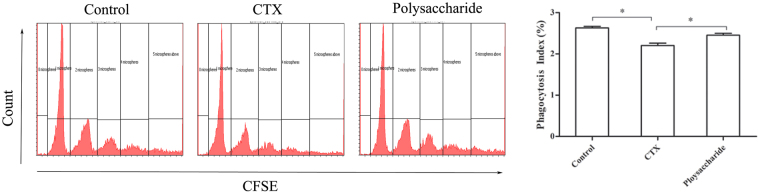
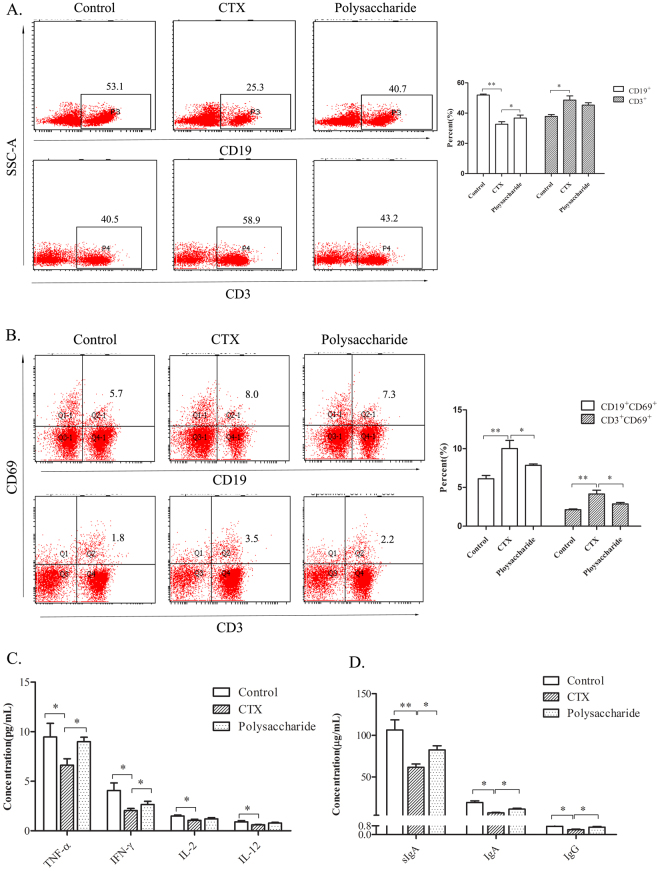
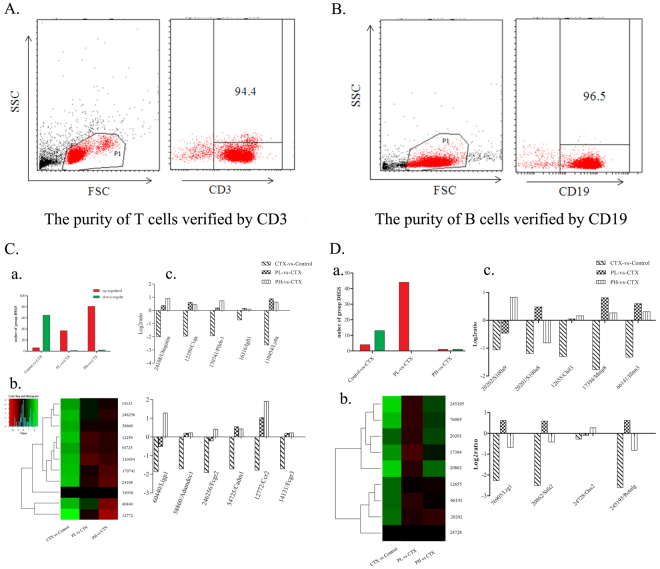
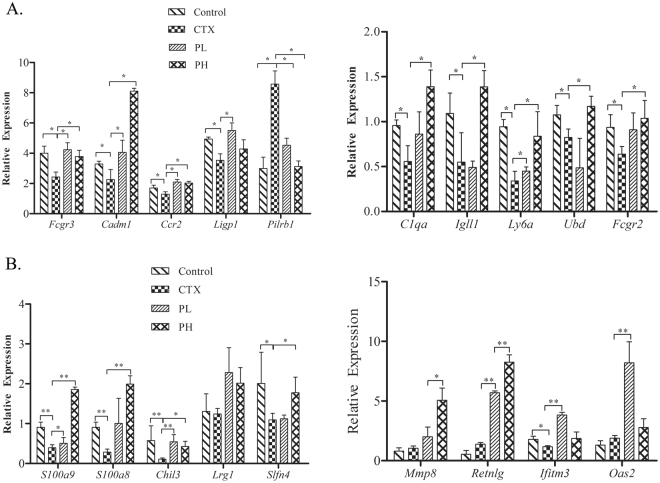
The efficacy of polysaccharides is widespread, especially in immune regulation. However, the genetic basis of the changes in polysaccharides regulating immunity is unclear. To obtain genome-wide insights into transcriptome changes and regulatory networks, we designed a polysaccharide formula, comprising lentinan, pachymaran and tremelia, to increase the availability of their optimized active sites. In this case, we focused on a model of immunosuppression to investigate genes by digital gene expression (DGE) tag profiling in T and B cells. These genes were further validated by qRT-PCR and Western blot experiments. Consequently, polysaccharide formula treatment helped to recover the expression of immune-related genes, including CADM1, CCR2, IGLL1, LIGP1, and FCGR3, FCGR2 in B cells, as well as S100A8, S100A9, ChIL3, MMP8 and IFITM3 in T cells. These results suggest that treatment with polysaccharides improves the immunity of immunosuppressive mice by regulating genes associated with T and B cell functions.
多糖的功效广泛,尤其在免疫调节方面。然而,多糖调节免疫的遗传基础尚不清楚。为了从全基因组水平上了解转录组变化和调控网络,我们设计了一种多糖配方,包含香菇多糖、裂褶多糖和银耳多糖,以增加其优化活性位点的可用性。在这种情况下,我们专注于免疫抑制模型,通过数字基因表达 (DGE) 标签分析在 T 和 B 细胞中研究基因。这些基因进一步通过 qRT-PCR 和 Western blot 实验进行验证。结果表明,多糖配方治疗有助于恢复免疫相关基因的表达,包括 B 细胞中的 CADM1、CCR2、IGLL1、LIGP1 和 FCGR3、FCGR2,以及 T 细胞中的 S100A8、S100A9、ChIL3、MMP8 和 IFITM3。这些结果表明,多糖治疗通过调节与 T 和 B 细胞功能相关的基因,改善了免疫抑制小鼠的免疫力。