Ruiz-Romero Paola, Valdez-Salas Benjamín, González-Mendoza Daniel, Mendez-Trujillo Vianey
Instituto de Ciencias Agrícolas de la Universidad Autónoma de Baja California (ICA-UABC), Ejido Nuevo León, Baja California, Mexico.
Instituto de Ingeniería de la Universidad Autónoma de Baja California, Mexicali, Baja California, Mexico.
Mycobiology. 2018 Mar 29;46(1):47-51. doi: 10.1080/12298093.2018.1454011. eCollection 2018.
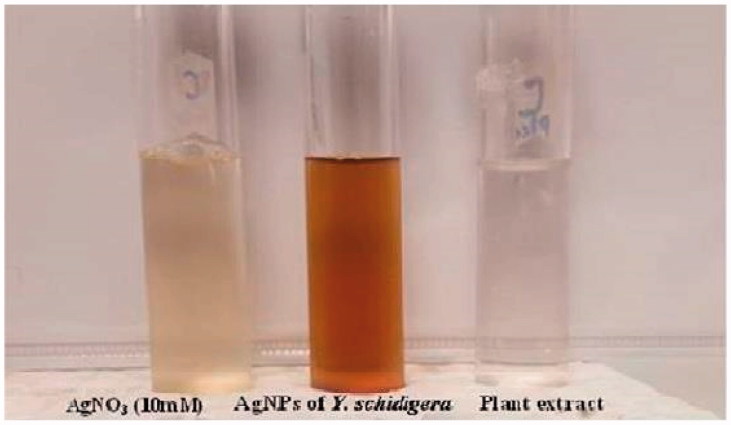
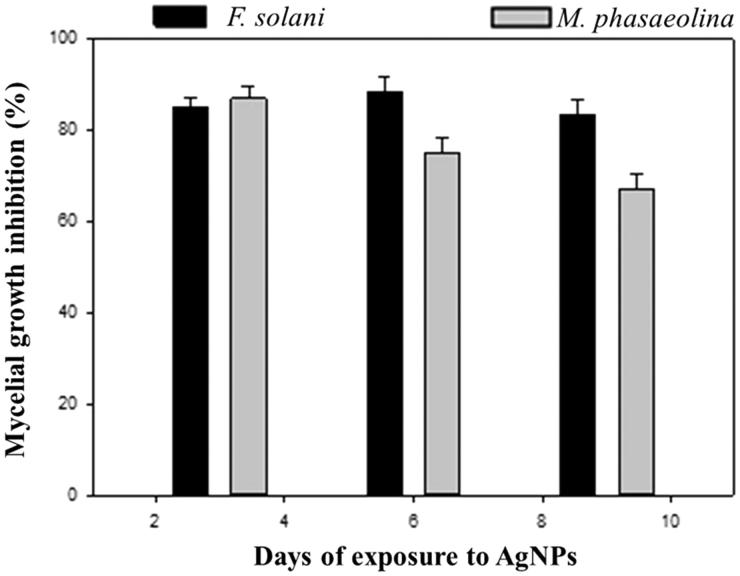
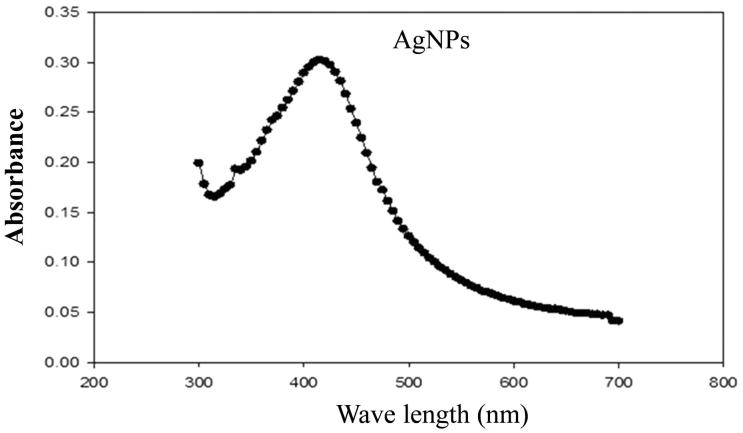
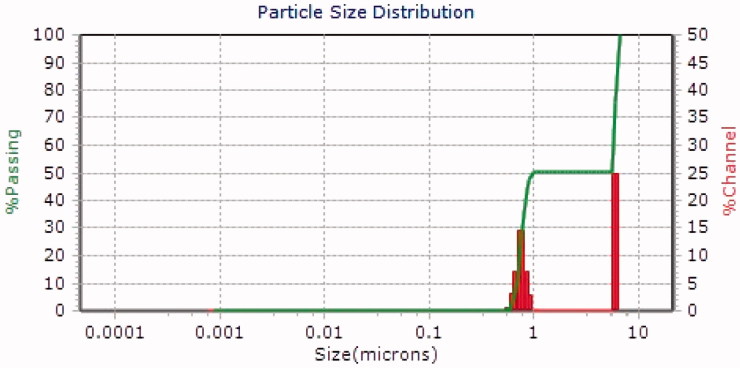
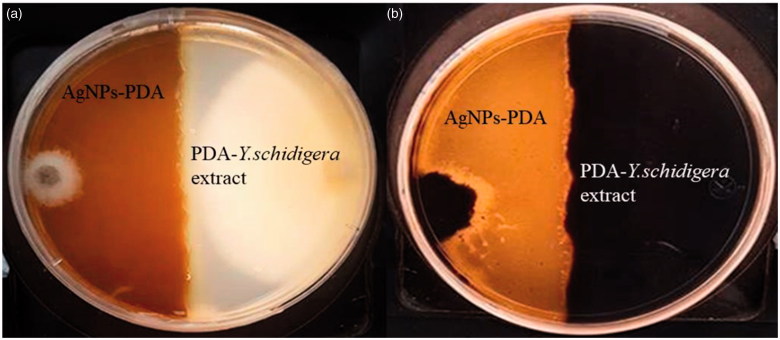
In the present study, the characterization and properties of silver nanoparticles from leaf extract (AgNPs) were investigated using UV-visible spectroscopic techniques, zeta potential, and dynamic light scattering. The UV-visible spectroscopic analysis showed the absorbance peaked at 460 nm, which indicated the synthesis of silver nanoparticles. The experimental results showed silver nanoparticles had -average diameter of 729 nm with lower stability (195.1 mV). Additionally, our dates revealed that AgNPs showed broad spectrum antagonism ( ≤ .05) against (83.05%) and (67.05%) when compared to the control after nine days of incubation. Finally, AgNPs from leaf extracts of may be used as an agent of biocontrol of microorganism of importance. However, further studies will be needed to fully understand the agronanotechnological potentialities of AgNPs from .
在本研究中,使用紫外可见光谱技术、zeta电位和动态光散射对来自叶提取物的银纳米颗粒(AgNPs)的特性和性质进行了研究。紫外可见光谱分析表明,吸光度在460nm处达到峰值,这表明银纳米颗粒的合成。实验结果表明,银纳米颗粒的平均直径为729nm,稳定性较低(195.1mV)。此外,我们的数据显示,与对照相比,孵育九天后,AgNPs对[未提及的某种微生物1](83.05%)和[未提及的某种微生物2](67.05%)表现出广谱拮抗作用(P≤0.05)。最后,来自[未提及的植物名称]叶提取物的AgNPs可能用作重要微生物的生物防治剂。然而,需要进一步研究以充分了解来自[未提及的植物名称]的AgNPs的农业纳米技术潜力。