Fischer Nastassja L, Peres Rafael, Fiorani Mario
Laboratory of Cognition Physiology, Institute of Biophysics Carlos Chagas Filho, Federal University of Rio de Janeiro, Rio de Janeiro, Brazil.
Department of Morphological Sciences, Medical School Souza Marques, Rio de Janeiro, Brazil.
Front Behav Neurosci. 2018 Aug 2;12:166. doi: 10.3389/fnbeh.2018.00166. eCollection 2018.
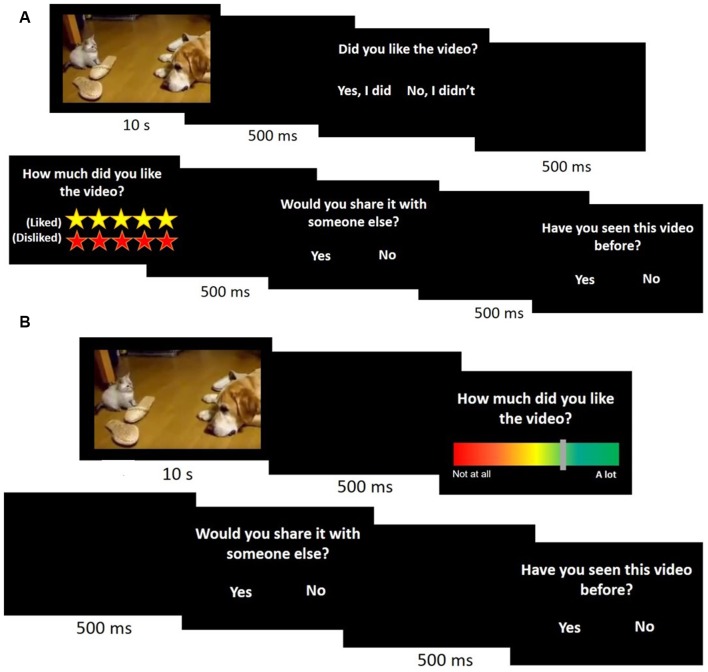
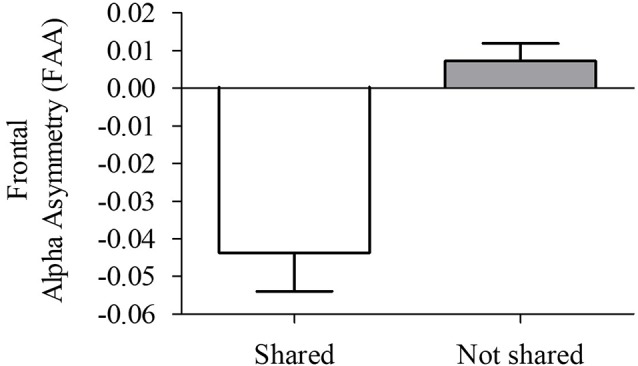
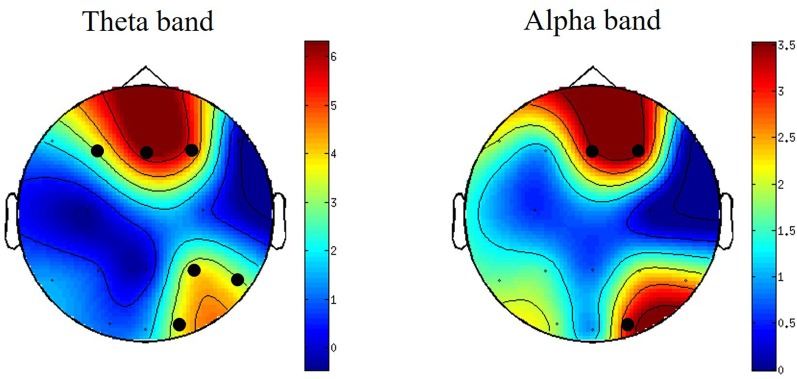
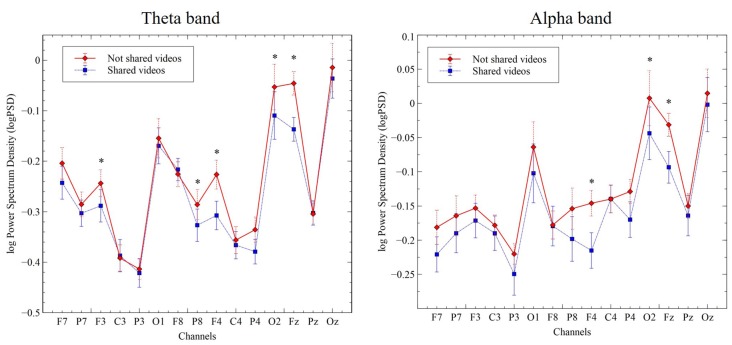
Social media has gained increasing importance in many aspects of everyday life, from building relationships to establishing collaborative networks between individuals worldwide. Sharing behavior is an essential part of maintaining these dynamic networks. However, the precise neural factors that could be related to sharing behavior in online communities remain unclear. In this study, we recorded electroencephalographic (EEG) oscillations of human subjects while they were watching short videos. The subjects were later asked to evaluate the videos based on how much they liked them and whether they would share them. We found that, at the population level, subjects watching videos that would not be shared had higher power spectral density (PSD) amplitudes in the theta band (4-8 Hz), primarily over the frontal and parietal sites of the right hemisphere, than subjects watching videos that would be shared. Previous studies have associated task disengagement with an increase in scalp-wide theta activation, which can be interpreted as a mind-wandering effect. This might suggest that the decision to not share the video may lead to a more automatic/effortless neural pattern. We also found that watching videos that would be shared was associated with lower PSD amplitudes in the alpha band (8-12 Hz) over the central and right frontal sites, and with more negative scores of frontal alpha asymmetry (FAA) index scores. These results may be related to previous work linking right-sided frontal EEG asymmetry to the pursuit of social conformity and avoidance of negative outcomes, such as social isolation. Finally, using support vector machine (SVM) algorithms, we show that these EEG parameters and preference rating scores can be used to improve the predictability of sharing information behavior. The information sharing-related EEG pattern described here could therefore improve our understanding of the neural markers associated with sharing behavior and contribute to studies about stimuli propagation.
社交媒体在日常生活的许多方面都变得越来越重要,从建立人际关系到在全球范围内的个人之间建立协作网络。分享行为是维持这些动态网络的重要组成部分。然而,与在线社区中的分享行为可能相关的精确神经因素仍不清楚。在本研究中,我们记录了人类受试者观看短视频时的脑电图(EEG)振荡。随后要求受试者根据他们对视频的喜爱程度以及是否会分享来对视频进行评估。我们发现,在总体水平上,观看不会被分享的视频的受试者,与观看会被分享的视频的受试者相比,在θ波段(4 - 8赫兹)具有更高的功率谱密度(PSD)振幅,主要出现在右半球的额叶和顶叶部位。先前的研究将任务脱离与头皮全脑θ激活的增加相关联,这可以解释为一种走神效应。这可能表明不分享视频的决定可能导致一种更自动/轻松的神经模式。我们还发现,观看会被分享的视频与中央和右额叶部位α波段(8 - 12赫兹)较低的PSD振幅以及额叶α不对称(FAA)指数得分的更多负分数相关。这些结果可能与先前将右侧额叶脑电图不对称与追求社会一致性和避免负面结果(如社会隔离)联系起来的工作有关。最后,使用支持向量机(SVM)算法,我们表明这些EEG参数和偏好评分可以用于提高分享信息行为的可预测性。因此,这里描述的与信息分享相关的EEG模式可以增进我们对与分享行为相关的神经标记的理解,并有助于关于刺激传播的研究。