Lind Monika N, Byrne Michelle L, Wicks Geordie, Smidt Alec M, Allen Nicholas B
Center for Digital Mental Health, Department of Psychology, University of Oregon, Eugene, OR, United States.
JMIR Ment Health. 2018 Aug 28;5(3):e10334. doi: 10.2196/10334.
To predict and prevent mental health crises, we must develop new approaches that can provide a dramatic advance in the effectiveness, timeliness, and scalability of our interventions. However, current methods of predicting mental health crises (eg, clinical monitoring, screening) usually fail on most, if not all, of these criteria. Luckily for us, 77% of Americans carry with them an unprecedented opportunity to detect risk states and provide precise life-saving interventions. Smartphones present an opportunity to empower individuals to leverage the data they generate through their normal phone use to predict and prevent mental health crises.
To facilitate the collection of high-quality, passive mobile sensing data, we built the Effortless Assessment of Risk States (EARS) tool to enable the generation of predictive machine learning algorithms to solve previously intractable problems and identify risk states before they become crises.
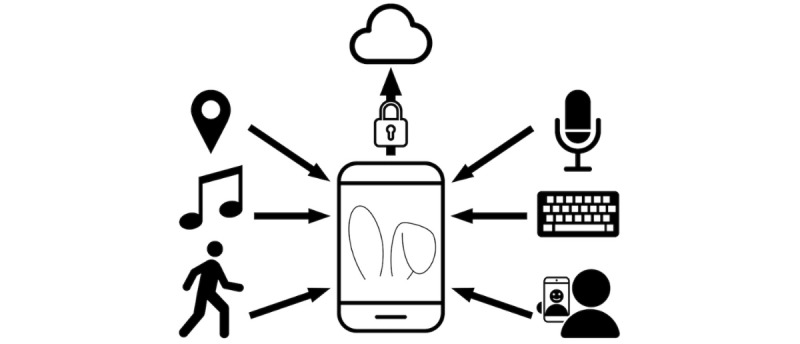
The EARS tool captures multiple indices of a person's social and affective behavior via their naturalistic use of a smartphone. Although other mobile data collection tools exist, the EARS tool places a unique emphasis on capturing the content as well as the form of social communication on the phone. Signals collected include facial expressions, acoustic vocal quality, natural language use, physical activity, music choice, and geographical location. Critically, the EARS tool collects these data passively, with almost no burden on the user. We programmed the EARS tool in Java for the Android mobile platform. In building the EARS tool, we concentrated on two main considerations: (1) privacy and encryption and (2) phone use impact.
In a pilot study (N=24), participants tolerated the EARS tool well, reporting minimal burden. None of the participants who completed the study reported needing to use the provided battery packs. Current testing on a range of phones indicated that the tool consumed approximately 15% of the battery over a 16-hour period. Installation of the EARS tool caused minimal change in the user interface and user experience. Once installation is completed, the only difference the user notices is the custom keyboard.
The EARS tool offers an innovative approach to passive mobile sensing by emphasizing the centrality of a person's social life to their well-being. We built the EARS tool to power cutting-edge research, with the ultimate goal of leveraging individual big data to empower people and enhance mental health.
为了预测和预防心理健康危机,我们必须开发新方法,以在干预措施的有效性、及时性和可扩展性方面取得显著进展。然而,目前预测心理健康危机的方法(如临床监测、筛查)在大多数(即使不是全部)这些标准上通常都不达标。对我们来说幸运的是,77%的美国人拥有一个前所未有的机会来检测风险状态并提供精确的救命干预措施。智能手机提供了一个机会,使个人能够利用他们通过正常手机使用产生的数据来预测和预防心理健康危机。
为了便于收集高质量的被动移动传感数据,我们构建了风险状态轻松评估(EARS)工具,以生成预测性机器学习算法,解决以前难以解决的问题,并在风险状态演变为危机之前识别它们。
EARS工具通过人们对智能手机的自然使用来捕捉其社交和情感行为的多个指标。虽然存在其他移动数据收集工具,但EARS工具特别强调捕捉手机上社交通信的内容和形式。收集的信号包括面部表情、声学语音质量、自然语言使用、身体活动、音乐选择和地理位置。至关重要的是,EARS工具被动地收集这些数据,对用户几乎没有负担。我们用Java为安卓移动平台编写了EARS工具。在构建EARS工具时,我们主要关注两个方面:(1)隐私和加密以及(2)手机使用影响。
在一项试点研究(N = 24)中,参与者对EARS工具的耐受性良好,报告负担极小。完成研究的参与者中没有人报告需要使用提供的电池组。目前在一系列手机上的测试表明,该工具在16小时内消耗的电量约为电池电量的15%。EARS工具的安装对用户界面和用户体验的影响极小。安装完成后,用户唯一注意到的区别是自定义键盘。
EARS工具通过强调一个人的社交生活对其幸福感的核心地位,为被动移动传感提供了一种创新方法。我们构建EARS工具是为了推动前沿研究,最终目标是利用个人大数据赋能人们并改善心理健康。