Hendaus Mohamed A, Alhammadi Ahmed H, Khan Shabina, Osman Samar, Hamad Adiba
Department of Pediatrics, section of academic general Pediatrics, Hamad general corporation, Doha, Qatar,
Department of Pediatrics, section of academic general Pediatrics, sidra Medicine, Doha, Qatar,
Int J Womens Health. 2018 Aug 22;10:467-475. doi: 10.2147/IJWH.S161003. eCollection 2018.
The aim of the study was to outline breastfeeding barriers faced by women residing in the State of Qatar.
A cross-sectional study through a telephone interview was conducted at Hamad Medical Corporation, the only tertiary care and accredited academic institution in the State of Qatar. Mothers of children born between the period of January 1, 2012 and December 31, 2012 in the State of Qatar were contacted.
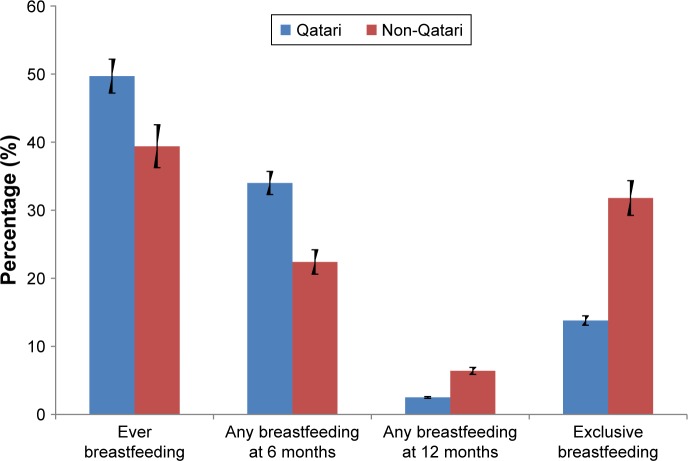
Of the total 840 mothers who were contacted for the telephone survey, 453 mothers agreed to be interviewed (response rate 53.9%), while 364 (43.3%) did not answer the phone, and 21 (2.5%) answered the phone but refused to participate in the study. The overall breastfeeding initiation rate among the mothers was 96.2%, with 3.8% mothers reporting that they had never breastfed their baby. The percentage of mothers who exclusively breastfed their children in the first 6 months was 24.3%. The most common barriers to breastfeeding as perceived by our participants were the following: perception of lack of sufficient breast milk after delivery (44%), formula is easy to use and more available soon after birth (17.8%), mom had to return to work (16.3%), lack of adequate knowledge about breastfeeding (6.5%), and the concept that the infant did not tolerate breast milk (4.9%).
Exclusive breastfeeding barriers as perceived by women residing in the State of Qatar, a wealthy rapidly developing country, do not differ much from those in other nations. What varies are the tremendous medical resources and the easy and comfortable access to health care in our community. We plan to implement a nationwide campaign to establish a prenatal breastfeeding counseling visit for all expecting mothers.
本研究旨在概述卡塔尔国女性面临的母乳喂养障碍。
在卡塔尔国唯一的三级医疗和认可学术机构哈马德医疗公司通过电话访谈进行了一项横断面研究。联系了2012年1月1日至2012年12月31日期间在卡塔尔国出生儿童的母亲。
在总共840名被联系进行电话调查的母亲中,453名母亲同意接受访谈(回复率53.9%),而364名(43.3%)未接电话,21名(2.5%)接了电话但拒绝参与研究。母亲们的总体母乳喂养启动率为96.2%,3.8%的母亲报告她们从未给孩子喂过母乳。在头6个月纯母乳喂养孩子的母亲比例为24.3%。我们的参与者认为最常见的母乳喂养障碍如下:产后认为母乳不足(44%)、配方奶粉使用方便且出生后很快就能获得(17.8%)、母亲必须回去工作(16.3%)、缺乏足够的母乳喂养知识(6.5%)以及认为婴儿不耐受母乳(4.9%)。
居住在卡塔尔国这个富裕的快速发展国家的女性所感知到的纯母乳喂养障碍与其他国家的障碍没有太大差异。不同的是我们社区拥有大量的医疗资源以及便捷舒适的医疗服务。我们计划开展一项全国性活动,为所有准妈妈安排产前母乳喂养咨询就诊。