BioIntel Research Laboratory, Department of Chemical and Petroleum Engineering, School of Engineering , University of Kansas , Lawrence , Kansas 66045 , United States.
Harrington Laboratory for Molecular Orthopedics, Department of Orthopedic Surgery, Department of Biochemistry & Molecular Biology , University of Kansas Medical Center , Kansas City , Kansas 66160 , United States.
ACS Nano. 2018 Oct 23;12(10):9866-9880. doi: 10.1021/acsnano.8b02434. Epub 2018 Sep 18.
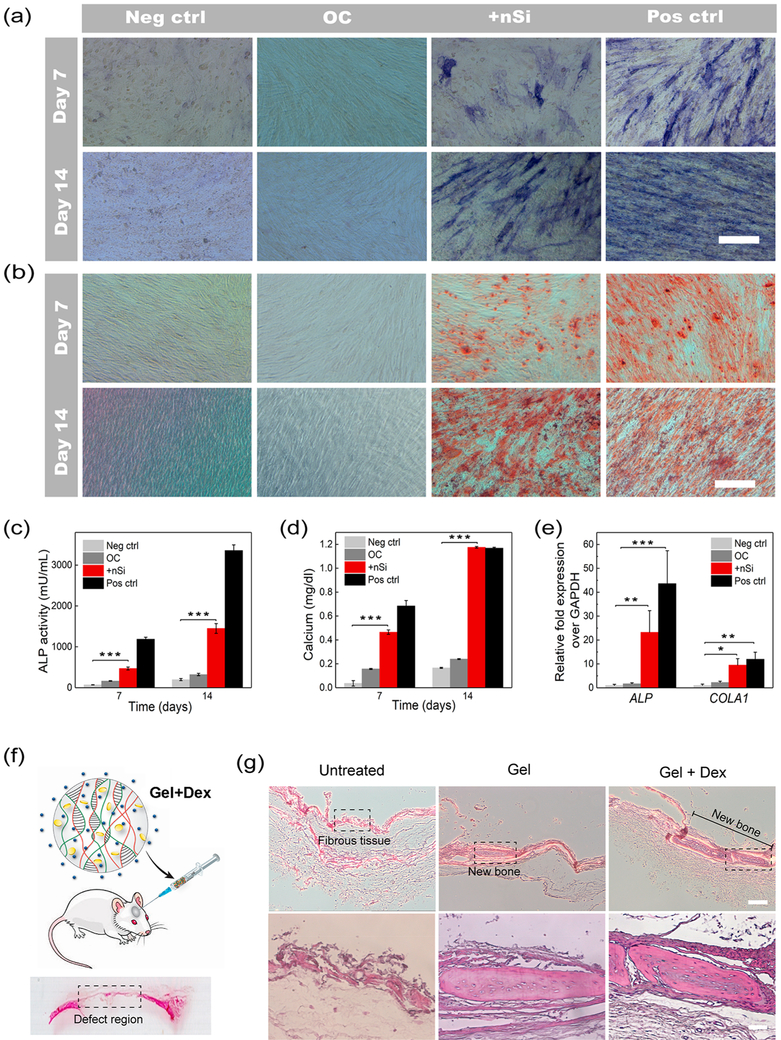
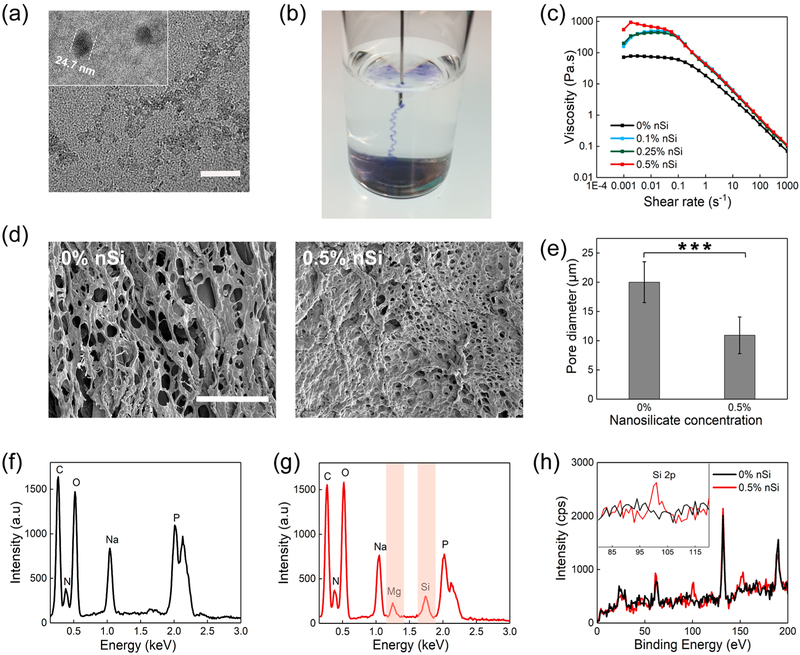
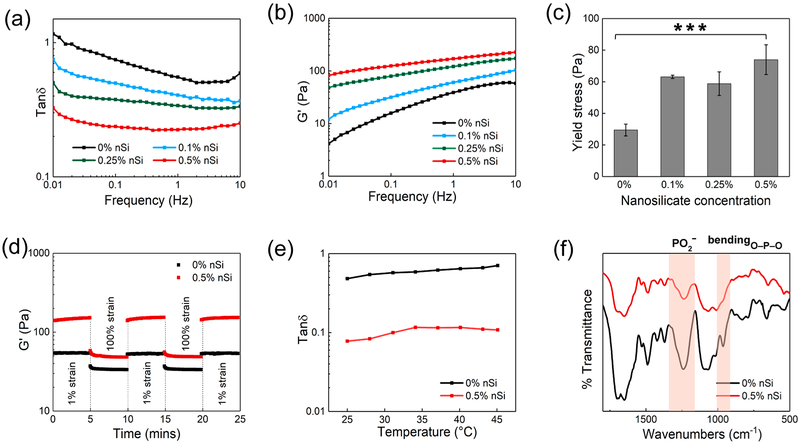
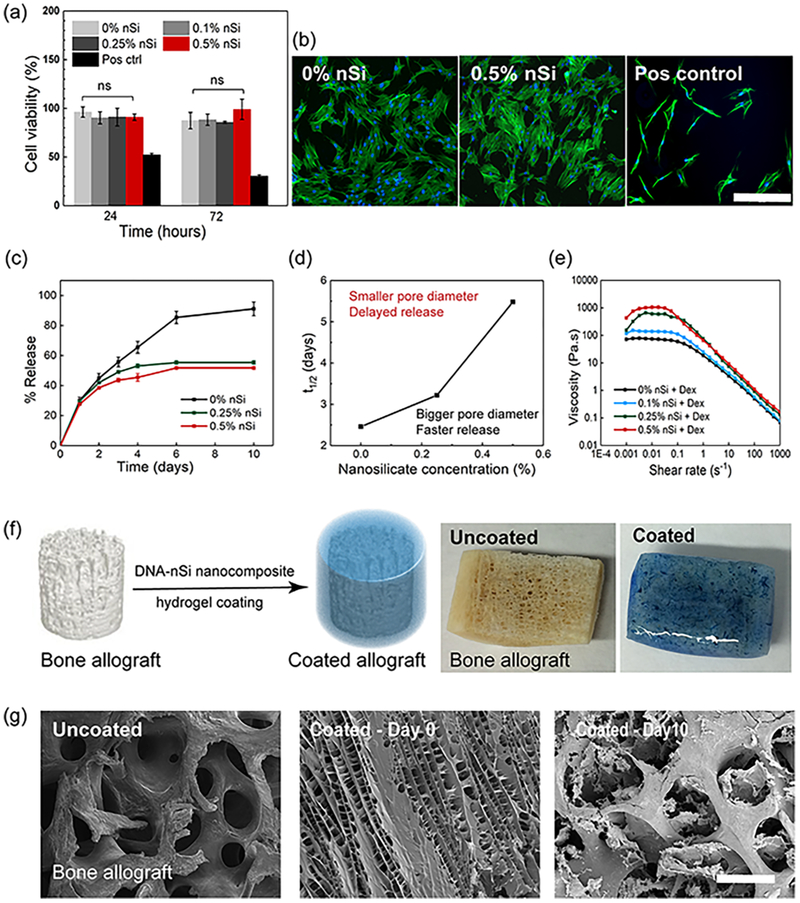
Injectable hydrogels present several advantages over prefabricated scaffolds including ease of delivery, shear-thinning property, and broad applicability in the fields of drug delivery and tissue engineering. Here, we report an approach to develop injectable hydrogels with sustained drug release properties, exploiting the chemical nature of the DNA backbone and silicate nanodisks. A two-step gelation method is implemented for generating a combination of noncovalent network points, leading to a physically cross-linked hydrogel. The first step initiates the development of an interconnected structure by utilizing DNA denaturation and rehybridization mechanism to form hydrogen bonds between complementary base pairs of neighboring DNA strands. The anisotropic charge distribution of two-dimensional silicate nanodisks (nSi) makes them an active center in the second step of the gelation process. Silicate nanodisks create additional network points via attractive electrostatic interactions with the DNA backbone, thereby enhancing the mechanical resilience of the formulated hydrogel. The thermally stable hydrogels displayed an increase in elasticity and yield stress as a function of nSi concentration. They were able to form self-supporting structures post injection due to their rapid recovery after removal of cyclic stress. Moreover, the presence of nanosilicate was shown to modulate the release of a model osteogenic drug dexamethasone (Dex). The bioactivity of released Dex was confirmed from in vitro osteogenic differentiation of human adipose stem cells and in vivo bone formation in a rat cranial bone defect model. Overall, our DNA-based nanocomposite hydrogel obtained from a combination of noncovalent network points can serve as an injectable material for bone regeneration and carrier for sustained release of therapeutics.
可注射水凝胶相对于预制支架具有许多优势,包括易于输送、剪切稀化特性以及在药物输送和组织工程领域的广泛适用性。在这里,我们报告了一种利用 DNA 骨架和硅酸盐纳米盘的化学性质开发具有持续药物释放性能的可注射水凝胶的方法。采用两步凝胶化方法来产生非共价网络点的组合,从而形成物理交联的水凝胶。第一步通过利用 DNA 变性和再杂交机制来启动互连成网络结构的发展,从而在相邻 DNA 链的互补碱基对之间形成氢键。二维硅酸盐纳米盘(nSi)的各向异性电荷分布使其成为凝胶化过程第二步中的活性中心。硅酸盐纳米盘通过与 DNA 骨架的静电吸引力形成额外的网络点,从而增强了所配制水凝胶的机械弹性。热稳定水凝胶的弹性和屈服应力随 nSi 浓度的增加而增加。由于在去除循环应力后能够迅速恢复,因此它们能够在注射后形成自支撑结构。此外,还证明纳米硅酸盐的存在可以调节模型成骨药物地塞米松(Dex)的释放。从人脂肪干细胞的体外成骨分化和大鼠颅骨缺损模型中的体内骨形成证实了释放的 Dex 的生物活性。总的来说,我们从非共价网络点的组合中获得的基于 DNA 的纳米复合水凝胶可以用作骨再生的可注射材料和用于持续释放治疗剂的载体。