Department of Computer Science, University of Sheffield, Sheffield, UK.
Sheffield Robotics, University of Sheffield, Sheffield, UK.
PLoS Comput Biol. 2018 Sep 17;14(9):e1006435. doi: 10.1371/journal.pcbi.1006435. eCollection 2018 Sep.
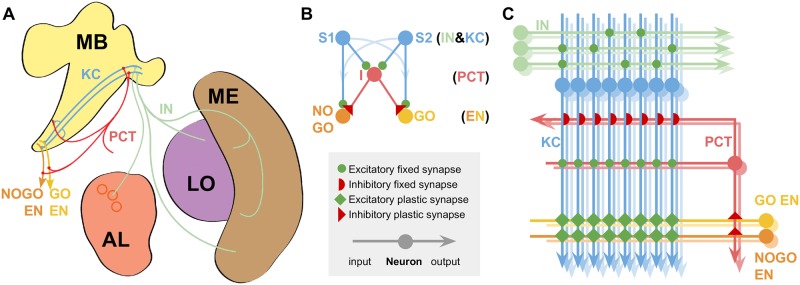
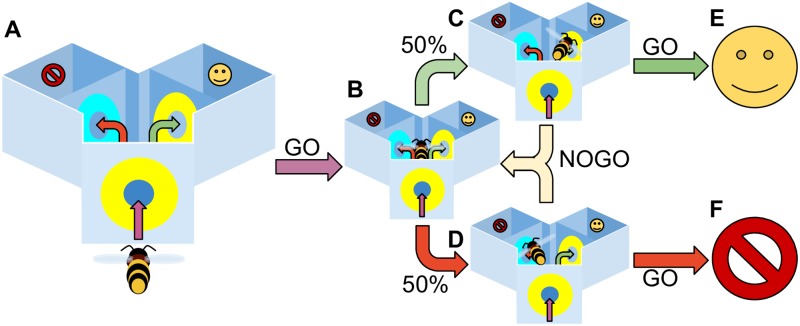
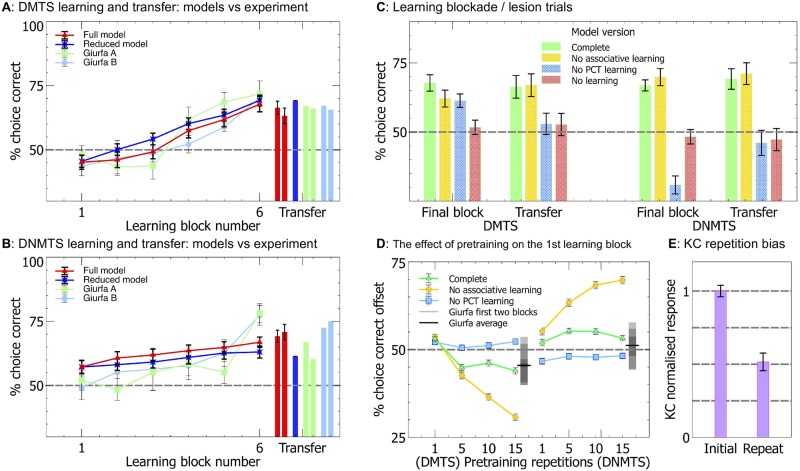
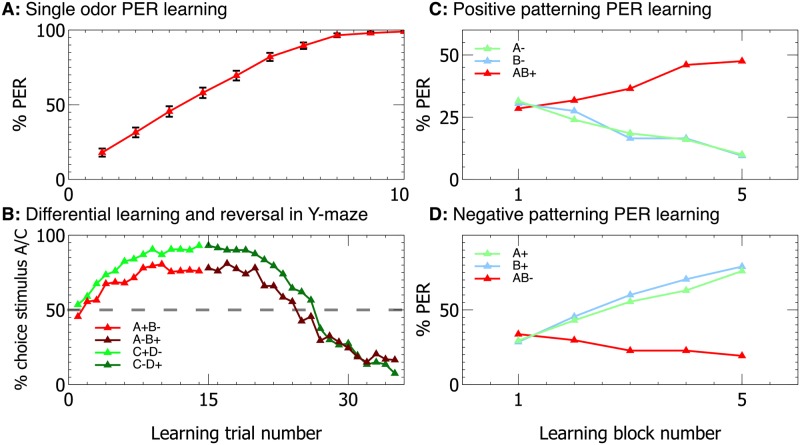
The capacity to learn abstract concepts such as 'sameness' and 'difference' is considered a higher-order cognitive function, typically thought to be dependent on top-down neocortical processing. It is therefore surprising that honey bees apparantly have this capacity. Here we report a model of the structures of the honey bee brain that can learn sameness and difference, as well as a range of complex and simple associative learning tasks. Our model is constrained by the known connections and properties of the mushroom body, including the protocerebral tract, and provides a good fit to the learning rates and performances of real bees in all tasks, including learning sameness and difference. The model proposes a novel mechanism for learning the abstract concepts of 'sameness' and 'difference' that is compatible with the insect brain, and is not dependent on top-down or executive control processing.
学习抽象概念的能力,如“相同”和“不同”,被认为是一种高级认知功能,通常被认为依赖于自上而下的皮质处理。因此,令人惊讶的是,蜜蜂显然具有这种能力。在这里,我们报告了一个可以学习相同和不同以及一系列复杂和简单的联想学习任务的蜜蜂大脑结构模型。我们的模型受已知的蘑菇体(包括原脑索)连接和属性的约束,并很好地适应了真实蜜蜂在所有任务中的学习率和表现,包括学习相同和不同。该模型提出了一种新的机制,用于学习“相同”和“不同”的抽象概念,与昆虫大脑兼容,并且不依赖于自上而下或执行控制处理。