Healthy Aging & Neuropsychology Lab, Department of Psychology & Neuroscience Program, Union College, Schenectady, NY, USA,
Computer Science Department & Neuroscience Program, Union College, Schenectady, NY, USA.
Clin Interv Aging. 2018 Sep 4;13:1565-1577. doi: 10.2147/CIA.S160756. eCollection 2018.
Alzheimer's and related dementias are on the rise, and older adults and their families are seeking accessible and effective ways to stave off or ameliorate mild cognitive impairment (MCI).
This pilot clinical trial (ClinicalTrials.gov Identifier: 03069391) examined neuropsychological and neurobiological outcomes of interactive physical and mental exercise.
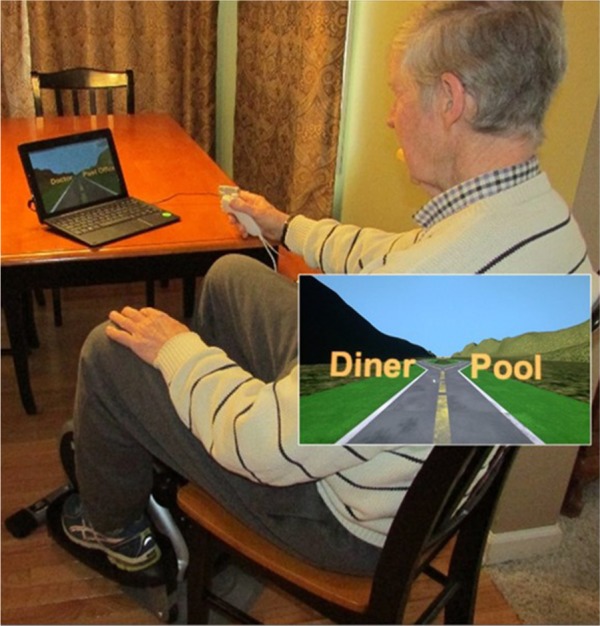
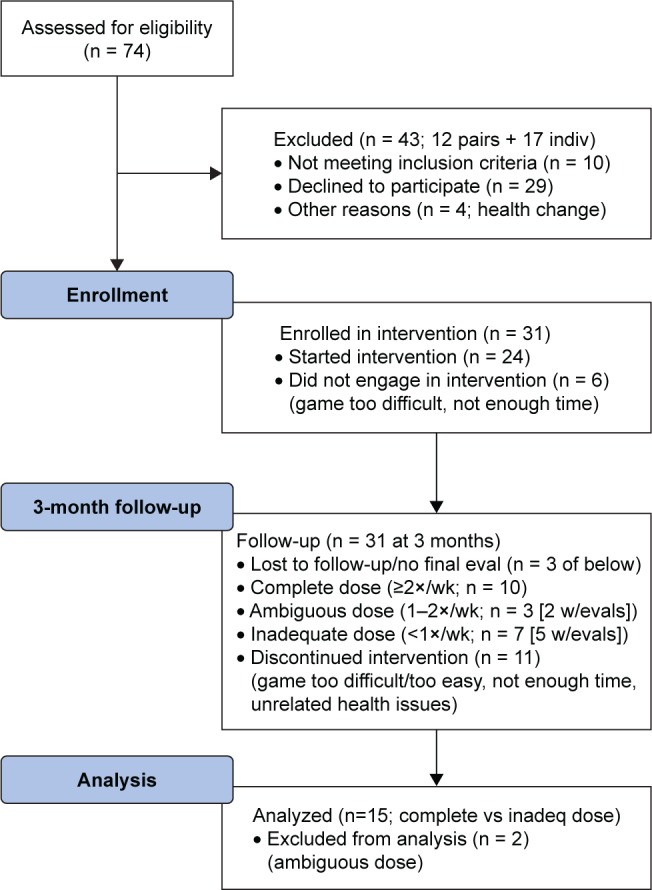
Older adults (MCI and caregivers) were enrolled in a 3-month, in-home trial of a portable neuro-exergame (the interactive Physical and Cognitive Exercise System [iPACES™]), in which they pedaled and steered along a virtual bike path to complete a list of errands (Memory Lane™). Neuropsychological function and salivary biomarkers were measured at pre-, mid-, and posttrial. Ten older adults complied with the recommended use of iPACES (complete dose; ≥2×/wk, 67% of the 15 who also had pre- and postevaluation data). Statistical analyses compared change over time and also change among those with a complete dose vs inadequate dose. Correlations between change in neuropsychological and biomarker measures were also examined.
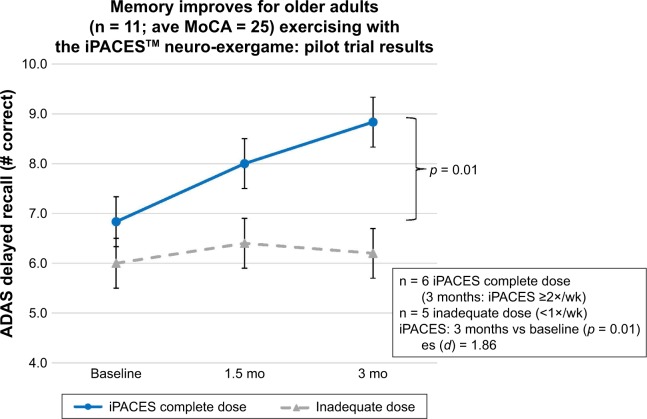
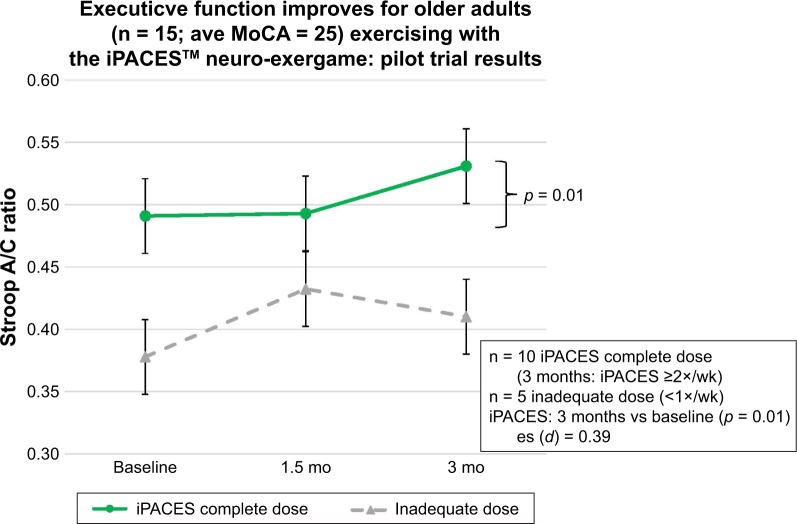
Executive function and verbal memory increased after 3 months ( = 0.01; no significant change was found with an inadequate dose). Change in salivary biomarkers was moderately associated with increasing cognition (cortisol, = 0.68; IGF-1, = 0.37).
Further research is needed, but these pilot data provide preliminary indications to suggest neuro-exergaming can impact cognitive function, perhaps via neurobiological mechanisms, and as such may provide an effective and practical way to promote healthy aging.
阿尔茨海默病和相关痴呆症的发病率正在上升,老年人及其家属正在寻找可行且有效的方法来预防或改善轻度认知障碍(MCI)。
这项试点临床试验(ClinicalTrials.gov 标识符:03069391)研究了互动身心锻炼对神经心理学和神经生物学结果的影响。
老年人(MCI 和照顾者)参加了一项为期 3 个月的在家试用便携式神经锻炼仪(互动身体和认知锻炼系统[iPACES™]),他们沿着虚拟自行车道踩踏和转向,以完成一系列任务(记忆车道™)。在试验前、中期和后期测量神经心理学功能和唾液生物标志物。10 名老年人遵守了 iPACES 的推荐使用量(完整剂量;每周≥2 次,其中 15 人中有 15 人还进行了预评估和后评估)。统计分析比较了随时间的变化,以及完整剂量与不足剂量之间的变化。还检查了神经心理学和生物标志物测量变化之间的相关性。
执行功能和言语记忆在 3 个月后增加(=0.01;不足剂量无显著变化)。唾液生物标志物的变化与认知能力的提高呈中度相关(皮质醇,=0.68;IGF-1,=0.37)。
需要进一步的研究,但这些试点数据初步表明,神经锻炼游戏可能通过神经生物学机制影响认知功能,因此可能提供一种有效且实用的促进健康老龄化的方法。