Department of Nutritional Sciences, Obesity Research Cluster, Texas Tech University, Lubbock, TX 79409, USA.
Department of Human Ecology, University of Maryland Eastern Shore, Princess Anne, MD 21853, USA.
Nutrients. 2018 Oct 25;10(11):1576. doi: 10.3390/nu10111576.
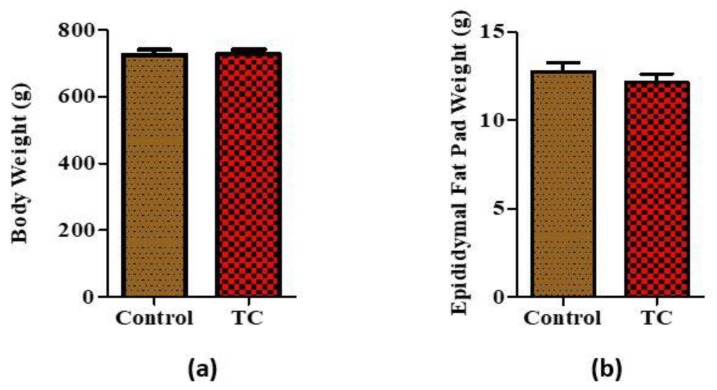
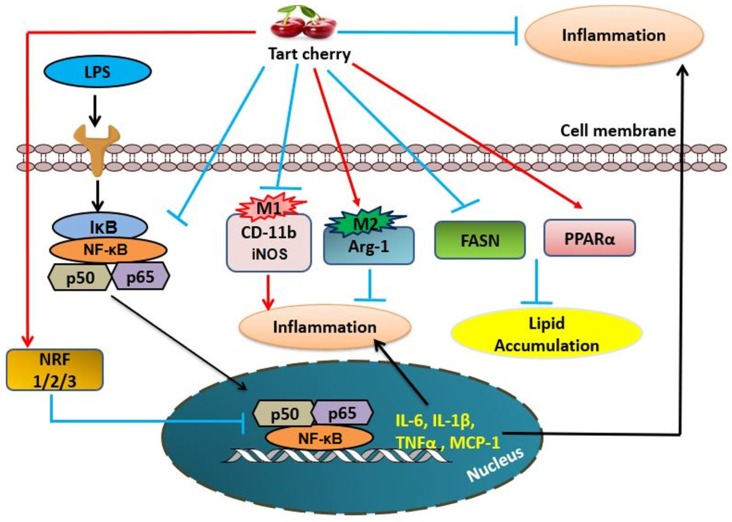
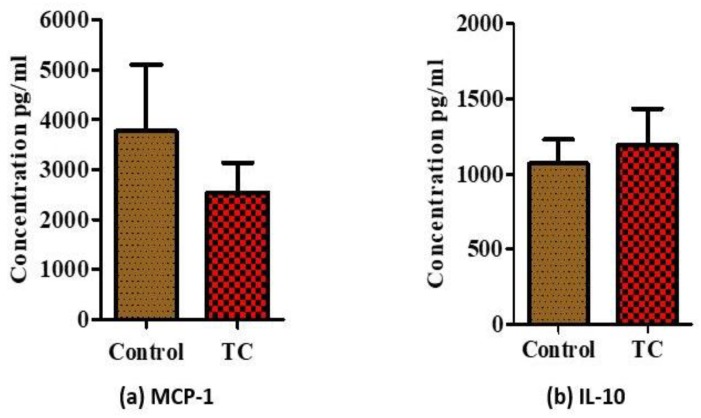
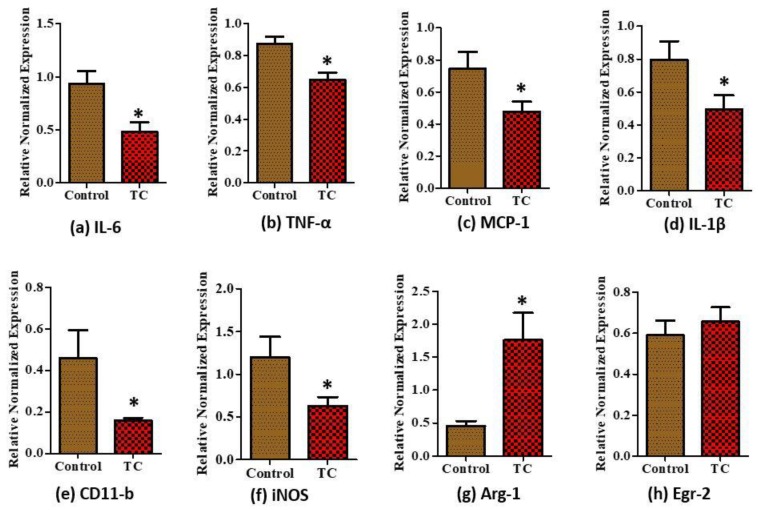
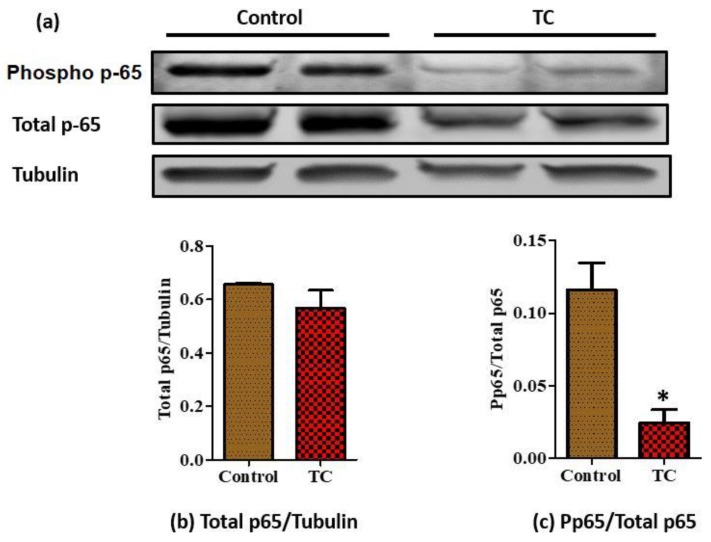
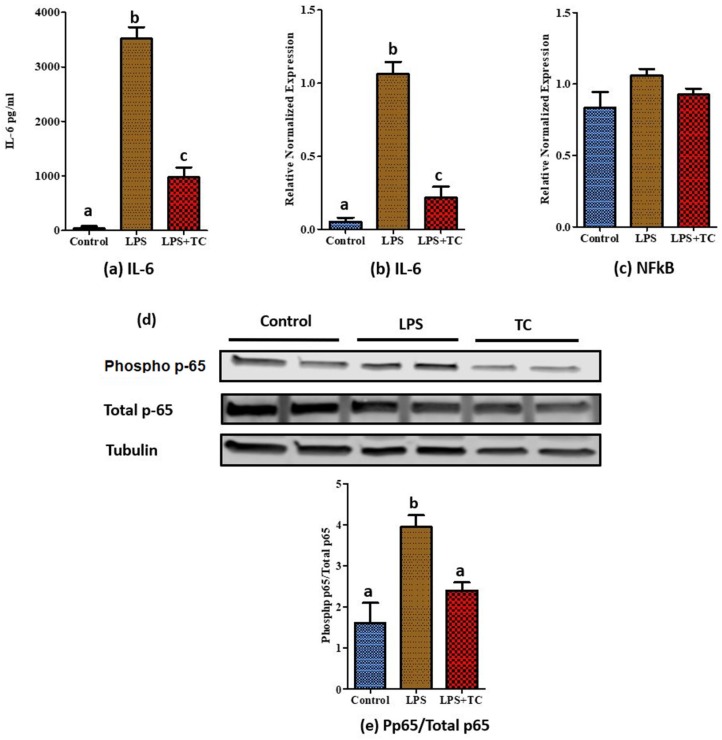
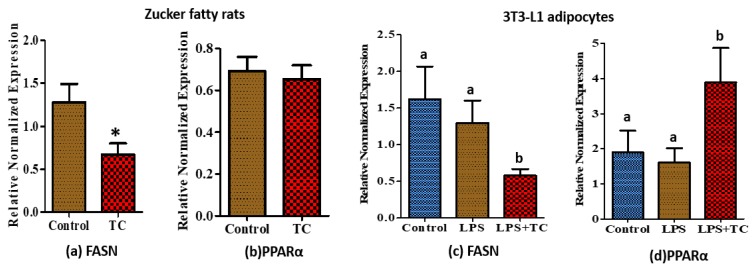
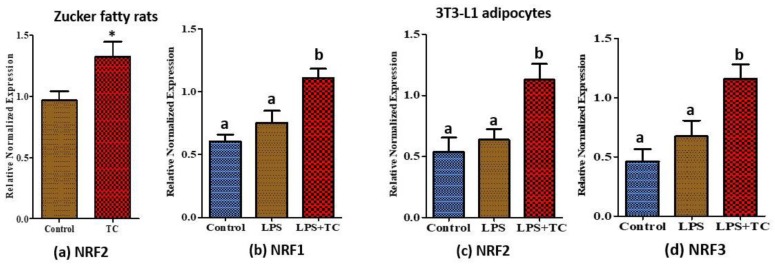
Obesity increases adipose tissue inflammation and secretion of pro-inflammatory adipokines, which have systemic effects on the organism's health status. Our objective was to dissect mechanisms of anti-inflammatory effects of tart cherry (TC) in adipose tissue of Zucker fatty rats, and cultured 3T3-L1 adipocytes. Rats were fed either a control diet, or 4% TC powder diets for eight weeks. Body and epididymal fat pad weights were not significantly different between control and TC groups. However, rats fed the TC diet had significantly reduced adipose tissue inflammation ( < 0.05), as determined by reduced mRNA levels of pro-inflammatory markers including interleukin-6 (IL-6), tumor necrosis factor alpha (TNFα), interleukin-1beta (IL-1β), monocyte chemoattractant protein 1 (MCP-1), inducible nitric oxide synthase (iNOS), and CD-11b, and increased mRNA levels of type-1 arginase (Arg-1) anti-inflammatory marker. Consistent with these in vivo results, TC significantly decreased expression of IL-6 mRNA and protein levels in lipopolysaccharide (LPS) stimulated adipocytes compared to those stimulated with LPS, but no TC. Moreover, both in vivo (rat adipose tissue) and in vitro (3T3-L1 adipocytes), phosphorylation of p65-NF-κB subunit was significantly reduced by TC. Additionally, TC decreased mRNA expression of fatty acid synthase (FASN), and increased expression of peroxisome proliferator-activated receptor alpha (PPARα), master regulator of lipid oxidation, and anti-oxidant markers nuclear factor erythroid-derived 2-related factor (NRFs) in both models. In conclusion, our findings indicate that TC downregulates inflammation in part via the nuclear factor kappa B (NF-κB) pathway in adipose tissue. Thus, TC may serve as a potential intervention to reduce obesity-associated inflammation.
肥胖会增加脂肪组织炎症和促炎脂肪因子的分泌,从而对机体的健康状况产生全身性影响。我们的目的是剖析酸樱桃(TC)对 Zucker 肥胖大鼠脂肪组织和培养的 3T3-L1 脂肪细胞的抗炎作用机制。大鼠分别喂食对照饮食或含 4% TC 粉的饮食 8 周。与对照组相比,喂食 TC 饮食的大鼠脂肪组织炎症明显减轻(<0.05),这表现在促炎标志物如白细胞介素 6(IL-6)、肿瘤坏死因子 alpha(TNFα)、白细胞介素 1β(IL-1β)、单核细胞趋化蛋白 1(MCP-1)、诱导型一氧化氮合酶(iNOS)和 CD-11b 的 mRNA 水平降低,以及 1 型精氨酸酶(Arg-1)抗炎标志物的 mRNA 水平升高。与这些体内结果一致,TC 显著降低了脂多糖(LPS)刺激的脂肪细胞中 IL-6 mRNA 和蛋白水平的表达,与 LPS 刺激相比,但没有 TC。此外,在体内(大鼠脂肪组织)和体外(3T3-L1 脂肪细胞),TC 均显著降低了 p65-NF-κB 亚基的磷酸化。此外,TC 降低了脂肪酸合酶(FASN)的 mRNA 表达,增加了过氧化物酶体增殖物激活受体 alpha(PPARα)的表达,后者是脂质氧化的主要调节因子,以及两种模型中的抗氧化标志物核因子红细胞衍生 2 相关因子(NRFs)的表达。总之,我们的研究结果表明,TC 通过核因子 kappa B(NF-κB)途径下调脂肪组织中的炎症,因此,TC 可能成为减少肥胖相关炎症的潜在干预措施。