Fernandes Jorlan, Oliveira Renata Carvalho de, Coelho Thayssa Alves, Martins Regina Maria Bringel, Caetano Karlla Antonieta Amorim, Horta Marco Aurélio Pereira, Levis Silvana, Carneiro Megmar Aparecida Dos Santos, Teles Sheila A, Lemos Elba Regina Sampaio de
Fundação Oswaldo Cruz-Fiocruz, Instituto Oswaldo Cruz, Laboratório de Hantaviroses e Rickettsioses, Rio de Janeiro, RJ, Brasil.
Universidade Federal de Goiás, Instituto de Patologia Tropical e Saúde Pública, Goiânia, GO, Brasil.
Mem Inst Oswaldo Cruz. 2018 Dec 17;114:e180448. doi: 10.1590/0074-02760180448.
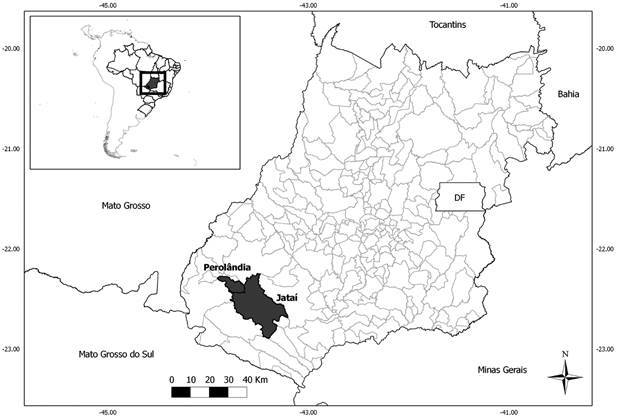
Anthropogenic environmental changes arising from settlement and agriculture include deforestation and replacement of natural vegetation by crops providing opportunities for pathogen spillover from animals to humans. This study aimed to investigate the prevalence of rodent-borne virus infections in seven rural settlements from Midwestern Brazil. Of the 466 individuals tested 12 (2.57%) were reactive for orthohantavirus and 3 (0.64%) for mammarenavirus. These rural settlers lived under unfavorable infrastructure, socioeconomic disadvantages, and unsanitary conditions, representing a risk for rodent-borne infections. Development of public policies towards the improvement of health, sanitation and awareness of rodent-borne diseases in improvised camps and settlements is imperative, in order to reduce morbidity and mortality caused by these diseases.
由定居和农业引发的人为环境变化包括森林砍伐以及用农作物取代自然植被,这为病原体从动物传播到人类创造了机会。本研究旨在调查巴西中西部七个农村定居点中啮齿动物传播病毒感染的流行情况。在接受检测的466人中,12人(2.57%)汉坦病毒检测呈阳性,3人(0.64%)沙粒病毒检测呈阳性。这些农村定居者生活在基础设施差、社会经济劣势和卫生条件不佳的环境中,存在啮齿动物传播感染的风险。必须制定公共政策,以改善临时营地和定居点的健康、卫生状况,并提高对啮齿动物传播疾病的认识,从而降低这些疾病导致的发病率和死亡率。