Erbis Gabriele, Schmidt Kirstin, Hansmann Sandra, Sergiichuk Tetiana, Michler Christine, Kuemmerle-Deschner Jasmin B, Benseler Susanne M
Rheumatology, Department of Pediatrics and autoinflammation reference center Tuebingen, University Children's Hospital Tuebingen, Tuebingen, Germany.
Institute of Education, University of Tuebingen, Tuebingen, Germany.
Pediatr Rheumatol Online J. 2018 Dec 20;16(1):81. doi: 10.1186/s12969-018-0300-7.
Autoinflammatory diseases (AIDs) illnesses of the innate immunity resulting in clinical signs and symptoms of systemic inflammation and loss of organ functions. While pathophysiological mechanisms are heavily studied and increasingly well understood, psychosocial needs are much less explored. The disease impact on the everyday life of patients including school and work is poorly studied. The purpose of the study was to identify the spectrum of unmet needs of children, adolescents and adults living with autoinflammatory disease and their families, to define key unmet needs and strategies and to develop and evaluate a pilot intervention addressing the unmet need "school".
A single-center, mixed-method study of AID patients and their families was conducted. Consecutive patients ages ≥4 years and their families were included. Expert consulting, focus groups and questionnaires explored the patient perspective of "unmet needs in AID". Quantitative and qualitative content analyses were performed and informed the development of a framework of unmet needs. A targeted pilot multimodular intervention for the unmet need "school" was developed and tested. Health-related Quality of Life (HRQoL) was evaluated using DISABKIDS-questionnaires and psychosocial impact evaluations.
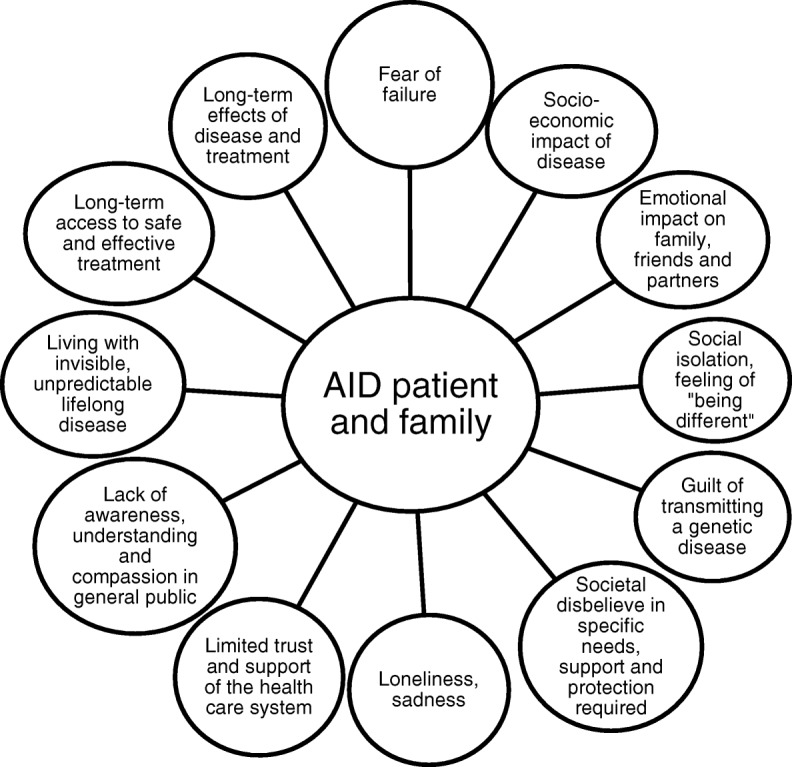
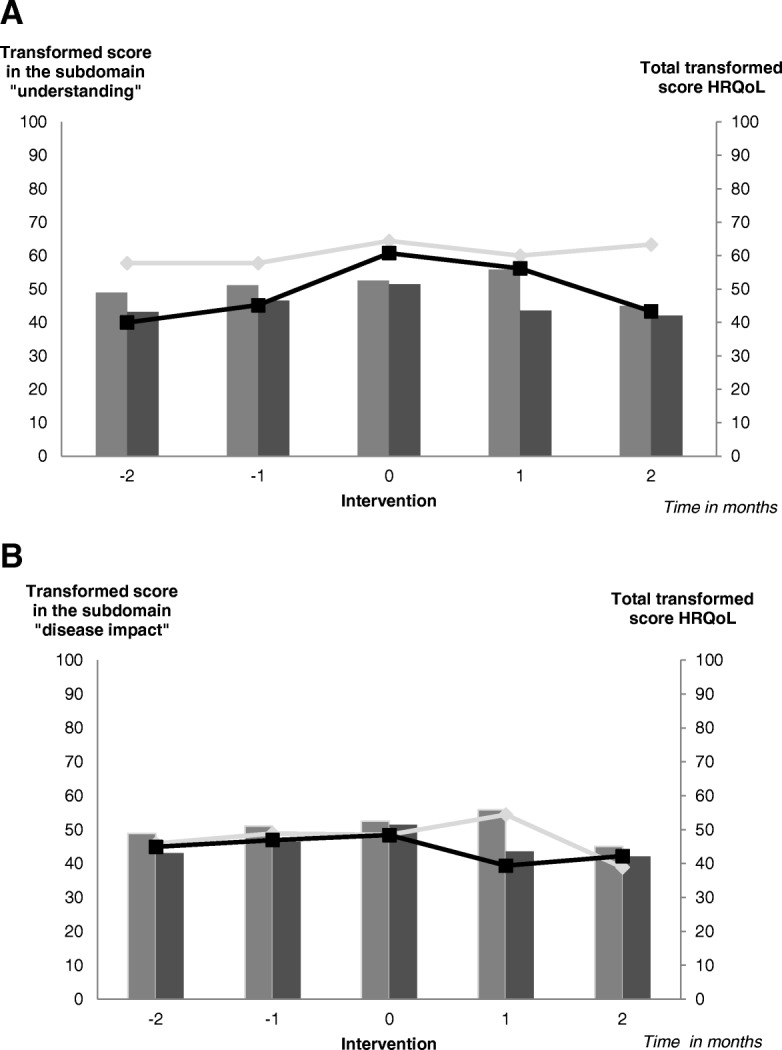
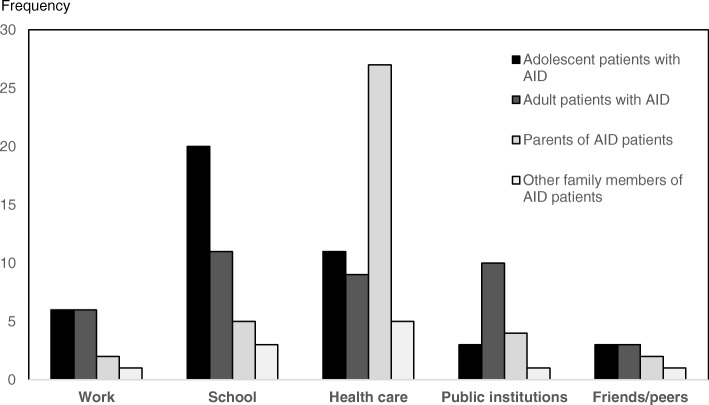
The study included 83 patients and their families. These were 14 children, 9 adolescents and 25 adults with AID and 35 family members; patients' median age was 19 years (5-78). Expert consultations: 110 AID patients with 320 visits/year; 99 (90%) were children and adolescents. 78 patients and family members (94%) participated in 10 groups. Qualitative content analysis delineated 9 domains of unmet needs, the most relevant being school, health care system and public institutions. The pilot intervention"school" included 18 participants; median age was 9 years (7-16). HRQoL improved with the intervention including "understanding" by 53%, however improvement was not sustained over time.
Unmet needs of AID patients and families affect all areas of life. Accessible networks increasing knowledge and empowering patients, strategies supporting academic and workplace environments to ensure successful participation and integrated concepts addressing psychosocial needs are urgently needed.
自身炎症性疾病(AIDs)是先天性免疫疾病,会导致全身炎症的临床体征和症状以及器官功能丧失。虽然对其病理生理机制进行了大量研究且日益了解,但对心理社会需求的探索却少得多。该疾病对患者日常生活(包括学校和工作)的影响研究不足。本研究的目的是确定患有自身炎症性疾病的儿童、青少年和成人及其家庭未满足需求的范围,确定关键的未满足需求和策略,并制定和评估一项针对未满足需求“学校”的试点干预措施。
对AID患者及其家庭进行了一项单中心、混合方法研究。纳入年龄≥4岁的连续患者及其家庭。通过专家咨询、焦点小组和问卷调查探讨了患者对“AID中未满足需求”的看法。进行了定量和定性内容分析,并为未满足需求框架的制定提供了依据。针对未满足需求“学校”制定并测试了有针对性的试点多模块干预措施。使用残疾儿童问卷评估健康相关生活质量(HRQoL)并进行心理社会影响评估。
该研究纳入了83名患者及其家庭。其中有14名患有AID的儿童、9名青少年和25名成人以及35名家庭成员;患者的中位年龄为19岁(5 - 78岁)。专家咨询:110名AID患者,每年就诊320次;99名(90%)为儿童和青少年。78名患者和家庭成员(94%)参加了10个小组。定性内容分析确定了9个未满足需求领域,最相关的是学校、医疗保健系统和公共机构。试点干预措施“学校”包括18名参与者;中位年龄为9岁(7 - 16岁)。干预后HRQoL有所改善,包括“理解”方面提高了53%,但随着时间推移改善未持续。
AID患者及其家庭的未满足需求影响生活的各个方面。迫切需要可及的网络来增加知识并增强患者能力,需要支持学术和工作场所环境以确保成功参与的策略,以及解决心理社会需求的综合概念。