Hernández Martínez Sara Paola, Rivera González Teodoro Iván, Franco Molina Moisés Armides, Bollain Y Goytia Juan José, Martínez Sanmiguel Juan José, Zárate Triviño Diana Ginette, Rodríguez Padilla Cristina
Laboratorio de Inmunología y Virología, Facultad de Ciencias Biológicas, Universidad Autónoma de Nuevo León, Pedro de Alba s/n, San Nicolas de los Garza, Nuevo León 66455, Mexico.
Laboratorio de Inmunología y Biología Molecular, Unidad Académica de Ciencias Biológicas, Universidad Autónoma de Zacatecas, Avenida de la Revolución Mexicana s/n, Guadalupe, Zacatecas 98600, Mexico.
Nanomaterials (Basel). 2019 Jan 8;9(1):75. doi: 10.3390/nano9010075.
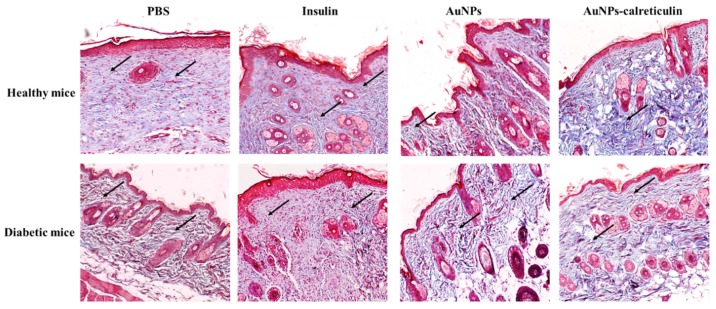
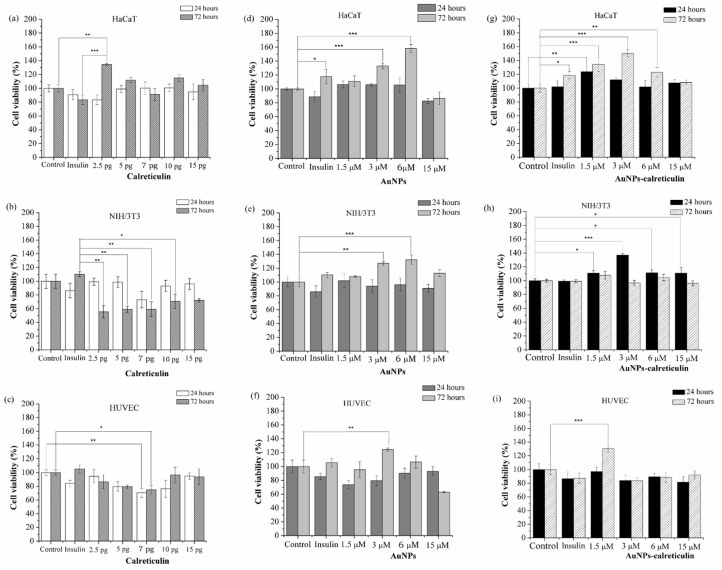
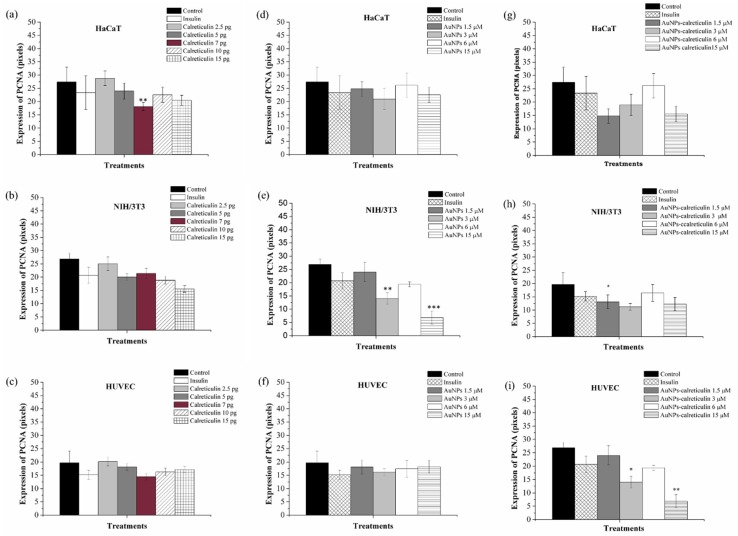
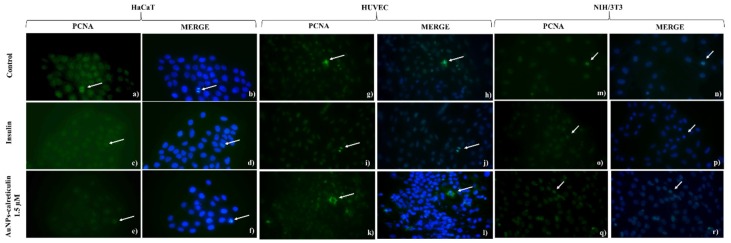
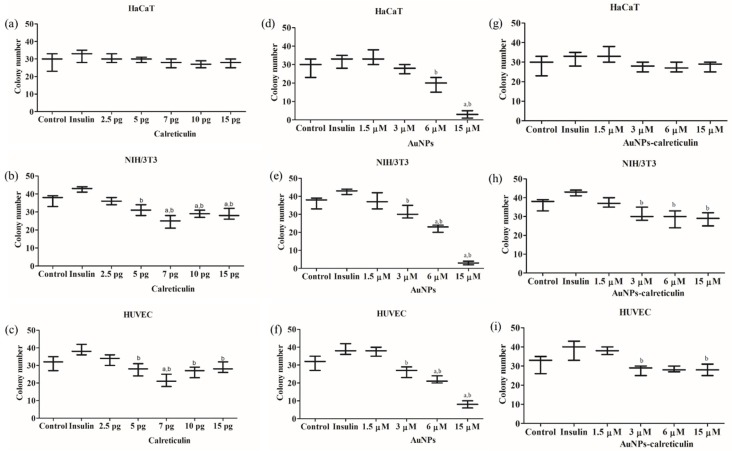
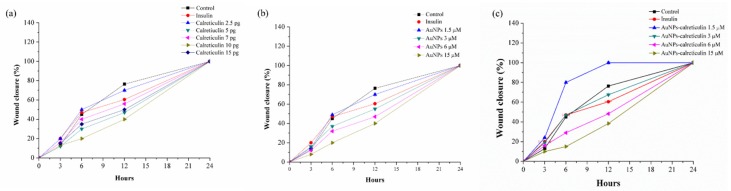
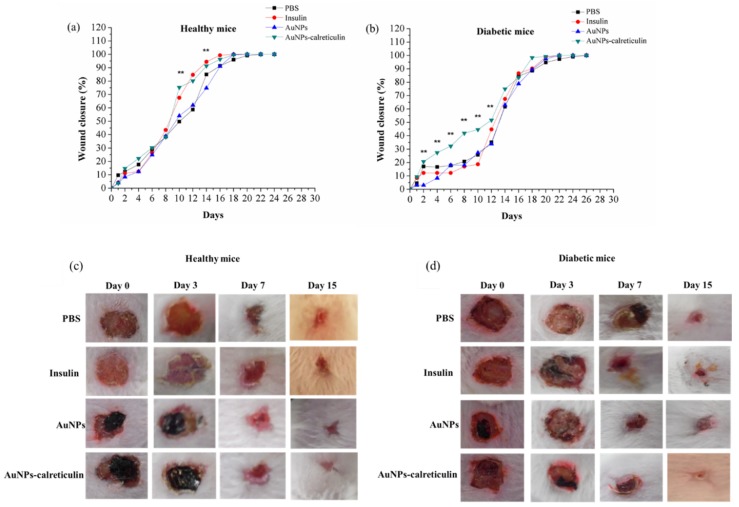
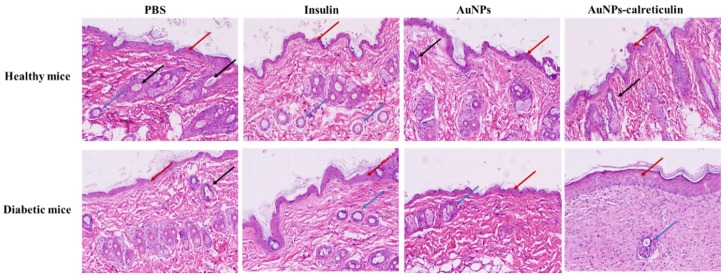
The development of new nanomaterials to promote wound healing is rising, because of their topical administration and easy functionalization with molecules that can improve and accelerate the process of healing. A nanocomposite of gold nanoparticles (AuNPs) functionalized with calreticulin was synthetized and evaluated. The ability of the nanocomposite to promote proliferation and migration was determined in vitro, and in vivo wound healing was evaluated using a mice model of diabetes established with streptozotocin (STZ). In vitro, the nanocomposite not affect the cell viability and the expression of proliferating cell nuclear antigen (PCNA). Moreover, the nanocomposite promotes the clonogenicity of keratinocytes, endothelial cells, and fibroblasts, and accelerates fibroblast migration. In vivo, mice treated with the nanocomposite presented significantly faster wound healing. The histological evaluation showed re-epithelization and the formation of granular tissue, as well as an increase of collagen deposition. Therefore, these results confirm the utility of AuNPs⁻calreticulin nanocomposites as potential treatment for wound healing of diabetic ulcers.
由于新型纳米材料可通过局部给药以及易于与能改善和加速愈合过程的分子进行功能化修饰,因此用于促进伤口愈合的新型纳米材料的研发正在兴起。合成并评估了一种用钙网蛋白功能化的金纳米颗粒(AuNPs)纳米复合材料。在体外确定了该纳米复合材料促进增殖和迁移的能力,并使用链脲佐菌素(STZ)建立的糖尿病小鼠模型评估了体内伤口愈合情况。在体外,该纳米复合材料不影响细胞活力和增殖细胞核抗原(PCNA)的表达。此外,该纳米复合材料促进角质形成细胞、内皮细胞和成纤维细胞的克隆形成,并加速成纤维细胞迁移。在体内,用该纳米复合材料治疗的小鼠伤口愈合明显更快。组织学评估显示有再上皮化和颗粒组织形成,以及胶原沉积增加。因此,这些结果证实了AuNPs⁻钙网蛋白纳米复合材料作为糖尿病溃疡伤口愈合潜在治疗方法的实用性。