Martins Lívia Caricio, Silva Eliana Vieira Pinto da, Casseb Livia Medeiros Neves, Silva Sandro Patroca da, Cruz Ana Cecília Ribeiro, Pantoja Jamilla Augusta de Sousa, Medeiros Daniele Barbosa de Almeida, Martins Filho Arnaldo Jorge, Cruz Ermelinda do Rosário Moutinho da, Araújo Marialva Tereza Ferreira de, Cardoso Jedson Ferreira, Cunha Marcos Antônio Correia Rodrigues da, Almada Gilton Luiz, Romano Alessandro Pecego Martins, Santos Maria Guadalupe Dias Pestana, Rodrigues Gilsa Aparecida Pimenta, Chiang Jannifer Oliveira, Quaresma Juarez Antonio Simões, Carvalho Valéria Lima, Vasconcelos Pedro Fernando da Costa
Instituto Evandro Chagas, Seção de Arbovirologia e Febres Hemorrágicas, Ananindeua, PA, Brasil.
Instituto Evandro Chagas, Seção de Patologia, Ananindeua, PA, Brasil.
Mem Inst Oswaldo Cruz. 2019 Jan 17;114:e180332. doi: 10.1590/0074-02760180332.
Serological evidence of West Nile virus (WNV) infection has been reported in different regions of Brazil from equine and human hosts but the virus had never been isolated in the country.
We sought to identify the viral etiology of equine encephalitis in Espírito Santo state.
We performed viral culture in C6/36 cells, molecular detection of WNV genome, histopathology and immunohistochemistry from horse cerebral tissue. We also carried out sequencing, phylogenetic analysis and molecular clock.
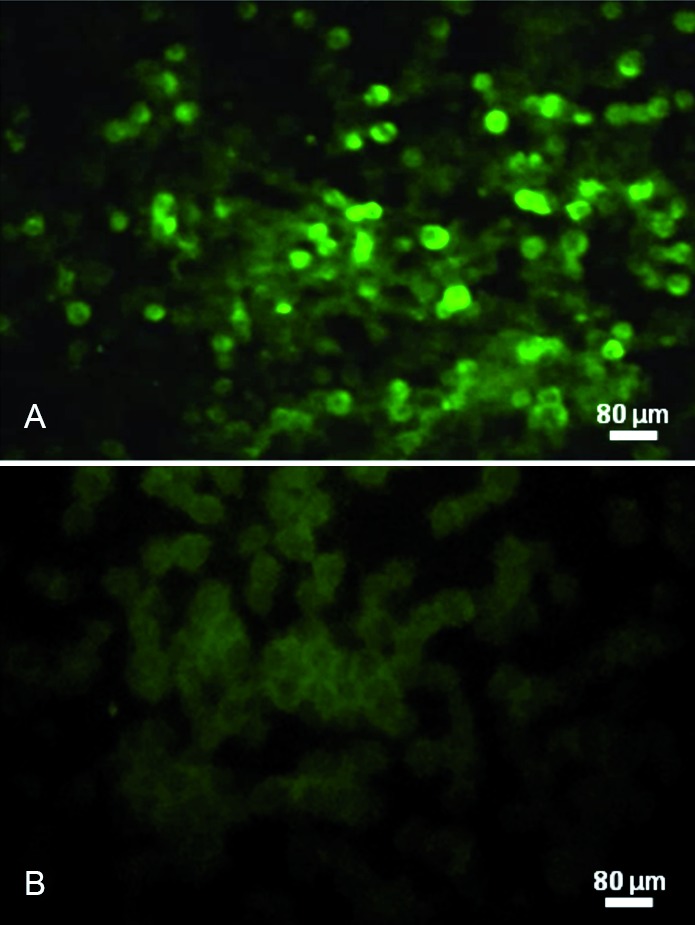
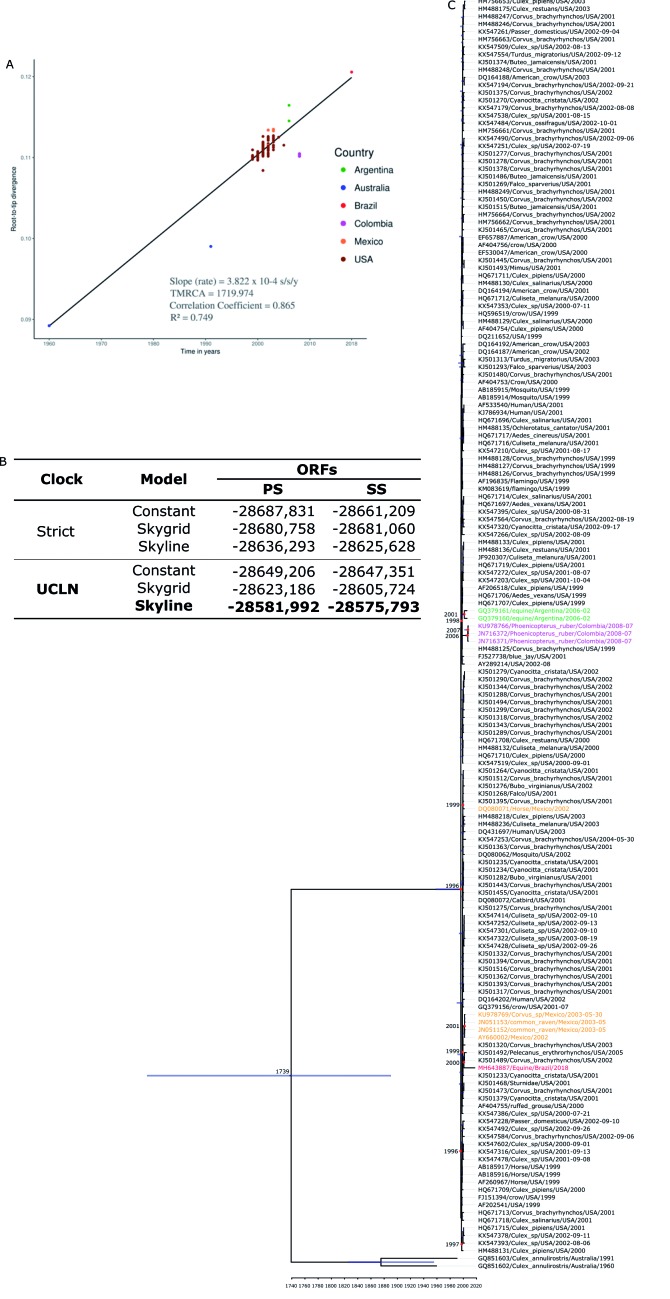
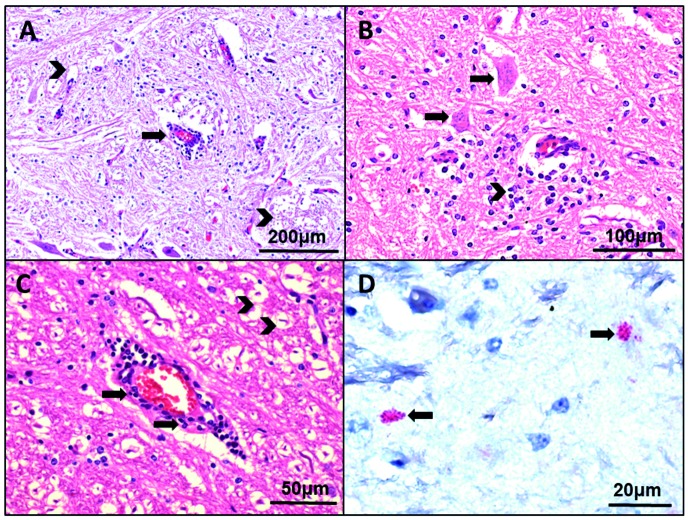
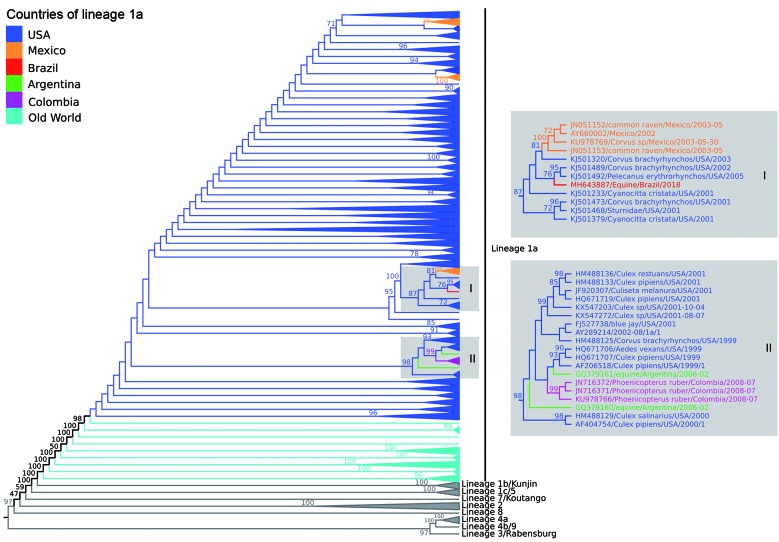
Histopathologic analysis from horse cerebral tissue showed injury related to encephalitis and WNV infection was confirmed by immunohistochemistry. The virus was detected by reverse transcription quantitative polymerase chain reaction (RT-qPCR) from brain tissue and subsequently isolated in C6/36 cells. WNV full-length genome was sequenced showing the isolated strain belongs to lineage 1a. The molecular clock indicated that Brazilian WNV strain share the same common ancestor that were circulating in US during 2002-2005.
Here we report the first isolation of WNV in Brazil from a horse with neurologic disease, which was clustered into lineage 1a with others US WNV strains isolated in beginning of 2000's decade.
在巴西不同地区,已报道从马和人类宿主中获得西尼罗河病毒(WNV)感染的血清学证据,但该国从未分离出该病毒。
我们试图确定圣埃斯皮里图州马脑炎的病毒病因。
我们在C6/36细胞中进行病毒培养,对WNV基因组进行分子检测,对马脑组织进行组织病理学和免疫组织化学分析。我们还进行了测序、系统发育分析和分子钟分析。
马脑组织的组织病理学分析显示存在与脑炎相关的损伤,免疫组织化学证实了WNV感染。通过逆转录定量聚合酶链反应(RT-qPCR)从脑组织中检测到该病毒,随后在C6/36细胞中分离出来。对WNV全长基因组进行测序,结果显示分离出的毒株属于1a谱系。分子钟分析表明,巴西WNV毒株与2002 - 2005年期间在美国传播的毒株具有相同的共同祖先。
在此我们报道了巴西首次从患有神经系统疾病的马中分离出WNV,该毒株与21世纪初在美国分离出的其他WNV毒株聚集在1a谱系中。