Department of Medicine, Division of Infectious Diseases, University of Colorado Anschutz Medical Campus, Aurora, CO, USA.
Department of Biostatistics and Informatics, Colorado School of Public Health, Aurora, CO, USA.
EBioMedicine. 2019 Feb;40:583-594. doi: 10.1016/j.ebiom.2019.01.033. Epub 2019 Jan 23.
HIV-1 infection and physiological aging are independently linked to elevated systemic inflammation and changes in enteric microbial communities (dysbiosis). However, knowledge of the direct effect of HIV infection on the aging microbiome and potential links to systemic inflammation is lacking.
In a cross-sectional study of older people living with HIV (PLWH) (median age 61.5 years, N = 14) and uninfected controls (median 58 years, n = 22) we compared stool microbiota, levels of microbial metabolites (short-chain fatty acid levels, SCFA) and systemic inflammatory biomarkers by HIV serostatus and age.
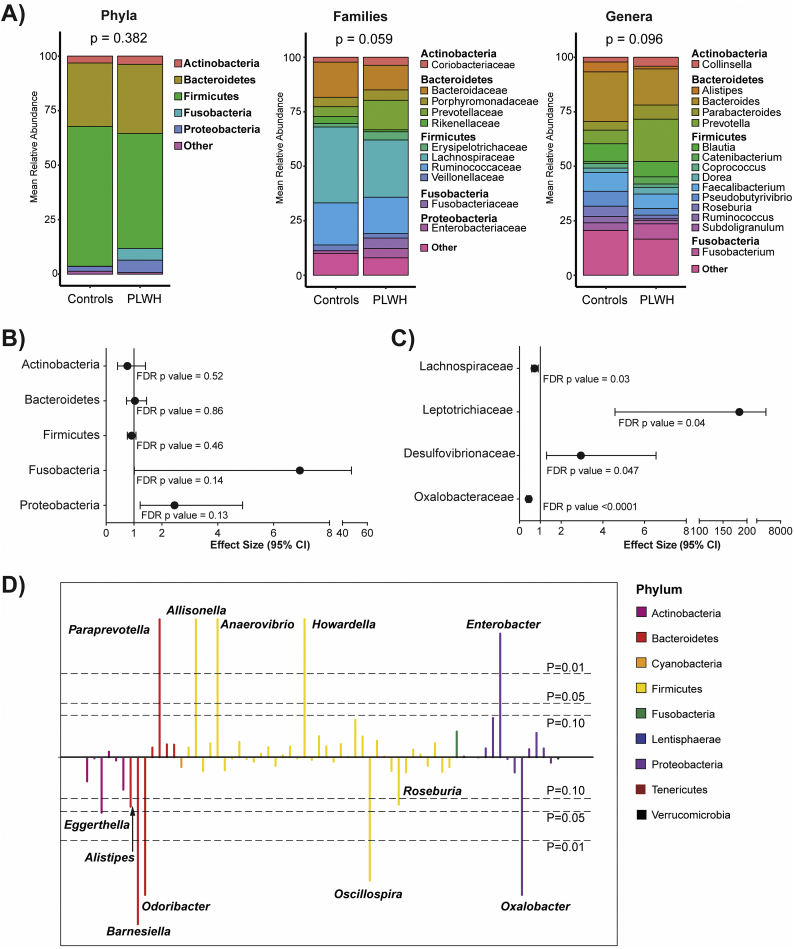
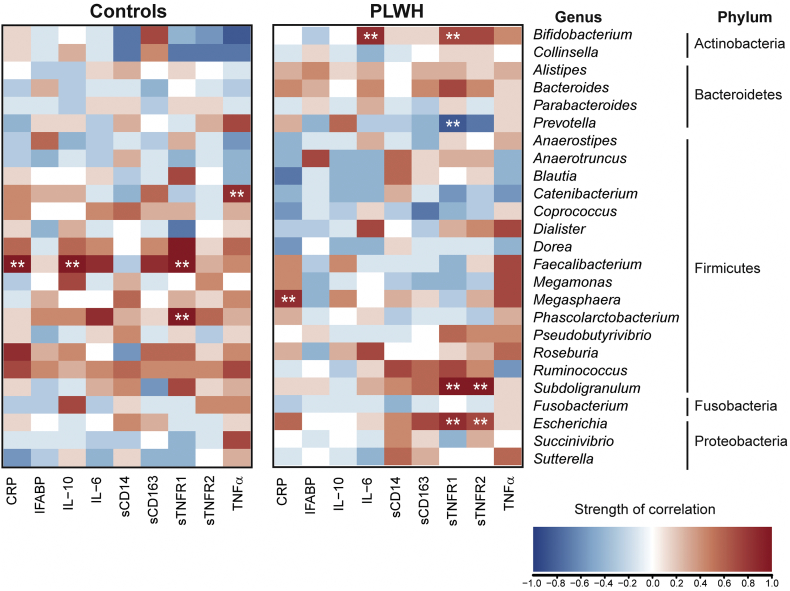
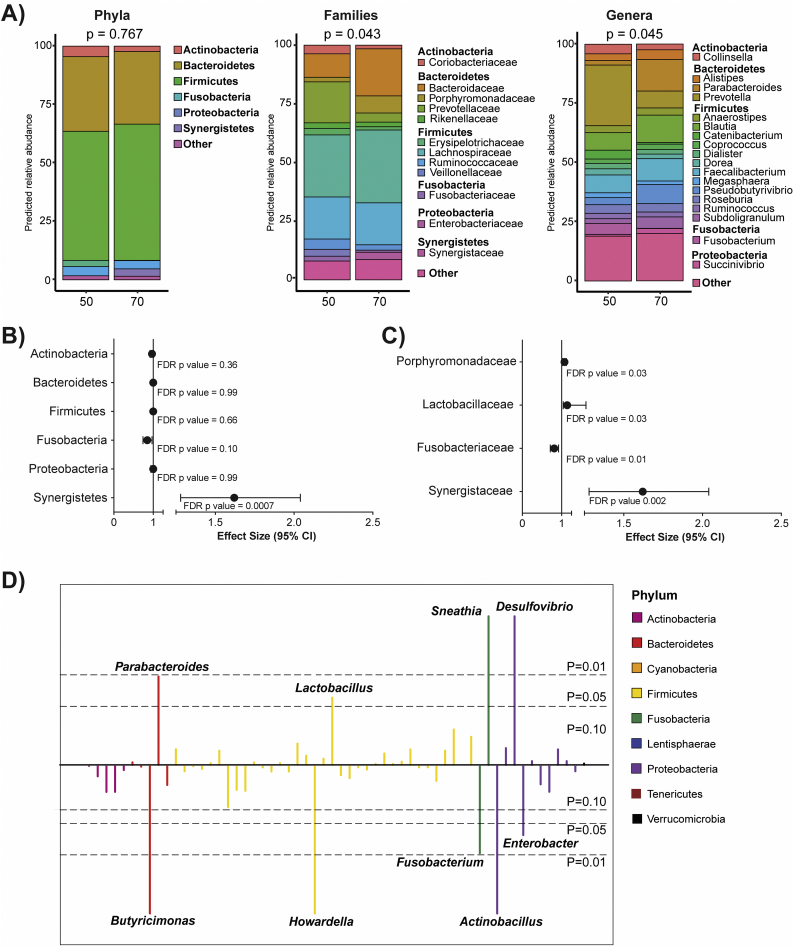
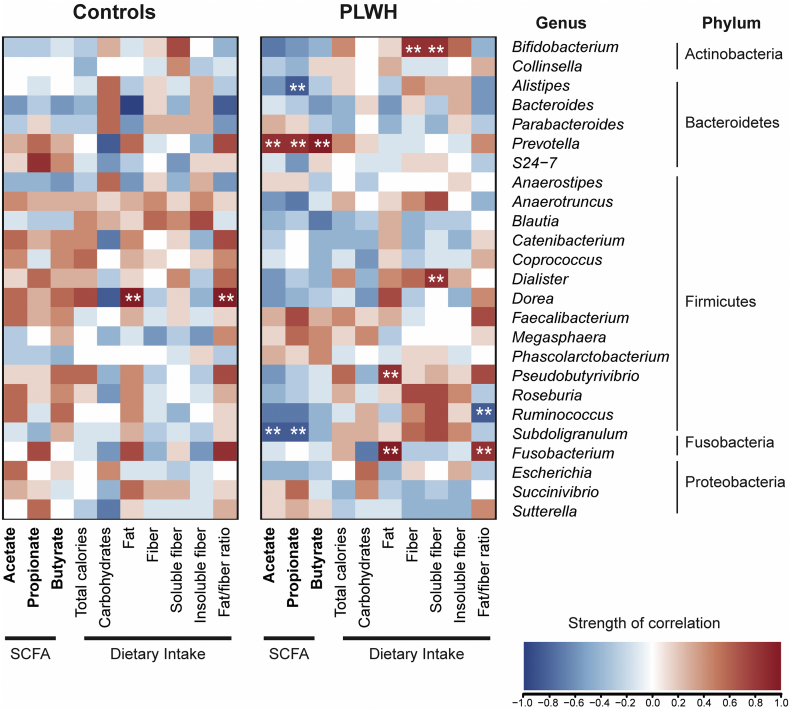
HIV and age were independently associated with distinct changes in the stool microbiome. For example, abundances of Enterobacter and Paraprevotella were higher and Eggerthella and Roseburia lower among PLWH compared to uninfected controls. Age-related microbiome changes also differed by HIV serostatus. Some bacteria with inflammatory potential (e.g. Escherichia) increased with age among PLWH, but not controls. Stool SCFA levels were similar between the two groups yet patterns of associations between individual microbial taxa and SCFA levels differed. Abundance of various genera including Escherichia and Bifidobacterium positively associated with inflammatory biomarkers (e.g. soluble Tumor Necrosis Factor Receptors) among PLWH, but not among controls.
The age effect on the gut microbiome and associations between microbiota and microbial metabolites or systemic inflammation differed based on HIV serostatus, raising important implications for the impact of therapeutic interventions, dependent on HIV serostatus or age.
HIV-1 感染和生理衰老均与全身性炎症升高和肠道微生物群落变化(失调)有关。然而,人们对 HIV 感染对衰老微生物组的直接影响以及与全身性炎症的潜在联系知之甚少。
在一项对感染 HIV 的老年人(PLWH)(中位年龄 61.5 岁,N=14)和未感染对照者(中位年龄 58 岁,n=22)的横断面研究中,我们比较了粪便微生物群、微生物代谢物(短链脂肪酸水平,SCFA)和系统炎症生物标志物的水平,以 HIV 血清状况和年龄为指标。
HIV 和年龄均与粪便微生物群的不同变化独立相关。例如,与未感染对照者相比,PLWH 中肠杆菌属和拟普雷沃菌属的丰度更高,而 Eggerthella 和 Roseburia 属的丰度更低。与 HIV 血清状况相关的年龄相关的微生物群变化也不同。一些具有炎症潜力的细菌(例如大肠杆菌)在 PLWH 中随年龄增长而增加,但在对照组中则不然。两组之间的粪便 SCFA 水平相似,但个体微生物类群与 SCFA 水平之间的关联模式不同。各种属的丰度(包括大肠杆菌和双歧杆菌)与 PLWH 中的炎症生物标志物(例如可溶性肿瘤坏死因子受体)呈正相关,但在对照组中则不然。
HIV 血清状况对肠道微生物群的年龄影响以及微生物群与微生物代谢物或系统炎症之间的关联因 HIV 血清状况而异,这对依赖于 HIV 血清状况或年龄的治疗干预措施的影响提出了重要的影响。