The United Graduate school of Agricultural Science, Gifu University, Gifu, Japan.
Center for Molecular Biology and Genetics, Mie University, Tsu, Mie, Japan.
Sci Rep. 2019 Feb 8;9(1):1715. doi: 10.1038/s41598-018-37559-7.
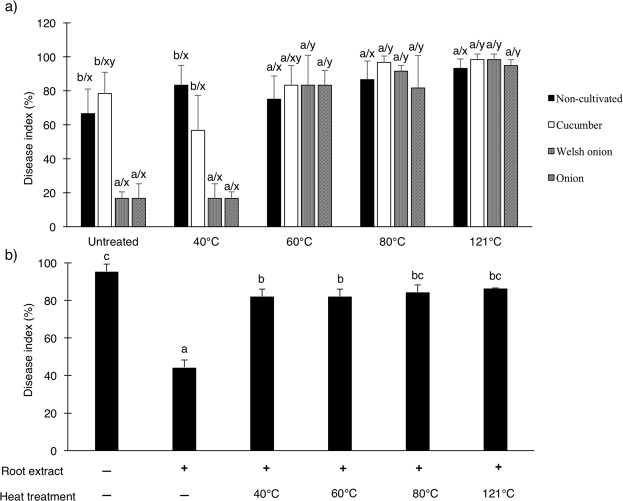
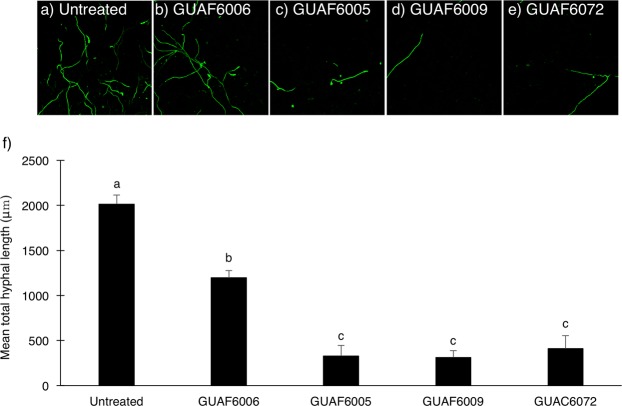
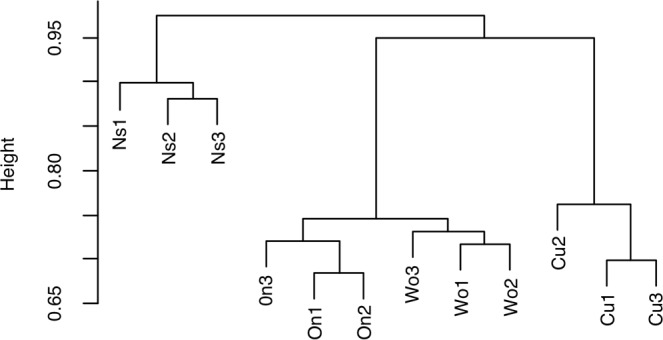
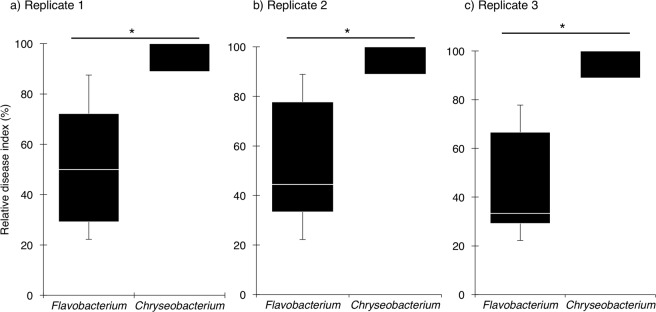
Crop rotation and intercropping with Allium plants suppresses Fusarium wilt in various crops. However, the mechanisms underlying this phenomenon have not been fully elucidated. This study was designed to assess the role of microorganisms inhabiting Allium rhizospheres and antifungal compounds produced by Allium roots in Fusarium wilt suppression by Allium cultivation. Suppression of cucumber Fusarium wilt and the pathogen multiplication by Allium (Welsh onion and/or onion)-cultivated soils were eliminated by heat treatment at 60 °C, whereas those by Welsh onion-root extract were lost at 40 °C. The addition of antibacterial antibiotics eliminated the suppressive effect of Welsh onion-cultivated soil on pathogen multiplication, suggesting the contribution of antagonistic gram-negative bacteria to the soil suppressiveness. The Illumina MiSeq sequencing of 16S rRNA gene amplicons revealed that genus Flavobacterium was the predominant group that preferentially accumulated in Allium rhizospheres. Flavobacterium species recovered from the rhizosphere soils of these Allium plants suppressed Fusarium wilt on cucumber seedlings. Furthermore, confocal laser scanning microscopy revealed that Flavobacterium isolates inhibited the multiplication of the pathogen in soil. Taken together, we infer that the accumulation of antagonistic Flavobacterium species plays a key role in Fusarium wilt suppression by Allium cultivation.
轮作和与葱属植物间作可抑制多种作物的枯萎病。然而,这一现象的机制尚未完全阐明。本研究旨在评估根际微生物和葱属植物根系产生的抗真菌化合物在葱属植物抑制枯萎病中的作用。60°C 热处理消除了土壤中葱属(韭菜和/或洋葱)种植对黄瓜枯萎病和病原菌繁殖的抑制作用,而 40°C 热处理则消除了韭菜根提取物的抑制作用。添加抗菌抗生素消除了韭菜种植土壤对病原菌繁殖的抑制作用,这表明拮抗革兰氏阴性菌对土壤抑制作用的贡献。Illumina MiSeq 测序 16S rRNA 基因扩增子显示,黄杆菌属是在葱属植物根际中优先富集的主要属。从这些葱属植物根际土壤中分离出的黄杆菌属能够抑制黄瓜幼苗的枯萎病。此外,共聚焦激光扫描显微镜显示,Flavobacterium 分离株抑制了土壤中病原菌的繁殖。综上所述,我们推断,拮抗黄杆菌属的积累在葱属植物抑制枯萎病中起关键作用。