Department of Mechanical and Automation Engineering, Faculty of Engineering, The Chinese University of Hong Kong, Shatin NT, Hong Kong SAR, China.
Department of Biomedical Engineering, Faculty of Engineering, The Chinese University of Hong Kong, Shatin NT, Hong Kong SAR, China.
Sci Adv. 2019 Jan 11;5(1):eaau9650. doi: 10.1126/sciadv.aau9650. eCollection 2019 Jan.
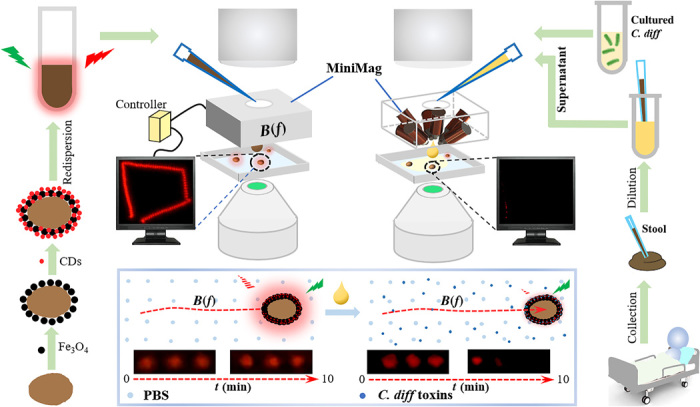
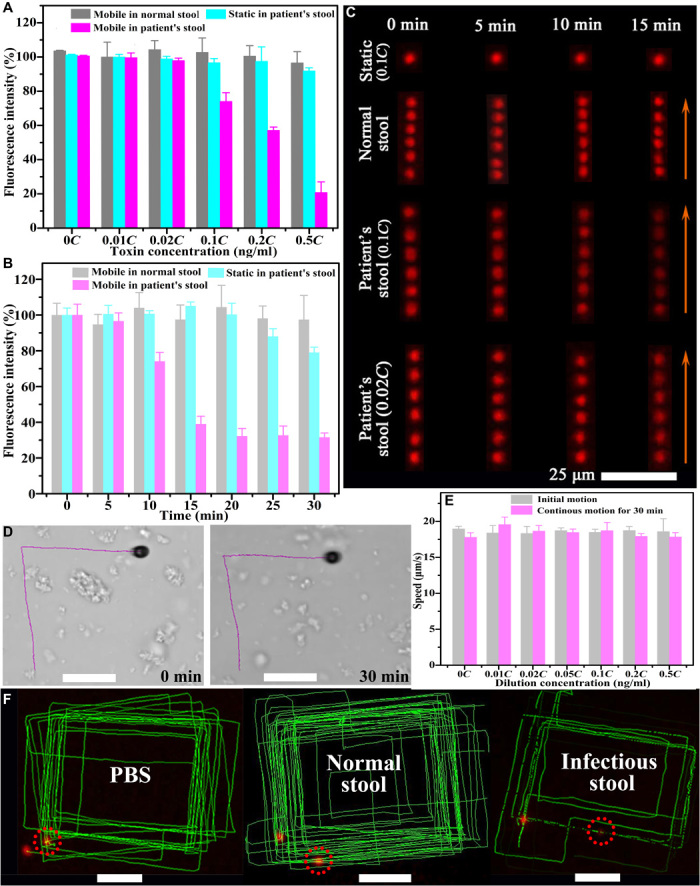
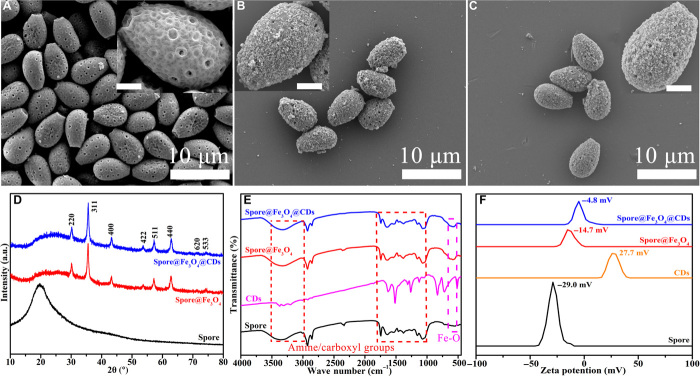
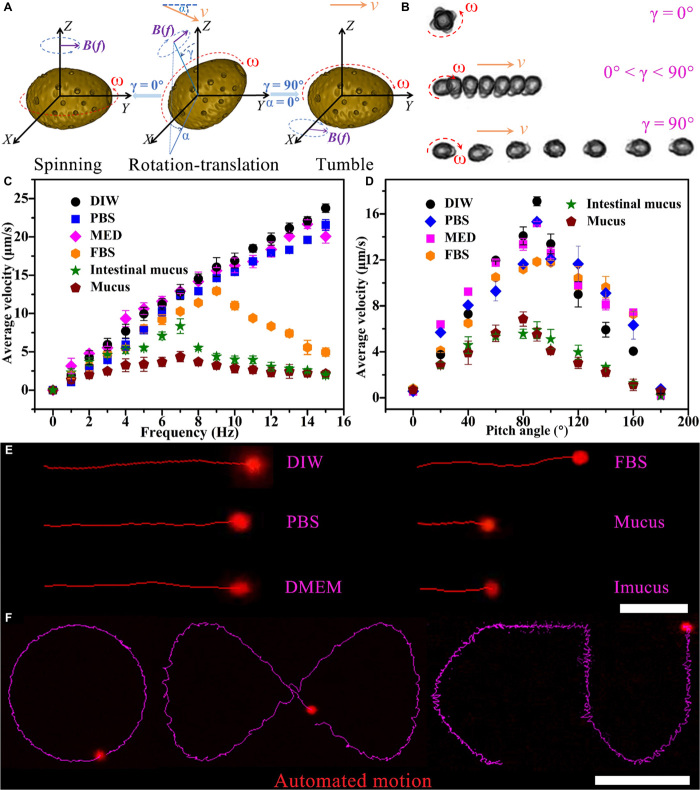
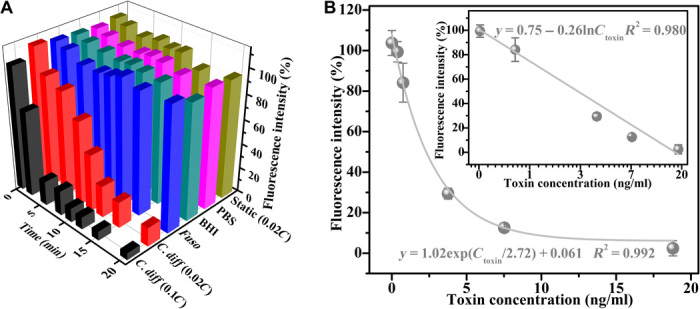
A rapid, direct, and low-cost method for detecting bacterial toxins associated with common gastrointestinal diseases remains a great challenge despite numerous studies and clinical assays. Motion-based detection through tracking the emerging micro- and nanorobots has shown great potential in chemo- and biosensing due to accelerated "chemistry on the move". Here, we described the use of fluorescent magnetic spore-based microrobots (FMSMs) as a highly efficient mobile sensing platform for the detection of toxins secreted by () that were present in patients' stool. These microrobots were synthesized rapidly and inexpensively by the direct deposition of magnetic nanoparticles and the subsequent encapsulation of sensing probes on the porous natural spores. Because of the cooperation effect of natural spore, magnetic FeO nanoparticles, and functionalized carbon nanodots, selective fluorescence detection of the prepared FMSMs is demonstrated in bacterial supernatant and even in actual clinical stool samples from infectious patients within tens of minutes, suggesting rapid response and good selectivity and sensitivity of FMSMs toward toxins.
一种快速、直接且低成本的检测与常见胃肠道疾病相关的细菌毒素的方法,尽管已经进行了大量的研究和临床检测,但仍然是一个巨大的挑战。基于跟踪新兴的微型和纳米机器人的运动检测,由于加速了“运动中的化学”,在化学和生物传感方面显示出了巨大的潜力。在这里,我们描述了使用基于荧光磁性孢子的微机器人 (FMSM) 作为一种高效的移动传感平台,用于检测存在于患者粪便中的 () 分泌的毒素。这些微机器人通过直接沉积磁性纳米粒子并随后在多孔天然孢子上包裹传感探针来快速且廉价地合成。由于天然孢子、磁性 FeO 纳米粒子和功能化碳点的协同作用,制备的 FMSM 对 细菌上清液的选择性荧光检测在几十分钟内即可完成,甚至可以在感染患者的实际临床粪便样本中完成,这表明 FMSM 对 毒素具有快速响应和良好的选择性和灵敏度。