• 文献检索
  • 文档翻译
  • 深度研究
  • 学术资讯
  • Suppr Zotero 插件Zotero 插件
  • 邀请有礼
  • 套餐&价格
  • 历史记录
应用&插件
Suppr Zotero 插件Zotero 插件浏览器插件Mac 客户端Windows 客户端微信小程序
定价
高级版会员购买积分包购买API积分包
服务
文献检索文档翻译深度研究API 文档MCP 服务
关于我们
关于 Suppr公司介绍联系我们用户协议隐私条款
关注我们

Suppr 超能文献

核心技术专利:CN118964589B侵权必究
粤ICP备2023148730 号-1Suppr @ 2026

文献检索

告别复杂PubMed语法,用中文像聊天一样搜索,搜遍4000万医学文献。AI智能推荐,让科研检索更轻松。

立即免费搜索

文件翻译

保留排版,准确专业,支持PDF/Word/PPT等文件格式,支持 12+语言互译。

免费翻译文档

深度研究

AI帮你快速写综述,25分钟生成高质量综述,智能提取关键信息,辅助科研写作。

立即免费体验

使用易于获取的电子健康记录数据对新生儿重症监护病房中早期脓毒症进行识别的机器学习模型。

Machine learning models for early sepsis recognition in the neonatal intensive care unit using readily available electronic health record data.

机构信息

Department of Anesthesiology and Critical Care, Perelman School of Medicine at the University of Pennsylvania, Philadelphia, Pennsylvania, United States of America.

Department of Biomedical and Health Informatics, Children's Hospital of Philadelphia, Philadelphia, Pennsylvania, United States of America.

出版信息

PLoS One. 2019 Feb 22;14(2):e0212665. doi: 10.1371/journal.pone.0212665. eCollection 2019.

DOI:10.1371/journal.pone.0212665
PMID:30794638
原文链接:https://pmc.ncbi.nlm.nih.gov/articles/PMC6386402/
Abstract

BACKGROUND

Rapid antibiotic administration is known to improve sepsis outcomes, however early diagnosis remains challenging due to complex presentation. Our objective was to develop a model using readily available electronic health record (EHR) data capable of recognizing infant sepsis at least 4 hours prior to clinical recognition.

METHODS AND FINDINGS

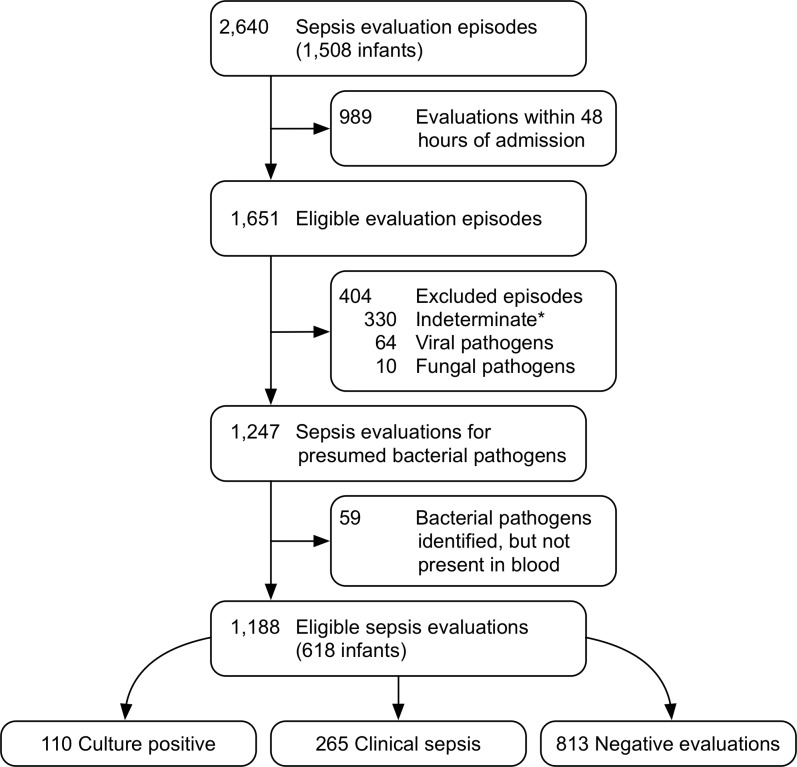
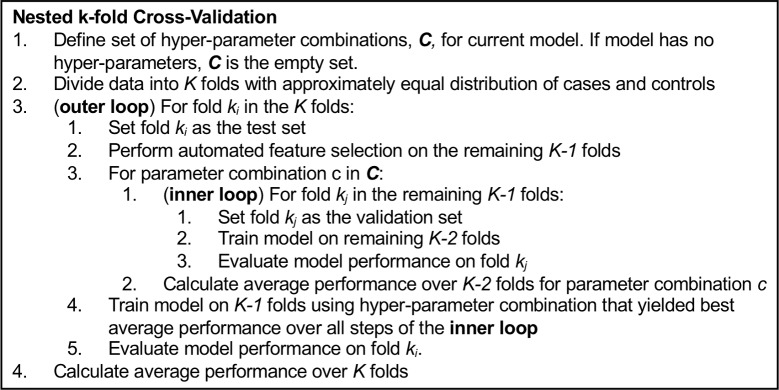
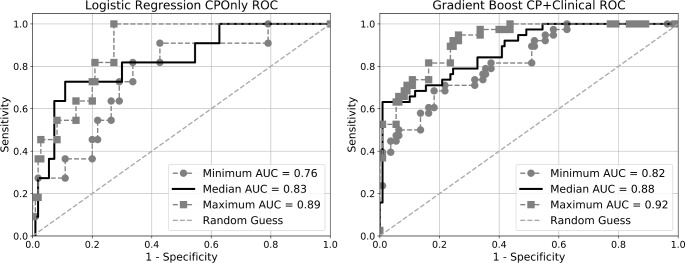
We performed a retrospective case control study of infants hospitalized ≥48 hours in the Neonatal Intensive Care Unit (NICU) at the Children's Hospital of Philadelphia between September 2014 and November 2017 who received at least one sepsis evaluation before 12 months of age. We considered two evaluation outcomes as cases: culture positive-positive blood culture for a known pathogen (110 evaluations); and clinically positive-negative cultures but antibiotics administered for ≥120 hours (265 evaluations). Case data was taken from the 44-hour window ending 4 hours prior to evaluation. We randomly sampled 1,100 44-hour windows of control data from all times ≥10 days removed from any evaluation. Model inputs consisted of up to 36 features derived from routine EHR data. Using 10-fold nested cross-validation, 8 machine learning models were trained to classify inputs as sepsis positive or negative. When tasked with discriminating culture positive cases from controls, 6 models achieved a mean area under the receiver operating characteristic (AUC) between 0.80-0.82 with no significant differences between them. Including both culture and clinically positive cases, the same 6 models achieved an AUC between 0.85-0.87, again with no significant differences.

CONCLUSIONS

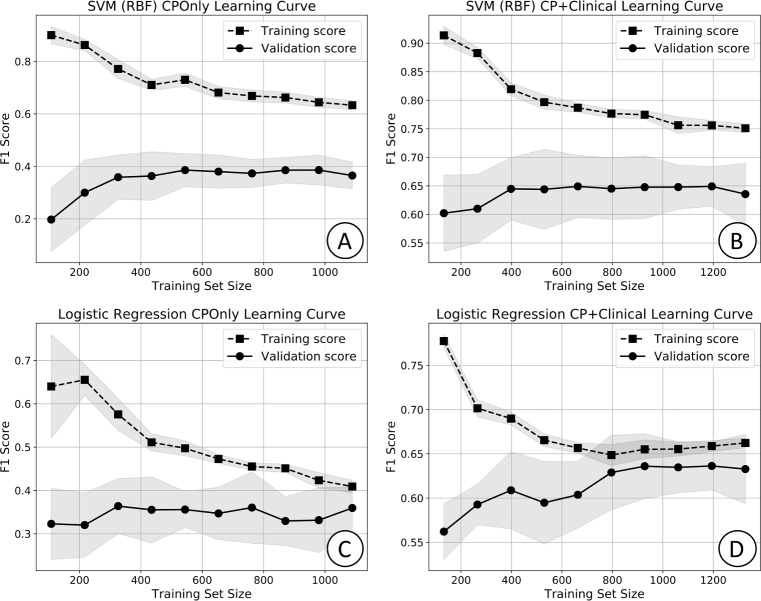
Machine learning models can identify infants with sepsis in the NICU hours prior to clinical recognition. Learning curves indicate model improvement may be achieved with additional training examples. Additional input features may also improve performance. Further research is warranted to assess potential performance improvements and clinical efficacy in a prospective trial.

摘要

背景

快速给予抗生素已被证实可以改善脓毒症的结局,但由于其临床表现复杂,早期诊断仍然具有挑战性。我们的目标是利用易于获取的电子健康记录(EHR)数据开发一种模型,使其能够在临床识别之前至少 4 小时识别婴儿脓毒症。

方法和发现

我们对 2014 年 9 月至 2017 年 11 月期间在费城儿童医院新生儿重症监护病房(NICU)住院时间≥48 小时且在 12 个月龄之前至少接受过一次脓毒症评估的婴儿进行了回顾性病例对照研究。我们将两种评估结果作为病例:培养阳性-阳性血培养出已知病原体(110 次评估);以及临床阳性-阴性培养但抗生素使用≥120 小时(265 次评估)。病例数据取自评估前 4 小时结束的 44 小时窗口。我们从所有≥10 天且与任何评估均无关联的时间中随机抽取了 1100 个 44 小时窗口的对照数据。模型输入由来自常规 EHR 数据的最多 36 个特征组成。使用 10 折嵌套交叉验证,对 8 个机器学习模型进行了训练,以将输入分类为脓毒症阳性或阴性。当任务是将培养阳性病例与对照区分开来时,6 个模型的平均接受者操作特征(ROC)曲线下面积(AUC)在 0.80-0.82 之间,它们之间没有显著差异。包括培养和临床阳性病例在内,相同的 6 个模型的 AUC 在 0.85-0.87 之间,也没有显著差异。

结论

机器学习模型可以在临床识别之前数小时识别 NICU 中的脓毒症婴儿。学习曲线表明,随着更多的训练示例,模型的改进可能会实现。更多的输入特征也可能会提高性能。需要进一步的研究来评估在前瞻性试验中的潜在性能改进和临床疗效。
https://cdn.ncbi.nlm.nih.gov/pmc/blobs/2163/6386402/0a77a84ad4d1/pone.0212665.g007.jpg
https://cdn.ncbi.nlm.nih.gov/pmc/blobs/2163/6386402/0f2e8cb5a0af/pone.0212665.g001.jpg
https://cdn.ncbi.nlm.nih.gov/pmc/blobs/2163/6386402/1296366bdb56/pone.0212665.g002.jpg
https://cdn.ncbi.nlm.nih.gov/pmc/blobs/2163/6386402/16748aa94966/pone.0212665.g003.jpg
https://cdn.ncbi.nlm.nih.gov/pmc/blobs/2163/6386402/12afd4ca94bf/pone.0212665.g004.jpg
https://cdn.ncbi.nlm.nih.gov/pmc/blobs/2163/6386402/d7c0faf1c7ae/pone.0212665.g005.jpg
https://cdn.ncbi.nlm.nih.gov/pmc/blobs/2163/6386402/cda341e56169/pone.0212665.g006.jpg
https://cdn.ncbi.nlm.nih.gov/pmc/blobs/2163/6386402/0a77a84ad4d1/pone.0212665.g007.jpg
https://cdn.ncbi.nlm.nih.gov/pmc/blobs/2163/6386402/0f2e8cb5a0af/pone.0212665.g001.jpg
https://cdn.ncbi.nlm.nih.gov/pmc/blobs/2163/6386402/1296366bdb56/pone.0212665.g002.jpg
https://cdn.ncbi.nlm.nih.gov/pmc/blobs/2163/6386402/16748aa94966/pone.0212665.g003.jpg
https://cdn.ncbi.nlm.nih.gov/pmc/blobs/2163/6386402/12afd4ca94bf/pone.0212665.g004.jpg
https://cdn.ncbi.nlm.nih.gov/pmc/blobs/2163/6386402/d7c0faf1c7ae/pone.0212665.g005.jpg
https://cdn.ncbi.nlm.nih.gov/pmc/blobs/2163/6386402/cda341e56169/pone.0212665.g006.jpg
https://cdn.ncbi.nlm.nih.gov/pmc/blobs/2163/6386402/0a77a84ad4d1/pone.0212665.g007.jpg

相似文献

1
Machine learning models for early sepsis recognition in the neonatal intensive care unit using readily available electronic health record data.使用易于获取的电子健康记录数据对新生儿重症监护病房中早期脓毒症进行识别的机器学习模型。
PLoS One. 2019 Feb 22;14(2):e0212665. doi: 10.1371/journal.pone.0212665. eCollection 2019.
2
Medical decision support using machine learning for early detection of late-onset neonatal sepsis.基于机器学习的医学决策支持用于早期检测迟发型新生儿败血症。
J Am Med Inform Assoc. 2014 Mar-Apr;21(2):326-36. doi: 10.1136/amiajnl-2013-001854. Epub 2013 Sep 16.
3
Aiding clinical assessment of neonatal sepsis using hematological analyzer data with machine learning techniques.运用机器学习技术,借助血液分析仪数据辅助临床评估新生儿败血症。
Int J Lab Hematol. 2021 Dec;43(6):1341-1356. doi: 10.1111/ijlh.13549. Epub 2021 May 4.
4
Tensor learning of pointwise mutual information from EHR data for early prediction of sepsis.基于电子健康记录数据的点互信息张量学习用于脓毒症的早期预测。
Comput Biol Med. 2021 Jul;134:104430. doi: 10.1016/j.compbiomed.2021.104430. Epub 2021 May 7.
5
Folic acid supplementation and malaria susceptibility and severity among people taking antifolate antimalarial drugs in endemic areas.在流行地区,服用抗叶酸抗疟药物的人群中,叶酸补充剂与疟疾易感性和严重程度的关系。
Cochrane Database Syst Rev. 2022 Feb 1;2(2022):CD014217. doi: 10.1002/14651858.CD014217.
6
Development and clinical impact assessment of a machine-learning model for early prediction of late-onset sepsis.开发和临床影响评估机器学习模型对迟发性败血症的早期预测。
Comput Biol Med. 2023 Sep;163:107156. doi: 10.1016/j.compbiomed.2023.107156. Epub 2023 Jun 15.
7
Implementation of a 24-hour empiric antibiotic duration for negative early-onset sepsis evaluations to reduce early antibiotic exposure in premature infants.实施 24 小时经验性抗生素疗程治疗阴性早发性败血症评估,以减少早产儿的早期抗生素暴露。
Infect Control Hosp Epidemiol. 2023 Aug;44(8):1308-1313. doi: 10.1017/ice.2022.246. Epub 2022 Oct 24.
8
Development and Validation of an Electronic Health Record-Based Machine Learning Model to Estimate Delirium Risk in Newly Hospitalized Patients Without Known Cognitive Impairment.基于电子病历的机器学习模型开发与验证:用于预测无已知认知障碍的新入院患者发生谵妄的风险。
JAMA Netw Open. 2018 Aug 3;1(4):e181018. doi: 10.1001/jamanetworkopen.2018.1018.
9
Evaluation of a machine learning algorithm for up to 48-hour advance prediction of sepsis using six vital signs.利用六个生命体征对脓毒症进行长达 48 小时的提前预测的机器学习算法评估。
Comput Biol Med. 2019 Jun;109:79-84. doi: 10.1016/j.compbiomed.2019.04.027. Epub 2019 Apr 24.
10
An Interpretable Machine Learning Model for Accurate Prediction of Sepsis in the ICU.一种用于 ICU 中脓毒症准确预测的可解释机器学习模型。
Crit Care Med. 2018 Apr;46(4):547-553. doi: 10.1097/CCM.0000000000002936.

引用本文的文献

1
Development and validation of an interpretable machine learning model for retrospective identification of suspected infection for sepsis surveillance: a multicentre cohort study.用于脓毒症监测中回顾性识别疑似感染的可解释机器学习模型的开发与验证:一项多中心队列研究
EClinicalMedicine. 2025 Aug 8;87:103401. doi: 10.1016/j.eclinm.2025.103401. eCollection 2025 Sep.
2
The Role of Artificial Intelligence in Pediatric Intensive Care: A Systematic Review.人工智能在儿科重症监护中的作用:一项系统综述。
Cureus. 2025 Mar 6;17(3):e80142. doi: 10.7759/cureus.80142. eCollection 2025 Mar.
3
A machine learning approach to predict mortality and neonatal persistent pulmonary hypertension in newborns with congenital diaphragmatic hernia. A retrospective observational cohort study.

本文引用的文献

1
Culture-Negative Early-Onset Neonatal Sepsis - At the Crossroad Between Efficient Sepsis Care and Antimicrobial Stewardship.培养阴性早发型新生儿败血症——高效败血症护理与抗菌药物管理的十字路口
Front Pediatr. 2018 Oct 9;6:285. doi: 10.3389/fped.2018.00285. eCollection 2018.
2
An Interpretable Machine Learning Model for Accurate Prediction of Sepsis in the ICU.一种用于 ICU 中脓毒症准确预测的可解释机器学习模型。
Crit Care Med. 2018 Apr;46(4):547-553. doi: 10.1097/CCM.0000000000002936.
3
Flexible, cluster-based analysis of the electronic medical record of sepsis with composite mixture models.
一种用于预测先天性膈疝新生儿死亡率和新生儿持续性肺动脉高压的机器学习方法。一项回顾性观察队列研究。
Eur J Pediatr. 2025 Mar 11;184(4):238. doi: 10.1007/s00431-025-06073-0.
4
Role of artificial intelligence in pediatric intensive care: a survey of healthcare staff perspectives in Saudi Arabia.人工智能在儿科重症监护中的作用:沙特阿拉伯医护人员观点调查
Front Pediatr. 2025 Feb 24;13:1533877. doi: 10.3389/fped.2025.1533877. eCollection 2025.
5
Aligning prediction models with clinical information needs: infant sepsis case study.使预测模型与临床信息需求相匹配:婴儿败血症案例研究。
JAMIA Open. 2025 Mar 7;8(2):ooaf015. doi: 10.1093/jamiaopen/ooaf015. eCollection 2025 Apr.
6
Neonatal Sepsis: A Comprehensive Review.新生儿败血症:全面综述
Antibiotics (Basel). 2024 Dec 25;14(1):6. doi: 10.3390/antibiotics14010006.
7
Comparing machine learning techniques for neonatal mortality prediction: insights from a modeling competition.比较用于新生儿死亡率预测的机器学习技术:建模竞赛的见解
Pediatr Res. 2024 Dec 16. doi: 10.1038/s41390-024-03773-5.
8
AI Algorithms for Modeling the Risk, Progression, and Treatment of Sepsis, Including Early-Onset Sepsis-A Systematic Review.用于模拟脓毒症(包括早发性脓毒症)风险、进展和治疗的人工智能算法——系统评价
J Clin Med. 2024 Oct 7;13(19):5959. doi: 10.3390/jcm13195959.
9
Evaluation of a Natural Language Processing Approach to Identify Diagnostic Errors and Analysis of Safety Learning System Case Review Data: Retrospective Cohort Study.自然语言处理方法评估诊断错误及安全学习系统病例回顾数据分析:回顾性队列研究。
J Med Internet Res. 2024 Aug 26;26:e50935. doi: 10.2196/50935.
10
Artificial Intelligence vs. Doctors: Diagnosing Necrotizing Enterocolitis on Abdominal Radiographs.人工智能与医生:在腹部 X 光片中诊断坏死性小肠结肠炎。
J Pediatr Surg. 2024 Oct;59(10):161592. doi: 10.1016/j.jpedsurg.2024.06.001. Epub 2024 Jun 8.
基于复合混合模型的脓毒症电子病历的灵活、集群式分析。
J Biomed Inform. 2018 Feb;78:33-42. doi: 10.1016/j.jbi.2017.11.015. Epub 2017 Dec 2.
4
Multiscale network representation of physiological time series for early prediction of sepsis.用于脓毒症早期预测的生理时间序列的多尺度网络表示。
Physiol Meas. 2017 Nov 30;38(12):2235-2248. doi: 10.1088/1361-6579/aa9772.
5
Early sepsis detection in critical care patients using multiscale blood pressure and heart rate dynamics.利用多尺度血压和心率动态变化对重症监护患者进行早期脓毒症检测。
J Electrocardiol. 2017 Nov-Dec;50(6):739-743. doi: 10.1016/j.jelectrocard.2017.08.013. Epub 2017 Aug 16.
6
Learning representations for the early detection of sepsis with deep neural networks.基于深度学习神经网络的脓毒症早期检测的表示学习。
Comput Biol Med. 2017 Oct 1;89:248-255. doi: 10.1016/j.compbiomed.2017.08.015. Epub 2017 Aug 19.
7
Improving Recognition of Pediatric Severe Sepsis in the Emergency Department: Contributions of a Vital Sign-Based Electronic Alert and Bedside Clinician Identification.提高急诊科对儿童严重脓毒症的识别能力:基于生命体征的电子警报和床边临床医生识别的作用
Ann Emerg Med. 2017 Dec;70(6):759-768.e2. doi: 10.1016/j.annemergmed.2017.03.019. Epub 2017 Jun 2.
8
Creating an automated trigger for sepsis clinical decision support at emergency department triage using machine learning.利用机器学习在急诊科分诊时创建用于脓毒症临床决策支持的自动触发机制。
PLoS One. 2017 Apr 6;12(4):e0174708. doi: 10.1371/journal.pone.0174708. eCollection 2017.
9
Vital signs and their cross-correlation in sepsis and NEC: a study of 1,065 very-low-birth-weight infants in two NICUs.脓毒症和坏死性小肠结肠炎中的生命体征及其相互关系:对两个新生儿重症监护病房的1065例极低出生体重儿的研究
Pediatr Res. 2017 Feb;81(2):315-321. doi: 10.1038/pr.2016.215. Epub 2016 Nov 3.
10
Association Between Antibiotic Use and Neonatal Mortality and Morbidities in Very Low-Birth-Weight Infants Without Culture-Proven Sepsis or Necrotizing Enterocolitis.抗生素使用与无培养证实败血症或坏死性小肠结肠炎的极低出生体重儿的新生儿死亡率和发病率的关系。
JAMA Pediatr. 2016 Dec 1;170(12):1181-1187. doi: 10.1001/jamapediatrics.2016.2132.