Department of Microbiology and Immunology, Yong Loo Lin School of Medicine, National University of Singapore, Singapore, Singapore.
Immunology Programme, Life Sciences Institute, National University of Singapore, Singapore, Singapore.
Front Immunol. 2019 Mar 14;10:489. doi: 10.3389/fimmu.2019.00489. eCollection 2019.
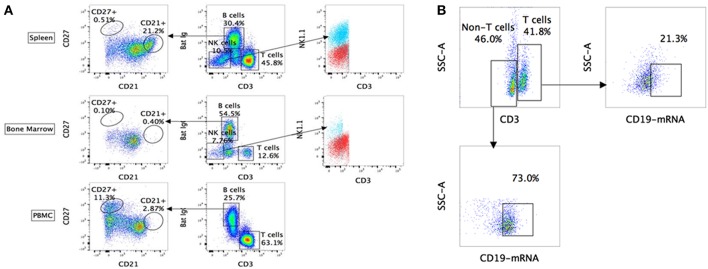
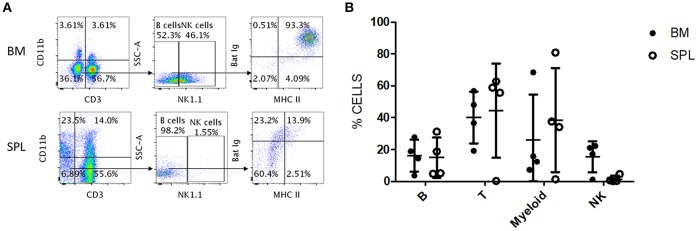
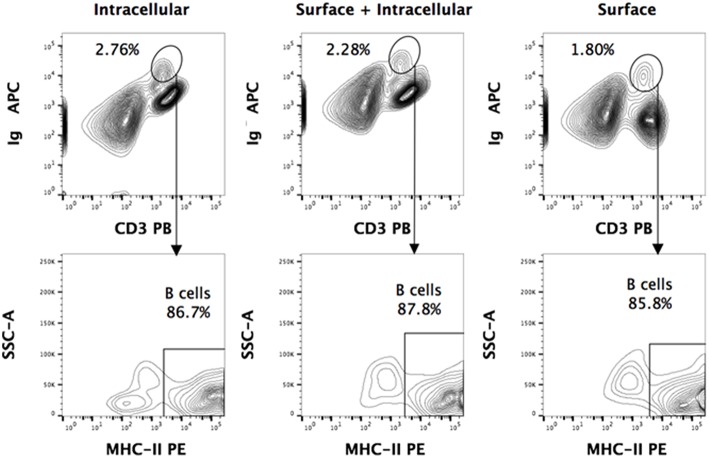
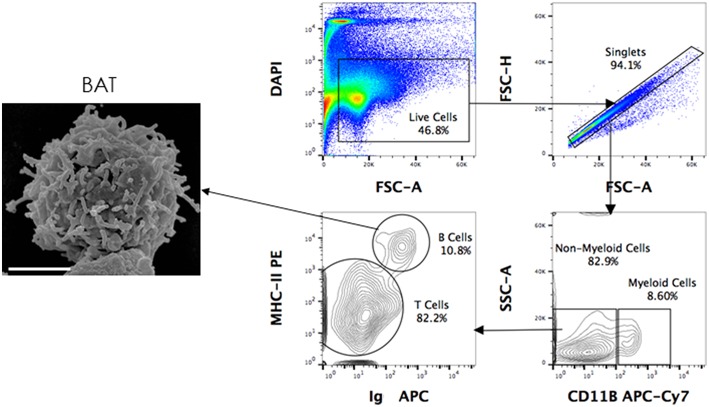
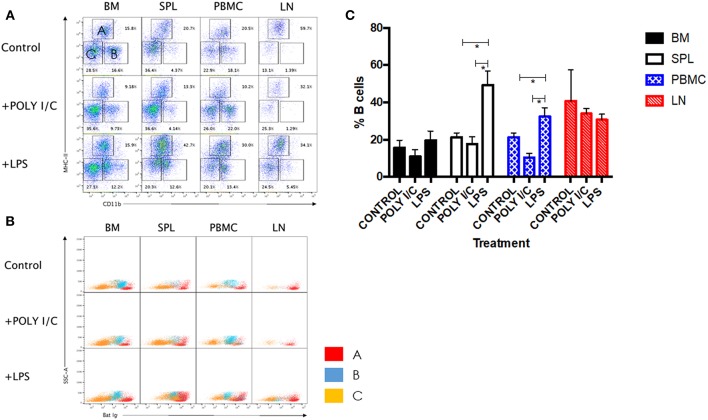
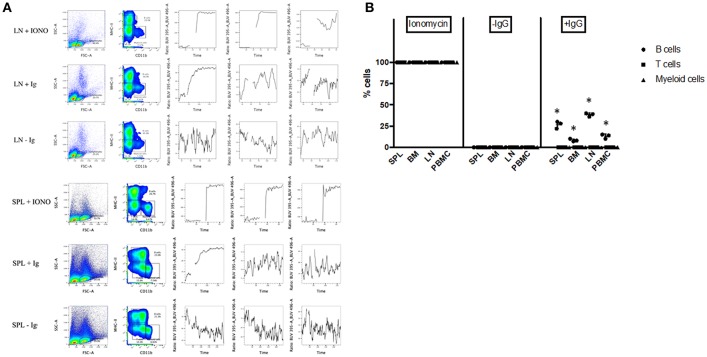
The ability of bats to act as reservoir for viruses that are highly pathogenic to humans suggests unique properties and functional characteristics of their immune system. However, the lack of bat specific reagents, in particular antibodies, has limited our knowledge of bat's immunity. Here, we report a panel of cross-reactive antibodies against MHC-II, NK1.1, CD3, CD21, CD27, and immunoglobulin (Ig), that allows flow cytometry analysis of B, T and NK cell populations in two different fruit-eating bat species namely, and . Results confirmed predominance of T cells in the spleen and blood of bats, as previously reported by us. However, the percentages of B cells in bone marrow and NK cells in spleen varied greatly between wild caught bats and colony bats, which may reflect inherent differences of their immune system or different immune status. Other features of bat B cells were investigated. A significant increase in sIg B cell population was observed in the spleen and blood from LPS-injected bats but not from poly I:C-injected bats, supporting T-independent polyclonal B cell activation by LPS. Furthermore, using an calcium release assay, B cells exhibited significant calcium release upon cross-linking of their B cell receptor. Together, this work contributes to improve our knowledge of bat adaptive immunity in particular B cells.
蝙蝠作为对人类具有高度致病性病毒的天然宿主,这表明其免疫系统具有独特的特性和功能。然而,由于缺乏针对蝙蝠的特异性试剂,特别是抗体,我们对蝙蝠免疫的了解受到了限制。在这里,我们报告了一组针对 MHC-II、NK1.1、CD3、CD21、CD27 和免疫球蛋白(Ig)的交叉反应性抗体,这些抗体允许对两种不同的果蝠物种(即 和 )中的 B、T 和 NK 细胞群进行流式细胞术分析。结果证实了 T 细胞在蝙蝠脾脏和血液中的优势,正如我们之前报道的那样。然而,骨髓中 B 细胞和脾脏中 NK 细胞的百分比在野生捕获的 蝙蝠和 群体蝙蝠之间有很大差异,这可能反映了它们免疫系统的固有差异或不同的免疫状态。还研究了蝙蝠 B 细胞的其他特征。在 LPS 注射的蝙蝠的脾脏和血液中观察到 sIgB 细胞群体显著增加,但在 poly I:C 注射的蝙蝠中没有观察到,这支持了 LPS 对 T 细胞非依赖性多克隆 B 细胞的激活。此外,使用钙释放测定法,当它们的 B 细胞受体交联时, B 细胞表现出显著的钙释放。总之,这项工作有助于提高我们对蝙蝠适应性免疫,特别是 B 细胞的认识。