Department of Environmental Physiology for Exercise, Osaka City University Graduate School of Medicine, 3-3-138 Sugimoto, Sumiyoshi-ku, Osaka-shi, Osaka 558-8585, Japan.
Department of Physical Therapy Faculty of Health Science, Aino University, 4-5-4 Higashiohda, Ibaraki-shi, Osaka 567-0012, Japan.
Nutrients. 2019 Apr 17;11(4):868. doi: 10.3390/nu11040868.
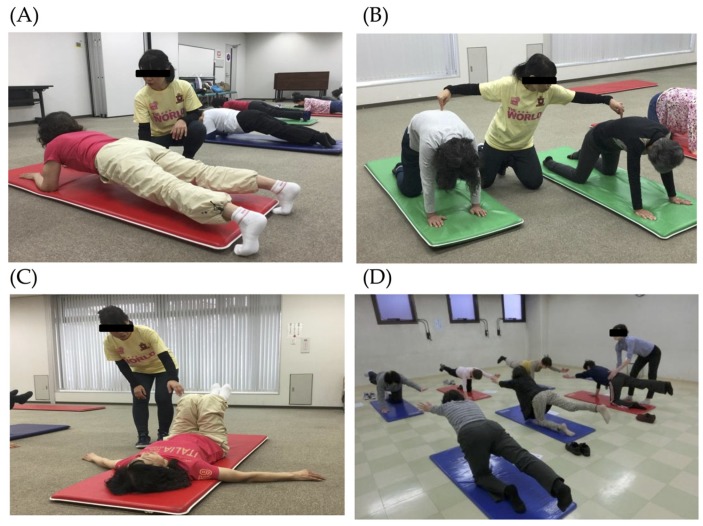
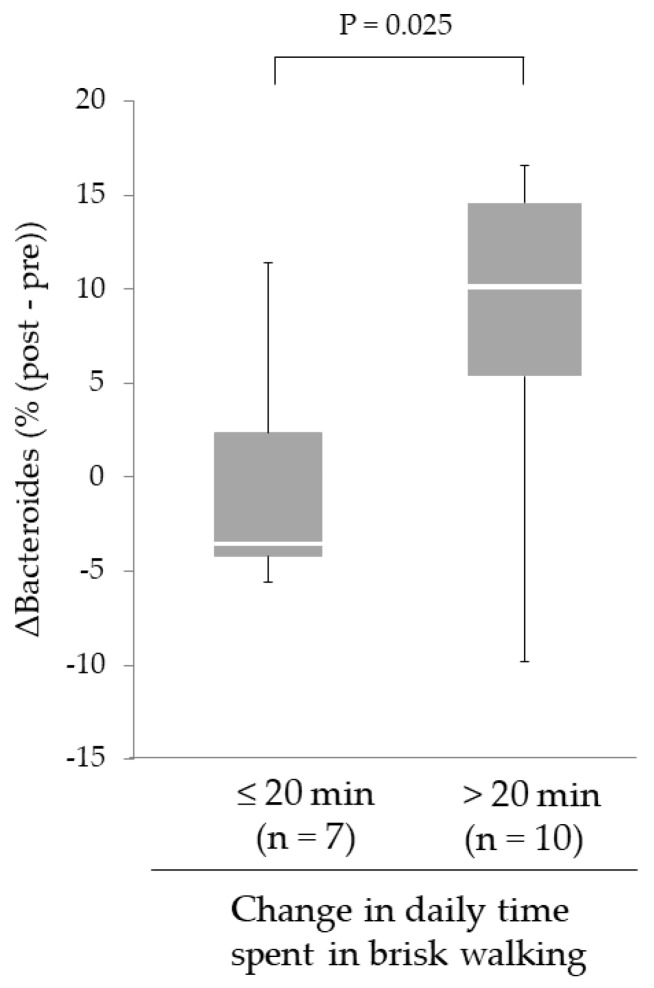
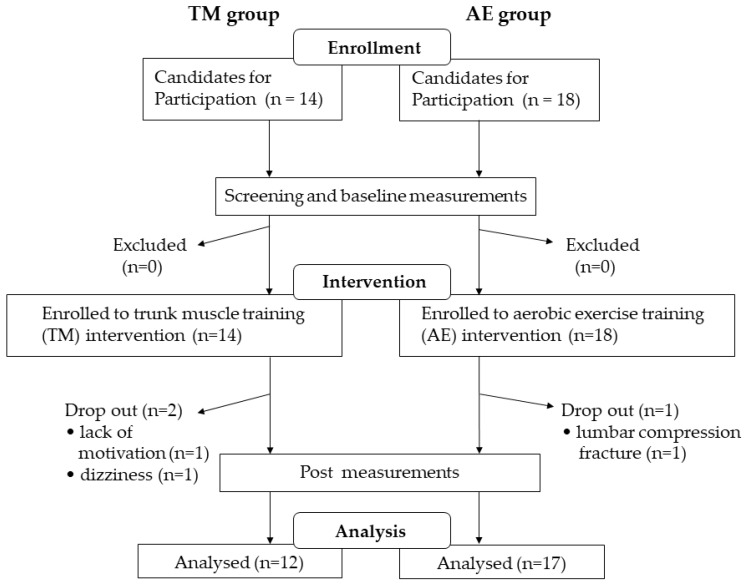
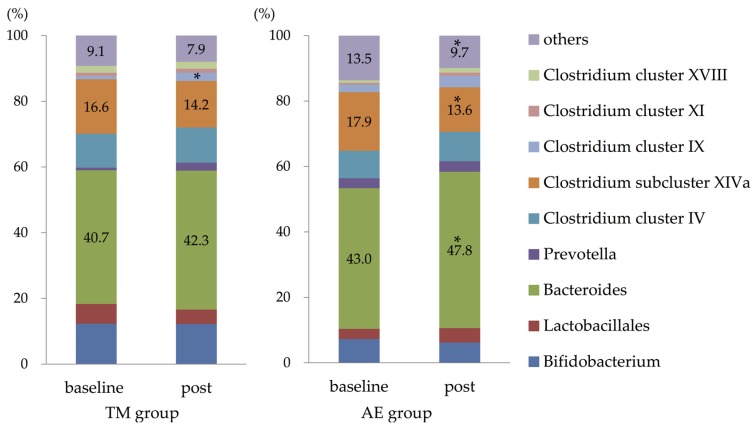
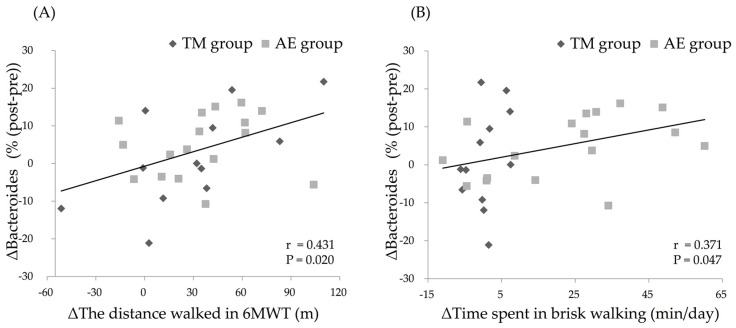
This study examined the effect of an exercise intervention on the composition of the intestinal microbiota in healthy elderly women. Thirty-two sedentary women that were aged 65 years and older participated in a 12-week, non-randomized comparative trial. The subjects were allocated to two groups receiving different exercise interventions, trunk muscle training (TM), or aerobic exercise training (AE). AE included brisk walking, i.e., at an intensity of ≥ 3 metabolic equivalents (METs). The composition of the intestinal microbiota in fecal samples was determined before and after the training period. We also assessed the daily physical activity using an accelerometer, trunk muscle strength by the modified Kraus-Weber (K-W) test, and cardiorespiratory fitness by a 6-min. walk test (6MWT). K-W test scores and distance achieved during the 6MWT (6MWD) improved in both groups. The relative abundance of intestinal only significantly increased in the AE group, particularly in subjects showing increases in the time spent in brisk walking. Overall, the increases in intestinal following the exercise intervention were associated with increases in 6MWD. In conclusion, aerobic exercise training that targets an increase of the time spent in brisk walking may increase intestinal in association with improved cardiorespiratory fitness in healthy elderly women.
本研究旨在探讨运动干预对健康老年女性肠道微生物组成的影响。32 名久坐的 65 岁及以上女性参与了一项为期 12 周的非随机对照试验。将受试者分为两组,分别接受不同的运动干预,即躯干肌肉训练(TM)或有氧运动训练(AE)。AE 包括快走,即强度≥3 代谢当量(METs)。在训练前后,通过粪便样本检测肠道微生物组成。我们还使用加速度计评估每日体力活动,用改良的 Kraus-Weber(K-W)测试评估躯干肌肉力量,用 6 分钟步行测试(6MWT)评估心肺功能。K-W 测试评分和 6MWT 中达到的距离(6MWD)在两组中均有所提高。AE 组肠道微生物的相对丰度仅显著增加,特别是在快走时间增加的受试者中。总的来说,运动干预后肠道微生物的增加与 6MWD 的增加有关。结论:针对增加快走时间的有氧运动训练可能会增加肠道微生物的丰度,从而提高健康老年女性的心肺功能。