INRA, Micalis Institute, INRA, AgroParisTech, Université Paris-Saclay, 78352 Jouy-en-Josas, France.
Department of Microbiology, Center of Basic Science, Universidad Autónoma de Aguascalientes, Aguascalientes 20131, Mexico.
Nutrients. 2019 Apr 20;11(4):890. doi: 10.3390/nu11040890.
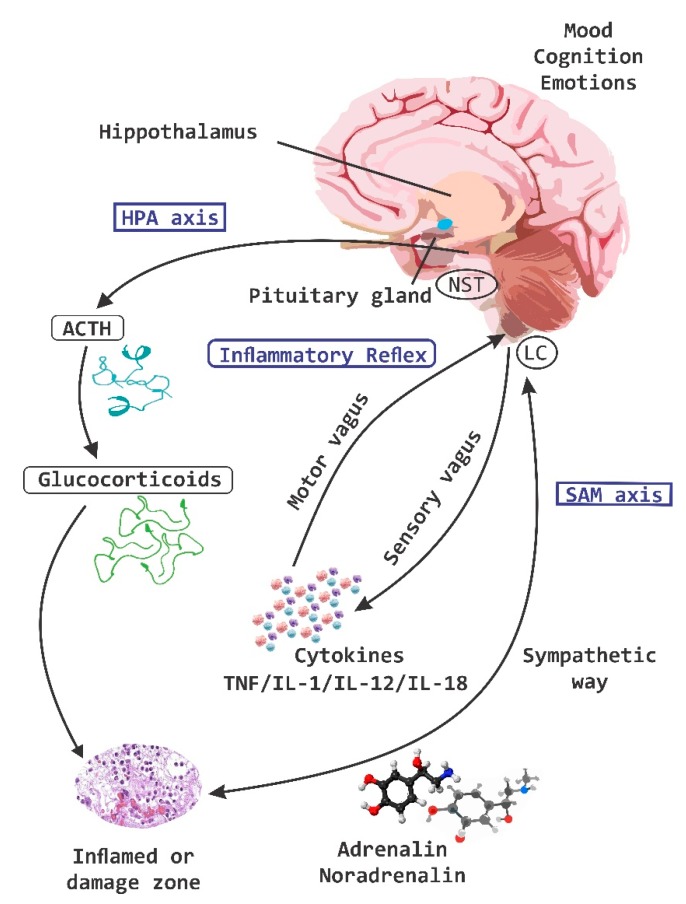
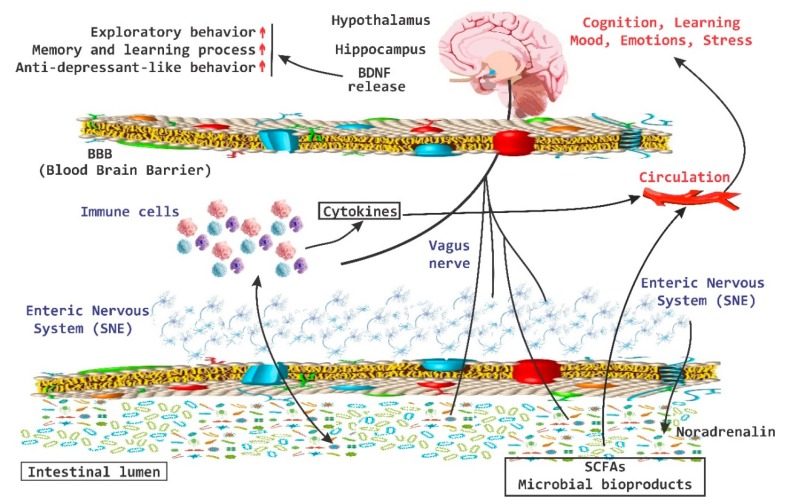
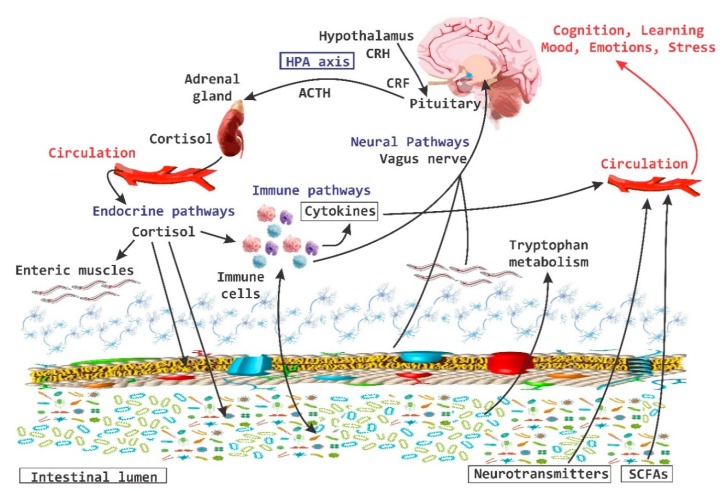
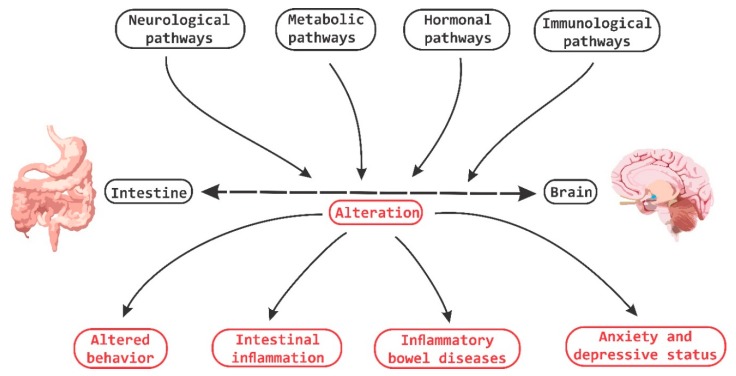
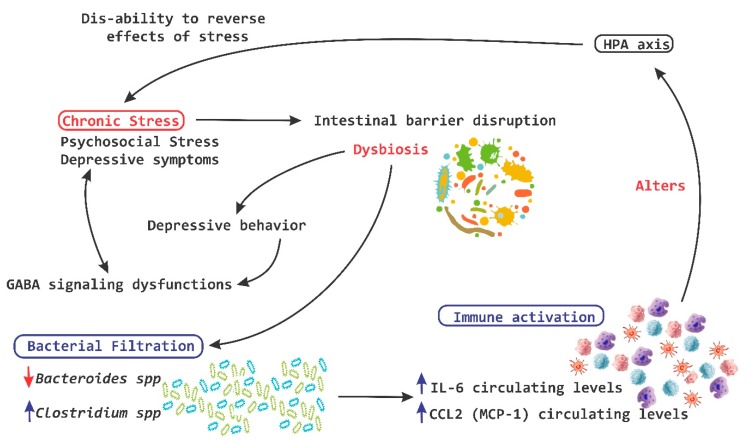
There is an important relationship between probiotics, psychobiotics and cognitive and behavioral processes, which include neurological, metabolic, hormonal and immunological signaling pathways; the alteration in these systems may cause alterations in behavior (mood) and cognitive level (learning and memory). Psychobiotics have been considered key elements in affective disorders and the immune system, in addition to their effect encompassing the regulation of neuroimmune regulation and control axes (the hypothalamic-pituitary-adrenal axis or HPA, the sympathetic-adrenal-medullary axis or SAM and the inflammatory reflex) in diseases of the nervous system. The aim of this review is to summarize the recent findings about psychobiotics, the brain-gut axis and the immune system. The review focuses on a very new and interesting field that relates the microbiota of the intestine with diseases of the nervous system and its possible treatment, in neuroimmunomodulation area. Indeed, although probiotic bacteria will be concentrated after ingestion, mainly in the intestinal epithelium (where they provide the host with essential nutrients and modulation of the immune system), they may also produce neuroactive substances which act on the brain-gut axis.
益生菌、心理益生菌与认知和行为过程之间存在着重要的关系,其中包括神经、代谢、激素和免疫信号通路;这些系统的改变可能导致行为(情绪)和认知水平(学习和记忆)的改变。心理益生菌已被认为是情感障碍和免疫系统的关键因素,除了它们的作用包括调节神经免疫调节和控制轴(下丘脑-垂体-肾上腺轴或 HPA、交感神经-肾上腺髓质轴或 SAM 和炎症反射)在神经系统疾病。本综述的目的是总结关于心理益生菌、脑-肠轴和免疫系统的最新发现。本综述重点介绍了一个非常新的有趣领域,即肠道微生物群与神经系统疾病及其可能的治疗方法(神经免疫调节)之间的关系。事实上,尽管益生菌细菌在摄入后主要集中在肠上皮(在那里为宿主提供必需的营养物质和免疫系统的调节),但它们也可能产生作用于脑-肠轴的神经活性物质。